A personal brand site restructured so Google AI Overviews describe it correctly: one entity, consistent facts across sources, open crawler access and quotable pages
Search “Devansh Thakkar WordPress developer” on Google today and the AI Overview gets it right. Freelance WordPress and WooCommerce developer, SEO specialist, Surat, 7+ years, 250+ projects across 15+ countries, 100% job success. It cites my LinkedIn and this site.
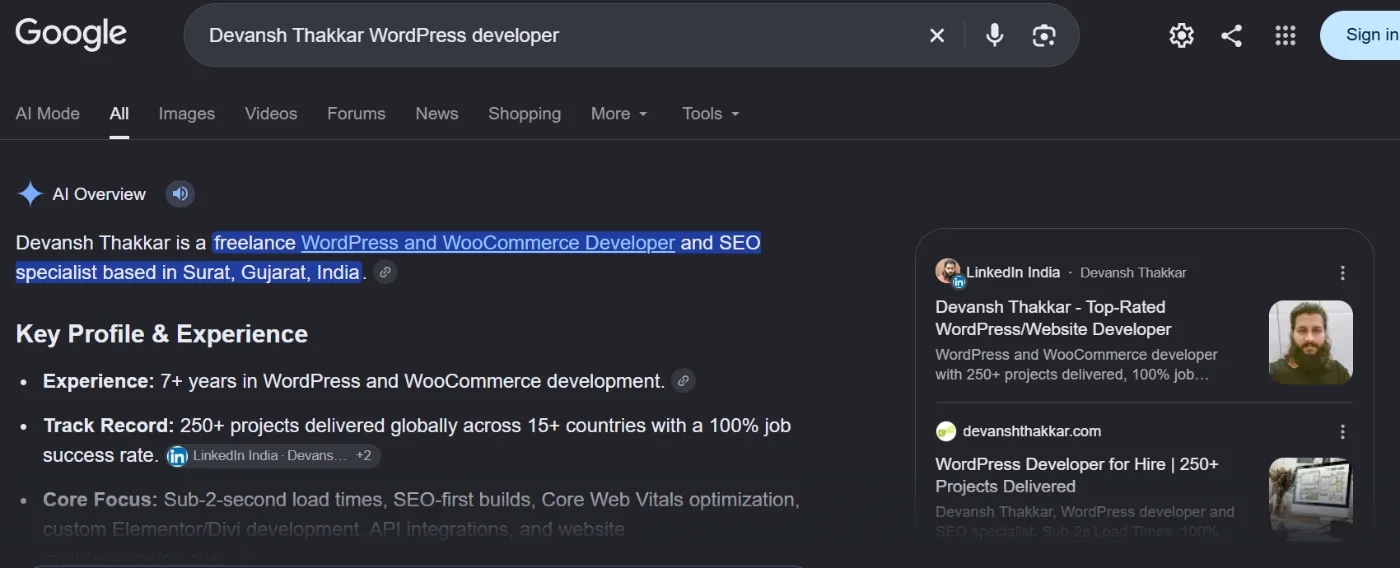
That did not happen by accident, and it did not happen because of one plugin setting. This is the client I know best, my own site, so I can show the whole thing: what I changed, why each part matters to an AI system, and what is still missing.
One honest caveat up front. This is a branded search. Getting an AI to describe you correctly when someone types your name is the first step. Getting it to recommend you when someone asks “who should fix my WooCommerce store” is a harder problem, and I cover what that takes at the end.
A search engine ranks pages. An AI answer retrieves facts, checks whether its sources agree, and writes a summary. If your sources disagree, it either hedges, picks the wrong version, or leaves you out.
So the question stops being “does my page rank” and becomes three different ones. Can the AI find a clear statement of who you are? Do the places it checks say the same thing? And can it lift a clean answer out of your page without guessing?
Every change below answers one of those.
When I audited the site’s structured data, it described me several times over. The homepage, the about page, the case study template, two dozen technology and industry templates and the SEO plugin each declared their own version of “Devansh Thakkar”, some with different job titles and images.
To a human that is invisible. To a machine reading the code, it looks like several people with the same name making slightly different claims. That is the opposite of what you want an AI to conclude.
Now there is exactly one definition of me, one of the business and one of the website, in one place. Every other page points at that single definition instead of restating it. The definition links out to the profiles that confirm it: LinkedIn, Upwork and WordPress.org.
Look at the screenshot again. “7+ years”, “250+ projects”, “15+ countries”, “100% job success”, “Surat”. Those are not paraphrases. They are the exact strings that now appear on this site, in its structured data, and on my LinkedIn profile.
Until recently they did not all match. Different pages said different project counts, and my LinkedIn experience did not add up to what the site claimed. An AI checking two sources that disagree has to pick one or say nothing. I aligned every one of them, including the parts of LinkedIn most people never look at again after setting them up.
Notice that LinkedIn is the first source Google cites, ahead of my own site. Your website is only one witness. The profiles you forgot about are witnesses too.
A surprising number of sites block AI crawlers without meaning to, through a security plugin, a hosting default or a copied robots file. If the crawler cannot read the page, nothing else on this list matters.
This site explicitly allows the crawlers that feed ChatGPT, Claude, Perplexity and Google’s AI features. I also fixed a quieter problem: the sitemap was intermittently coming back blank because two caching layers disagreed about it. A sitemap that works most of the time is a sitemap that fails on the day a crawler happens to visit.
An AI answer is built from short passages. If the answer to a question is spread across five paragraphs of marketing copy, it is easier for the model to quote someone else.
Every service page now opens with a direct two-sentence answer to the question the page exists for: what it is, what it costs, who it suits. Below that, clear headings that each answer one question, and ten real FAQs written the way people actually ask them. The FAQs and the opening answer are marked up so machines know exactly which text is the answer.
This also made the pages better for people. Nobody has ever complained that a pricing page told them the price too early.
AI systems lean toward recent sources, because recent is a reasonable proxy for still true. A guide last touched in 2023 loses to a weaker one updated last month.
New articles go out regularly, and the pages that matter most for the business get revisited and updated rather than left as finished. When a number changes, it changes everywhere at once, which is easy only because of step 2.
Describing me correctly when you search my name is the identity layer. It is necessary, and it is not the same as being recommended.
When someone asks an AI “best WordPress developer for a slow WooCommerce store”, the model looks for agreement across sources it already trusts: review platforms, forums, industry publications, other people’s articles. Content on my own site cannot fake that, and listing myself as “the best” on my own blog would be ignored, rightly.
So the next phase is outside this site entirely: reviews on the platforms clients actually check, genuine answers in the communities where people ask these questions, and mentions from people other than me. That is slower, and there is no shortcut worth taking.
This is the same work I do for clients under AI search optimisation: entity cleanup, structured data that agrees with itself, crawler access, extractable pages and a refresh plan. On WordPress it usually sits alongside technical SEO, because most of the problems overlap.
If you want to know where your site stands first, send me the URL and the one search you most want to show up for. I will tell you what the AI currently sees and what is stopping it.
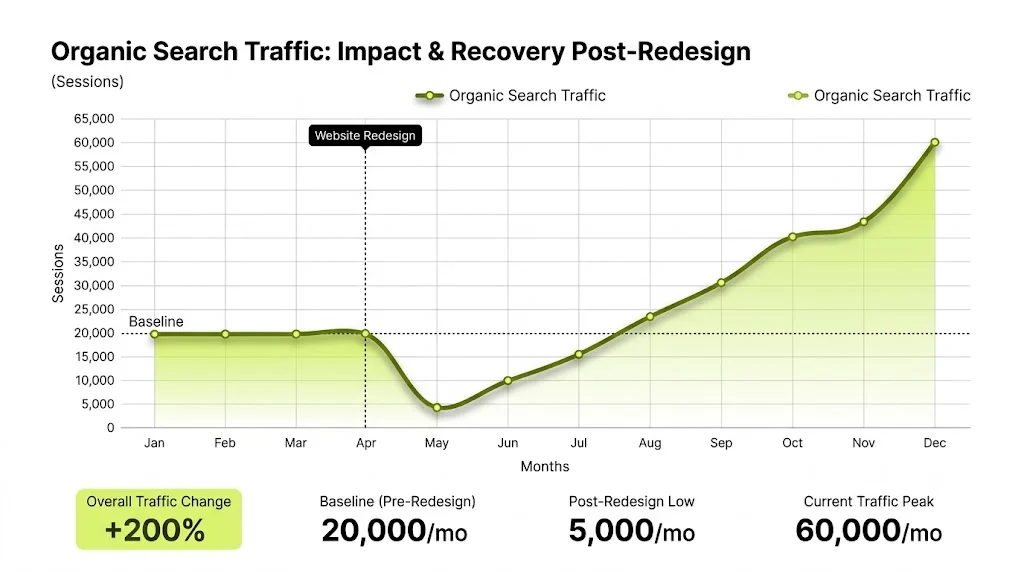
62% organic loss recovered, then 3x the pre-redesign baseline within twelve months

Professional corporate website showcasing financial services, investor relations resources, and thought-leadership content for enterprise clients.
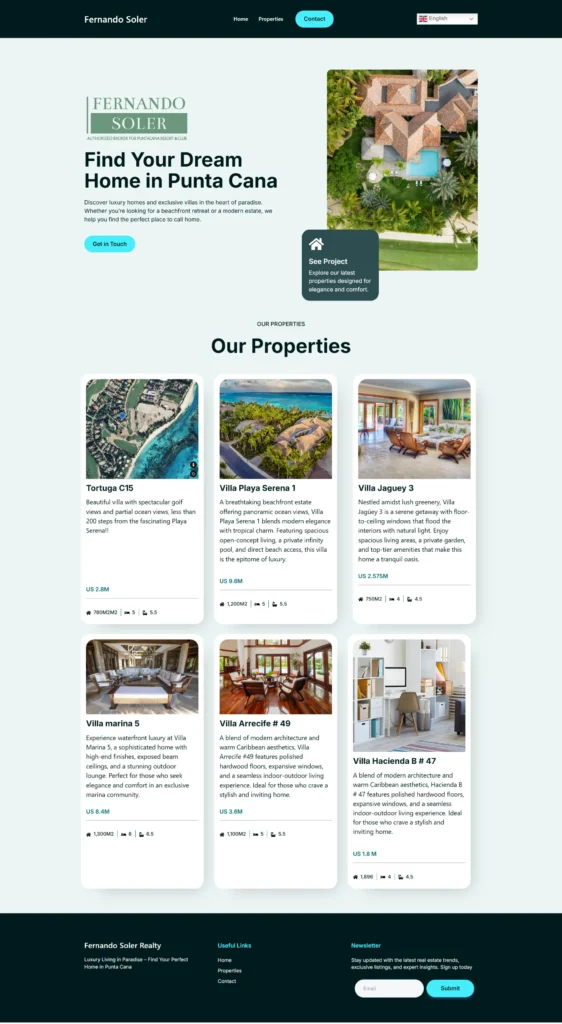
Luxury real estate platform showcasing premium villas and properties in Punta Cana with dynamic listings and multi-language support.
Free 30-minute call. Tell me what is going wrong and you get a fixed-price quote within 48 hours. If a smaller fix would do, I will say so.