Custom WordPress Plugin Development You Own, Built to WordPress Standards
Custom WordPress Plugin Development by a Top Rated freelancer specializing in WPCS-compliant code, security hardening, REST API endpoints, custom Gutenberg blocks, and WooCommerce extensions. Plugins built specifically for your business logic, not approximated through ten generic plugins.
- WPCS-compliant code that passes automated linting
- Security hardening: nonces, sanitization, REST API auth
- Custom Gutenberg blocks + admin React UIs
- You own the code outright, no recurring license fees
What is Custom WordPress Plugin Development?
Custom WordPress Plugin Development is the focused work of building WordPress plugins from scratch using clean PHP, modern JavaScript, and the WordPress Plugin API rather than stacking ten generic third-party plugins to approximate what one purpose-built plugin would handle cleanly. Real Custom WordPress Plugin Development covers discovery and architecture design, plugin from scratch following WordPress Coding Standards, security hardening built in (nonces, sanitization, capability checks, REST API protection), custom admin interfaces, REST API endpoints, WooCommerce plugin extensions, custom Gutenberg blocks, third-party service integration, and existing plugin customization or fork. Plugins are written to WordPress Coding Standards, hardened with proper security, tested with automated suites, documented for future developers.
What's wrong with relying on third-party plugins
Most underperforming WordPress sites suffer from plugin stack complexity. Each plugin added solves one problem and creates two more. Generic plugins at scale produce conflicts, security risks, license costs, and lock-in that custom code avoids by design.
10 generic plugins doing 90% of what you need
Each plugin handles 70-90% of one requirement. Combined they create overlapping admin pages, conflicting hooks, and database bloat. The remaining 10% always requires workarounds or compromise.
Plugin conflicts compounding over time
Plugin compatibility multiplies geometrically with stack size. Two plugins might work fine; ten plugins create maintenance hell. Update anxiety on every WordPress release. Site reliability decreases over years.
Critical business logic locked in third-party code
Revenue-critical features depend on plugins your team did not write. When the maintainer abandons the plugin or sells to new owners with different priorities, your business is exposed.
Premium plugin licenses adding up
$50-$200 annually per premium plugin times 8 plugins equals $400-$1,600 annually forever. Custom plugins paid once, owned outright. License costs compound over years and across multiple sites.
Security vulnerabilities in unmaintained plugins
WordPress security incidents almost always trace back to plugins. Unmaintained plugins ship known vulnerabilities. Your security depends on the slowest-patching maintainer in your stack.
Plugins abandoned or sold to new owners
Plugin maintainers stop maintaining plugins, get acquired, or change pricing models. Your stack contains time bombs you cannot defuse without rebuilding the functionality elsewhere.
Everything included in Custom WordPress Plugin Development
Discovery + architecture design
Functional specification, data model design, hook integration planning, security threat modeling, extension point identification. Architecture before features prevents unmaintainable plugins.
Plugin from scratch (WPCS)
WordPress Coding Standards followed rigorously. Code passes automated WPCS linting before commits. Function naming, prefixing, hook usage, and class autoloading follow documented patterns.
Security hardening built in
Nonces verified on every form. Inputs sanitized with appropriate functions. Outputs escaped at render time. Database queries use prepared statements. Capability checks gate admin actions. REST endpoints validate auth.
Custom admin interfaces
Settings API for simple configuration. React-based admin pages with @wordpress/components for complex dashboards. Interfaces feel native to WordPress rather than third-party panels bolted on.
REST API endpoints
Routes registered through register_rest_route. Parameter schemas, capability-based permission_callback, standardized responses. Integrates cleanly with frontend frameworks, mobile apps, and external automation.
WooCommerce plugin extensions
Custom payment gateways, shipping methods, product types, checkout fields. Integration through documented WooCommerce extension points. Updates remain compatible across WooCommerce major releases.
Custom Gutenberg blocks
Modern @wordpress/scripts toolchain, block.json metadata, server-side rendering, InnerBlocks for nested content. Blocks integrate with custom post types, ACF data, and external APIs.
Third-party service integration
CRM, email platform, payment processor, analytics, and industry API integrations. OAuth flows, encrypted API key storage, retry logic, error logging, admin visibility into integration status.
Existing plugin customization
Customizations through hooks and filters survive plugin updates. Fork when maintainer abandoned the plugin or refuses needed changes. Judgment about scratch vs customize vs fork.
How a Custom WordPress Plugin Development engagement works
-
01
Discovery + architecture call
Free 30-minute call covering functional requirements, security needs, integration scope, performance targets, and timeline constraints. Initial architecture sketch.
30 min -
02
Functional spec + fixed quote
Written functional specification covering all features, hooks used, data stored, admin interface, security model, and extension points. Sign-off prevents scope creep. Fixed-quote proposal.
3-5 business days -
03
Architecture + database schema
Class structure, database tables, REST API endpoints, hook patterns scaffolded. Security threat modeling documented. Code repository initialized with WPCS linting and testing setup.
2-4 business days -
04
Plugin development
WPCS-compliant code, security hardening, admin interfaces, REST endpoints, custom blocks, third-party integration. Internal QA on staging. Test coverage for critical paths.
8-25 business days -
05
Security audit + automated testing
Independent security review of all inputs, outputs, database operations. PHPUnit tests for critical functions. WordPress version compatibility testing across past 4 major versions.
3-5 business days -
06
Launch + 30-day monitoring
Coordinated launch with rollback plan. 30 days monitoring of error logs, performance metrics, integration status. Loom walkthrough of architecture. Documentation handover.
Final + 30 days
The Custom WordPress Plugin Development stack I work with
I work with the modern WordPress plugin development stack rather than the legacy patterns that produce hard-to-maintain code. Most projects use the technologies below in the right combination for your functional requirements, integration scope, and performance targets.
Real projects, real outcomes
Recent work delivered for clients worldwide.
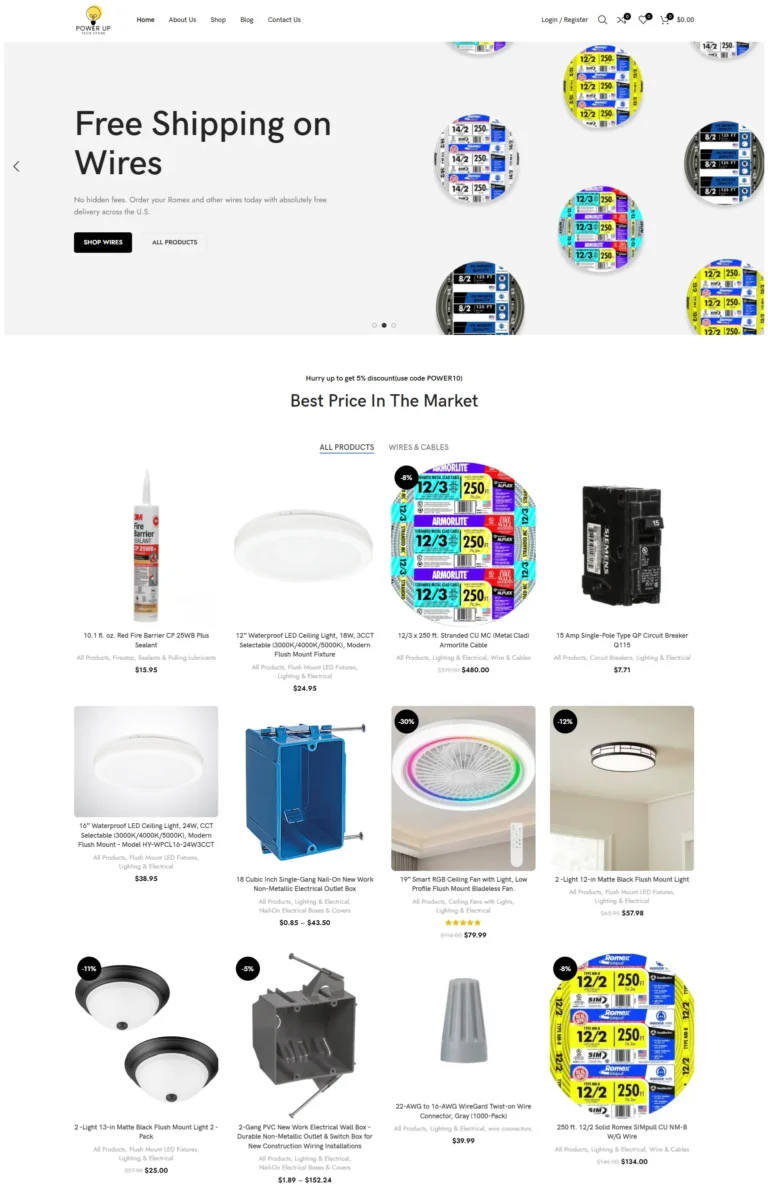
PowerUp Tech Store
High-performance WooCommerce store for electrical products with dynamic catalogs, advanced filters, and optimized checkout.
Read case study
Ethnik Ease
Modern fashion e-commerce platform specializing in ethnic wear with seasonal sales, discount logic, and responsive shopping layouts.
Read case study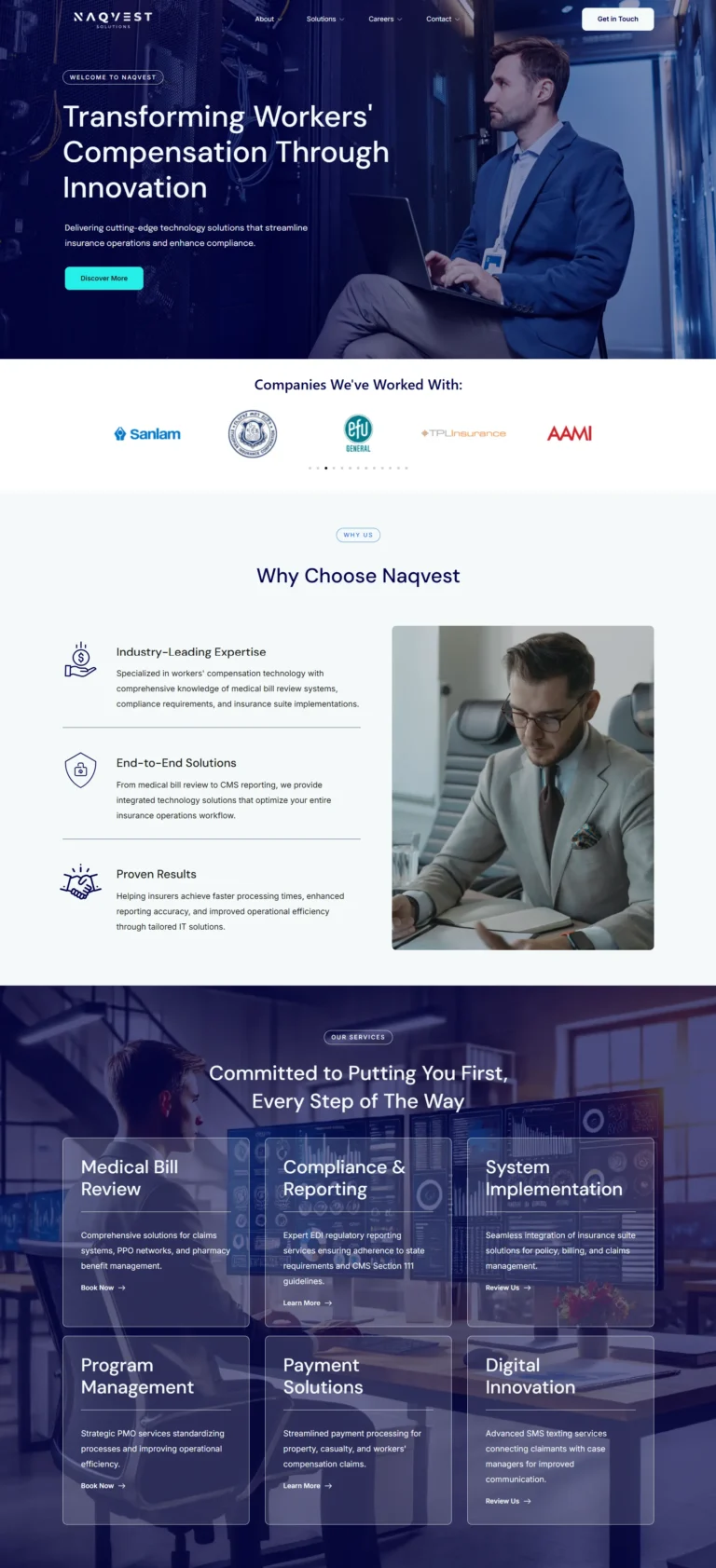
Naqvest Solutions
Technology-driven corporate platform showcasing insurance and workers compensation solutions with B2B lead generation.
Read case studyReal numbers from real Custom WordPress Plugin Development projects
What clients say
Always supportive and ready to work. I recommend him a lot.
Really great to work with. Super responsive and very helpful.
Great and professional guy to work with. I totally recommend.
Transparent Custom WordPress Plugin Development pricing
Three tiers cover most Custom WordPress Plugin Development projects. From simple plugins with focused functionality, to standard plugins with custom admin interfaces and ACF integration, to complex plugins with REST API, third-party integrations, custom Gutenberg blocks, or WooCommerce extensions.
Simple Plugin
Focused functionality, basic admin
- Simple plugin with focused functionality
- Discovery and architecture call
- Functional spec sign-off before development
- WPCS-compliant code
- Security hardening built in
- Basic admin Settings page
- Up to 1 custom post type if needed
- Activation and deactivation handlers
- Translation-ready strings
- PHPUnit tests for critical paths
- Loom handover walkthrough
- 30 days post-launch support
- Delivered in 3-4 weeks
Standard Plugin
Most popular: custom admin UI + integrations
- Everything in Simple Plugin tier
- Custom admin React UI or advanced Settings API
- Multiple custom post types
- ACF Pro field integration
- Database table creation if needed
- Basic external service integration
- Custom shortcodes
- Custom Gutenberg blocks (up to 3)
- WP-CLI commands if useful
- Documentation site or readme
- Security audit by independent review
- 60 days post-launch support
- Delivered in 5-8 weeks
Complex Plugin
REST API, third-party integrations, advanced features
- Everything in Standard Plugin tier
- REST API endpoints with authentication
- Multiple third-party API integrations
- OAuth flows and encrypted credentials
- Custom Gutenberg blocks (unlimited)
- WooCommerce extensions if applicable
- Subscription or membership integration
- Multi-tenant data handling
- Headless WordPress support
- Comprehensive automated test coverage
- Performance optimization included
- 90 days post-launch support
- Delivered in 8-12 weeks
All prices in USD, fixed-quote per project, no hidden fees. Custom quotes for very large plugin projects (multi-tenant SaaS platforms, full marketplace plugins, comprehensive WooCommerce extensions with multi-vendor support). Premium third-party API costs, ACF Pro license, hosting, and external service subscriptions not included unless agreed.
10 generic plugins vs 1 custom plugin you own
Everything you need to know about Custom WordPress Plugin Development
Custom WordPress Plugin Development is the focused work of building WordPress plugins from scratch using clean PHP, modern JavaScript, and the WordPress Plugin API rather than stacking ten generic third-party plugins to approximate what one purpose-built plugin would handle cleanly. The result is a single plugin you own outright, written to WordPress Coding Standards, hardened with proper security (nonces, sanitization, capability checks, REST API protection), tested with automated test suites, documented for future developers, and built around your specific business logic instead of generic feature assumptions. This guide explains what real Custom WordPress Plugin Development includes in 2026, what it should cost, and how to choose the right developer when your project deserves functionality built specifically for your business.
I’m Devansh Thakkar, a Top Rated freelancer on Upwork with 5+ years of experience and 100+ projects delivered. Custom WordPress Plugin Development is one of my core specialties, with custom plugins shipped for clients across the United States, United Kingdom, Australia, Canada, and beyond. Every plugin engagement follows the same standard: write to WordPress Plugin Handbook conventions, harden security from the first commit, integrate cleanly with the WordPress hooks system without monkey-patching, document the architecture, ship with automated tests, and produce code that other developers can extend without reverse-engineering undocumented decisions.
What Custom WordPress Plugin Development Actually Includes
Modern Custom WordPress Plugin Development covers nine distinct areas. Most cheap freelance plugin work focuses on getting the basic feature to function and skips the supporting work that separates production-ready plugins from prototypes. Real specialists deliver complete plugin engineering because plugins handle business logic that affects revenue, security, and long-term maintainability.
Discovery and Architecture Design
Real plugin engagements begin with architecture, not coding. The discovery phase identifies what the plugin needs to do, what data it stores, what hooks it uses, what conflicts it might cause with existing plugins, and what extension points future developers will need. Real Custom WordPress Plugin Development scaffolds class structure, database schema, REST API endpoints, and hook patterns before writing any feature code. Skipping this phase produces plugins that work for the first feature but become unmaintainable when the second or third feature gets added.
Plugin From Scratch Following WPCS
The WordPress Plugin Handbook defines specific conventions for plugin structure, naming, hook usage, file organization, and code style. Real Custom WordPress Plugin Development follows WordPress Coding Standards rigorously because they make plugins maintainable across developer transitions. Code passes automated WPCS linting before commits. Function names use proper prefixing to avoid conflicts. Hooks follow priority conventions. Class autoloading follows PSR-4 patterns adapted for WordPress. The result is plugins that any other WordPress developer can pick up without learning specific in-house conventions.
Security Hardening Built In
WordPress security depends entirely on plugin security. Real Custom WordPress Plugin Development hardens every input, output, and database operation as a non-negotiable foundation. Form submissions verify nonces. User input gets sanitized with appropriate functions (sanitize_text_field, esc_url_raw, wp_kses, sanitize_email). Output gets escaped at point of use (esc_html, esc_attr, esc_url). Database queries use prepared statements via wpdb. Capability checks gate admin actions. REST API endpoints validate authentication and permissions. SQL injection, XSS, CSRF, and authorization bypass become structurally impossible rather than accidentally avoided.
Custom Admin Interfaces
Plugins that need configuration require admin interfaces. Real Custom WordPress Plugin Development builds admin pages using either the Settings API for simple configuration or modern React-based interfaces for complex dashboards. Settings sections, fields, and validation all follow WordPress patterns. React-based admin UIs use the @wordpress/components library to match the WordPress admin design system. Either approach produces interfaces that feel native to WordPress rather than third-party panels bolted onto the admin sidebar.

REST API Endpoints
Modern plugins increasingly need REST API endpoints for headless WordPress, mobile app integration, or external service communication. Real Custom WordPress Plugin Development registers REST routes correctly using register_rest_route, validates parameters through proper schemas, authenticates requests through WordPress capability checks or application passwords, and returns standardized responses. Endpoints follow REST conventions for HTTP methods, status codes, and resource naming. The result is API surfaces that integrate cleanly with frontend frameworks, mobile apps, or external automation systems.
WooCommerce Plugin Extensions
WooCommerce extensions are one of the most common Custom WordPress Plugin Development categories. Real WooCommerce plugin work uses the WooCommerce-specific hooks and filters rather than fighting against the platform. Custom payment gateways follow the WC_Payment_Gateway pattern. Shipping methods extend WC_Shipping_Method. Product types register through the WC product class system. Custom checkout fields, order metadata, email templates, and admin reporting all integrate through documented WooCommerce extension points. This pairs with my WooCommerce Development service for stores requiring deeper customization beyond plugin functionality.
Custom Gutenberg Blocks
Custom Gutenberg blocks have become a major Custom WordPress Plugin Development category as WordPress moved toward block-based editing. Real Custom Gutenberg block development uses the modern @wordpress/scripts toolchain, block.json metadata for registration, server-side rendering where appropriate, and InnerBlocks for nested content. Blocks integrate with custom post types, ACF data, and external APIs while remaining editable through the standard WordPress editor. The pattern handles everything from simple display blocks to complex interactive components.
Third-Party Service Integration
Many plugins integrate WordPress with external services: CRMs (HubSpot, Salesforce, Pipedrive), email platforms (Mailchimp, ActiveCampaign, Klaviyo), payment processors (Stripe, Razorpay, Paddle), analytics platforms (Mixpanel, Amplitude, Segment), or industry-specific APIs. Real Custom WordPress Plugin Development handles authentication securely (OAuth flows, API keys stored encrypted, never in plugin options without protection), retries on transient failures, logs errors comprehensively, and provides admin visibility into integration status. Production plugins survive third-party API changes through proper abstraction.
Existing Plugin Customization or Fork
Not every project needs a plugin from scratch. Sometimes the right answer is customizing an existing plugin through proper extension points (hooks, filters, theme overrides) or forking it when the maintainer abandoned it or refuses needed changes. Real Custom WordPress Plugin Development decides between scratch, customization, and fork based on the maintenance burden each path creates. Customizations through hooks survive plugin updates; theme function modifications break on the next plugin release. The judgment matters as much as the coding.
How Much Does Custom WordPress Plugin Development Cost?
Custom WordPress Plugin Development pricing varies based on functional complexity. Simple plugins (content restriction, custom post types with display, basic admin settings) typically cost $1,499 to $2,499 for most freelance projects. Standard plugins with custom admin interfaces, ACF integration, and basic external service integration run $2,999 to $5,999. Complex plugins with REST API endpoints, third-party API integration, custom Gutenberg blocks, WooCommerce extensions, or multi-tenant data handling cost $5,999 to $14,999. Senior North American developers charge $80 to $150+ per hour, while quality offshore freelancers run $35 to $90 per hour for comparable technical output.
Beware of pricing that seems too good. A $100 to $300 custom plugin from cheap freelance services almost never includes security hardening, automated tests, documentation, or proper architecture. The pattern works on day one but fails security audits, breaks on the next WordPress major release, or carries undocumented logic that locks the business into the original developer. Equally beware of agency quotes at $25,000 to $50,000+ for plugin work that bundles strategy decks, account managers, and project management overhead delivering similar technical results to good freelance work.
Why Choose Custom WordPress Plugin Development Over Existing Plugins
The WordPress plugin repository contains 60,000+ free plugins, with thousands more in commercial marketplaces. The math seems to favor existing plugins for most needs. But the math changes significantly once you account for total cost of ownership.
Most businesses end up running 10 to 25 generic plugins where each does 70 to 90 percent of what’s actually needed. License costs compound: $50 to $200 annually per premium plugin times 8 plugins equals $400 to $1,600 annually forever. Plugin conflicts grow exponentially with stack size, increasing support costs and decreasing reliability. Critical business logic gets locked in third-party code your team did not write and cannot modify when the maintainer abandons the plugin or sells to a new owner with different priorities.
Custom WordPress Plugin Development replaces 10 generic plugins with 1 plugin built specifically for your needs. You own the code outright with no recurring license fees. The plugin does exactly what your business requires, no more and no less. Maintenance burden drops because there is one codebase to update instead of ten. Security depends on one audit instead of ten different maintainer judgment calls. For businesses where the WordPress site handles real revenue, owning critical functionality through Custom WordPress Plugin Development is the difference between scaling on solid ground and scaling on someone else’s foundation.
The Real Cost of Cheap Custom WordPress Plugin Development
Cheap Custom WordPress Plugin Development has measurable downsides that compound dangerously over time. Plugin failures affect revenue directly, unlike theme issues that mostly affect aesthetics.
- No security hardening. Inputs not sanitized, outputs not escaped, nonces missing, capability checks absent, REST endpoints unauthenticated. SQL injection, XSS, and CSRF vulnerabilities ship to production. ADA and PCI compliance issues accumulate.
- No automated tests. Plugin works for the specific scenarios the developer tested manually. Edge cases ship undiscovered. Next WordPress major release breaks something silently. Issues only surface when revenue or operations are already affected.
- WPCS not followed. Function naming inconsistent, prefixes missing, hooks improperly used. Conflicts with other plugins difficult to diagnose. Code review by another developer takes weeks before any change is safe.
- No documentation. Architecture undocumented, business logic uncommented, integration assumptions unrecorded. Next developer spends weeks reverse-engineering before any change is possible.
- Hard-coded business logic. No filters or extension points. Future requirements require core code changes instead of clean extension. Plugin becomes harder to modify each iteration.
- Vendor lock-in to original developer. Only the original developer can maintain it. They raise rates, become unavailable, or disappear. Business is stuck with code only one person understands.
The real cost of cheap Custom WordPress Plugin Development is rarely the build itself. It is the security incidents, the WordPress update failures, the developer transition costs, and the inevitable rebuild when the next team realizes the existing plugin is closer to a prototype than production code.
Custom WordPress Plugin Development Security Standards
WordPress security incidents almost always trace back to plugins. The WordPress core team maintains the core platform with rigorous security review. Plugins, in contrast, range from rigorously secured to actively dangerous. Real Custom WordPress Plugin Development treats security as a non-negotiable foundation rather than a checklist to complete after features ship. The patterns below align with OWASP security recommendations adapted for WordPress.
Every input gets sanitized at the point it enters the plugin, with the appropriate sanitization function for the data type. Text uses sanitize_text_field. Email addresses use sanitize_email. URLs use esc_url_raw. HTML content uses wp_kses with allowed tags lists. Numeric input gets validated and cast appropriately. Every output gets escaped at the point of rendering, never trusting that input sanitization caught everything. esc_html for text, esc_attr for HTML attributes, esc_url for URLs in href attributes, wp_kses_post for filtered HTML content. Plugins handling sensitive data should pair with my WordPress Security Hardening service for the full site-wide security review.
Form submissions verify nonces with check_admin_referer or wp_verify_nonce. Capability checks gate admin actions through current_user_can with specific capabilities like manage_options or edit_posts rather than checking user roles directly. Database queries use $wpdb->prepare for any value coming from user input. REST API endpoints register with proper permission_callback functions that verify authentication and capabilities. Custom file uploads validate MIME types and use wp_handle_upload rather than direct file system writes. These patterns are not optional for production plugins; they are the foundation that prevents the plugin from becoming the next reported WordPress security incident.
Who Needs Custom WordPress Plugin Development?
Not every WordPress functionality need requires a custom plugin. If a quality commercial plugin handles 95 percent of your needs and your workflow can adapt to the remaining 5 percent, the commercial plugin at $200 annually is often the smarter choice. Custom WordPress Plugin Development becomes worth the specialist investment when specific conditions apply.
Your business logic is unique and no commercial plugin handles it without significant workarounds. You operate in a regulated industry (healthcare, finance, legal, education) where compliance requirements rule out generic plugins with unknown data handling practices. You have specific integration requirements with internal systems or industry-specific APIs that no commercial plugin supports.
You currently run 10+ overlapping plugins where each does 70 to 90 percent of what’s needed and the combination creates ongoing maintenance burden. You are an agency needing white-label custom plugin work for client projects you bill at higher rates. You need WooCommerce extensions for industry-specific commerce models (subscriptions, rentals, B2B wholesale, configurator products, marketplace platforms). You are building custom Gutenberg blocks tied to your specific content workflow rather than generic display blocks. Plugin work pairs naturally with my Custom WordPress Theme Development service when both the theme and functionality need custom code, or with Elementor, Bricks Builder, or Divi sites needing custom widgets or modules beyond what commercial plugins offer.

How to Choose a Custom Plugin Specialist
The freelance market for plugin development is the deepest technical specialty in WordPress freelance work and has the widest quality spread. Most providers list plugin development as a skill, but few deliver production-ready code that passes security audits and survives WordPress major releases. Look for these signals when hiring a real specialist.
Real WPCS adherence visible in code samples. The WordPress Coding Standards define specific conventions for plugin structure, naming, hook usage, and file organization. A genuine specialist references WPCS, shows automated linting in their workflow, and produces code that passes phpcs –standard=WordPress checks. Verified client reviews on platforms like Upwork mentioning specific plugin projects with technical details (security, REST API, automated tests) carry weight because the platform is competitive enough that fake claims get exposed.
Security knowledge demonstrable through specific patterns. Ask how they handle nonce verification, output escaping, REST API authentication, and SQL injection prevention. Generic answers signal cargo-cult understanding. Specific function names and patterns signal real expertise. Ask for live URLs of WordPress sites running their plugins and check for visible plugin headers, error messages, and admin page consistency. Direct work without agency middlemen, since plugin development involves rapid iteration that does not delegate well across handoffs.
Custom WordPress Plugin Development Trends in 2026
The plugin development landscape evolved significantly through 2024-2025 with WordPress core changes and competitive pressure from page builder ecosystems. The trends shaping Custom WordPress Plugin Development in 2026 reflect both platform direction and what agencies and businesses are buying.
Custom Gutenberg block development became the largest single category as WordPress moved toward block-based editing. Most plugin engagements in 2026 include at least some custom block work. React-based admin interfaces replaced many traditional Settings API implementations as WordPress core moved toward React for its own admin features. Modern @wordpress/scripts toolchain became the standard build pipeline replacing legacy webpack and Gulp configurations.
WooCommerce-specific plugin development grew substantially with the platform becoming the dominant e-commerce CMS choice. Subscription and membership models continued growing as recurring revenue businesses moved to WordPress. AI-related plugin development emerged as a distinct category with plugins integrating OpenAI, Claude, or other LLM APIs for content, support, or workflow automation. WordPress security tightened through 2024-2026 with new core capabilities for application passwords, REST API permissions, and capability granularity, requiring plugins to follow stricter authentication patterns. Headless WordPress drove demand for plugins exposing data through REST API or GraphQL with proper authentication and rate limiting.
The Custom WordPress Plugin Development Process and Timeline
Real Custom WordPress Plugin Development follows a methodical process designed to produce production-ready code rather than working prototypes. Skipping phases creates the underperforming plugins that give the approach a mixed reputation when compared to mature commercial plugin alternatives.
Discovery and architecture take 3 to 5 business days for most projects. The phase covers functional specification, data model design, hook integration planning, security threat modeling, and extension point identification. Functional spec sign-off prevents the scope creep that plagues plugin engagements where requirements got assumed rather than documented. Architecture and database schema design run 2 to 4 business days for plugins with significant data storage or external API integration.
Plugin development with WPCS-compliant code takes 8 to 25 business days depending on functional scope, security requirements, admin interface complexity, and integration scope. Security audit and automated test development take 3 to 5 business days. Pre-launch testing includes WordPress version compatibility testing across the past 4 major versions, plugin conflict testing with common plugin combinations, performance testing, and security review. Total timeline from kickoff to launch ranges from 3 weeks for simple plugins to 12 weeks for complex plugins with extensive integrations.
Get a Custom WordPress Plugin Development Quote Today
If your next WordPress project needs functionality built specifically for your business rather than approximated through ten overlapping commercial plugins, the next step is a free 30-minute discovery call. We’ll review your functional requirements, security needs, integration scope, performance targets, and timeline constraints. Within 48 hours of that call, you’ll receive a written proposal with fixed-quote pricing, phase breakdown, and projected timeline.
You can also browse my portfolio of recent work to see real Custom WordPress Plugin Development examples across industries, or read what past clients have said about working with me on plugin projects.
Custom WordPress Plugin Development questions, answered
How much does Custom WordPress Plugin Development cost?
How long does plugin development take?
Custom plugin vs existing plugin which is better?
Will my custom plugin be secure?
Can you customize an existing WordPress plugin?
Will my plugin survive WordPress updates?
Can you build WooCommerce plugin extensions?
Will I own the code?
Can you build custom Gutenberg blocks?
How do you handle plugin compatibility with other plugins?
More to dig into
-
Hire Best WordPress Developer: Avoid 9 Costly Mistakes
A working developer's method for vetting WordPress developers: a 5-minute source-code test, the 9 mistakes that cost the...
Read article -
WordPress Block Theme vs Classic Theme: The Complete 2026 Guide
🕑 12 min read Updated: June 2026 Table of Contents The Quick Verdict The Real Difference Where a...
Read article -
Do I Need a Custom WordPress Theme? The Complete 2026 Answer
🕑 12 min read Updated: June 2026 Table of Contents The Short Answer What Custom Actually Means When...
Read article
-
WordPress Migration Services
WordPress Migration Services by a Top Rated freelancer. Host-to-host, Wix or Squarespace to WordPress, WooCommerce store migrations, domain...
View service -
WooCommerce Development Services
Custom WooCommerce Development by a Top Rated freelancer with 5+ years and stores delivered for clients in 8+...
View service -
Elementor Website Development
Elementor Website Development by a Top Rated freelancer specializing in performance-tuned Elementor Pro builds. Theme Builder for full-site...
View service
Ready to start?
Book a free 30-minute call. No pitch, no pressure. We discuss your project and decide if we're a fit.