
Custom WordPress Theme Development That Hits 85+ PageSpeed by Design
Custom WordPress Theme Development by a Top Rated freelancer specializing in lean PHP, HTML, CSS, and JavaScript foundations. 300KB-900KB page weight, no recurring license fees, ACF dynamic content, and Core Web Vitals passing on day one.
- 85-98 PageSpeed scores standard, no aggressive optimization needed
- 300KB-900KB pages vs 2-5MB on page builder sites
- ACF integration + custom post types for content teams
- No recurring license fees, you own the code outright
What is Custom WordPress Theme Development?
Custom WordPress Theme Development is the focused work of building a WordPress theme from scratch using clean PHP, HTML, CSS, and JavaScript rather than starting from a premium ThemeForest theme or stacking page builders on top of generic templates. Real Custom WordPress Theme Development covers lean code architecture, Hello Elementor child theme or theme from scratch approach, ACF integration with custom post types, performance built in from the code level, block editor integration where useful, mobile-first responsive design with WCAG 2.1 AA accessibility, WooCommerce custom integration, block theme support for FSE, and migration from page builder sites. The result is 300KB-900KB page weight and 85-98 PageSpeed scores as a baseline.
What's wrong with off-the-shelf themes and page builders
Most underperforming WordPress sites share the same six issues with their theme foundation. Premium themes and page builders ship code your site never uses, locking you into design decisions that prevent the performance and brand consistency custom code delivers naturally.
Premium themes ship bloat for every feature
Theme demos include 50+ layout options. The CSS and JS for all of them load on every page even when your site uses 5%. Total page weight 2-5MB instead of 300-900KB.
Page builders create wrapper-heavy DOM
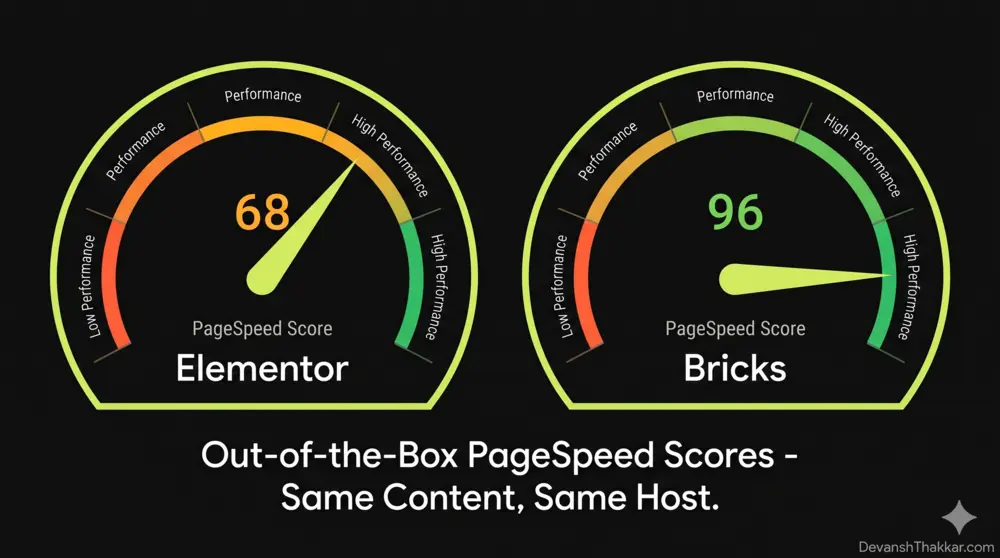
Every visual element produces extra div nesting. Inline styles prevent caching design decisions. PageSpeed scores stuck in 40-65 range despite aggressive optimization plugins.
Generic design used by thousands of sites
ThemeForest top-sellers appear on 100,000+ live sites. Brand differentiation lost in cookie-cutter aesthetics. Customers cannot tell your site from a competitor.
Hard to extend later
Theme structure baked into builder ecosystem. Adding custom functionality requires fighting the template system. Often easier to rebuild than extend.
Recurring license fees forever
Page builder Pro: $59-$399 annually. Premium plugins: $50-$200 each annually. License costs compound across sites and years. Custom themes paid once, owned outright.
Plugin dependency hell
Theme requires 8-12 plugins to function. Premium plugins with annual fees. Plugin conflicts compound. Update anxiety on every release. Site reliability decreases over time.
Everything included in Custom WordPress Theme Development
Discovery + design strategy
Content architecture planning, custom post type identification, design system definition, performance targets, and technical approach (Hello Elementor child vs scratch vs block theme).
Lean PHP HTML CSS JavaScript
Only the code your specific site needs. 300KB-900KB page weight versus 2-5MB for page builder sites. Performance built into the foundation rather than bolted on.
Hello Elementor child or scratch
Two proven approaches based on your team capability and editing preferences. Hello Elementor child for builder-friendly editing, theme from scratch for absolute leanest result.
ACF + custom post types
Custom post types for portfolio, case studies, services, team, testimonials, products. ACF field groups matched to design requirements. Content teams get structured editing.
Performance from code level
WebP image delivery with srcset, font loading strategy that avoids CLS, only-needed-CSS inlined for critical paths, JavaScript scoped to components. 85-98 PageSpeed baseline.
Block editor where useful
Hybrid approach with classic theme template control plus block editor for body content where flexibility helps. Custom blocks registered, block patterns tied to design system.
Mobile-first + WCAG 2.1 AA
Layouts start at 320px and progressively enhance. Semantic HTML, proper heading hierarchy, color contrast 4.5:1 minimum, keyboard navigation, ARIA labels, form labels.
WooCommerce custom integration
Single product templates, archive layouts, cart and checkout, account areas styled to match design system. WooCommerce template hierarchy followed. Updates remain compatible.
Migration from page builder sites
Complete site audit, design pattern recreation in clean code, content migration with custom fields preserved, redirect mapping, performance verification. Sites typically load 3-5x faster.
How a Custom WordPress Theme Development engagement works
-
01
Discovery + design strategy call
Free 30-minute call covering project goals, content architecture, performance targets, technical approach (Hello Elementor child vs scratch vs block theme), and timeline constraints.
30 min -
02
Audit + fixed quote
Existing site audit if migrating, content type identification, integration requirements, design system planning. Written proposal with fixed-quote pricing and timeline.
3-5 business days -
03
Design + content architecture
Mockups for key page templates, mobile and desktop layouts, design system documentation. Custom post types and ACF field groups scaffolded. Sign-off before development.
5-10 business days -
04
Theme development
PHP, HTML, CSS, JavaScript implementation following WordPress coding standards. ACF integration, custom widgets, block editor configuration where applicable. Internal QA on staging.
8-20 business days -
05
Performance + accessibility tuning
WebP image conversion, font loading optimization, CLS prevention, JavaScript scope review. WCAG 2.1 AA accessibility verified with screen readers. Mobile device testing.
2-4 business days -
06
Launch + 30-day monitoring
Coordinated launch with Search Console resubmission. 30 days monitoring of Core Web Vitals, search rankings, conversion metrics. Documentation handover with Loom walkthrough.
Final + 30 days
The Custom WordPress Theme Development stack I work with
I work with the modern WordPress theme development stack rather than relying on premium themes or page builder shortcuts. Most projects use the technologies below in the right combination for your team capability, content workflow, and performance requirements.
Real projects, real outcomes
Recent work delivered for clients worldwide.
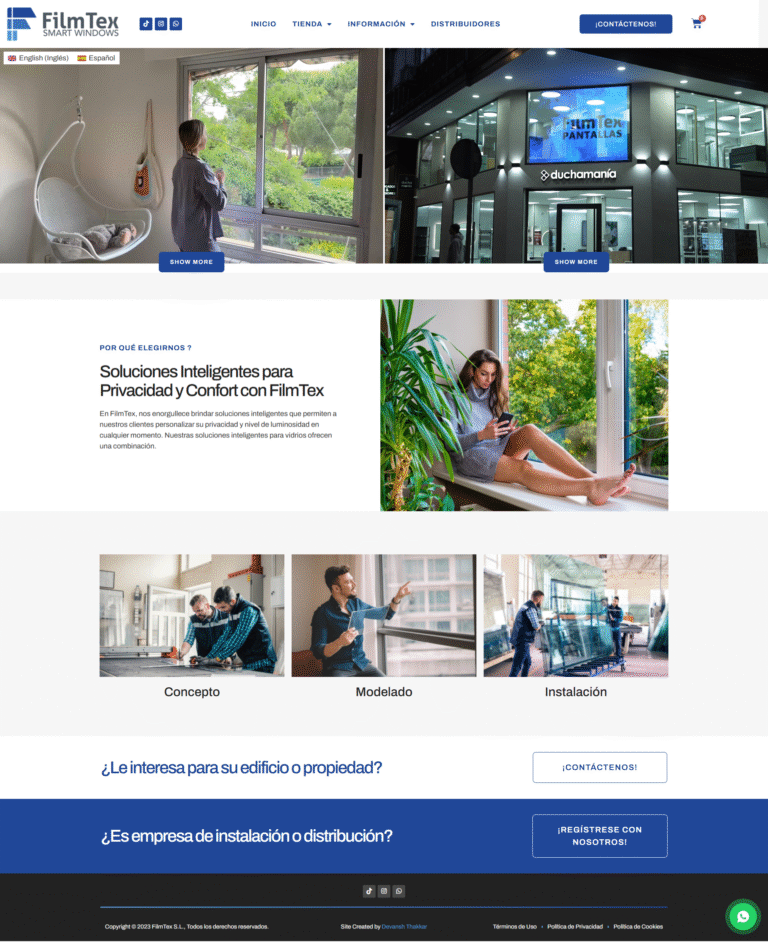
FilmTex Smart Windows
Bilingual e-commerce website with integrated filmsheet measurement and ordering functionality for smart window films.
Read case study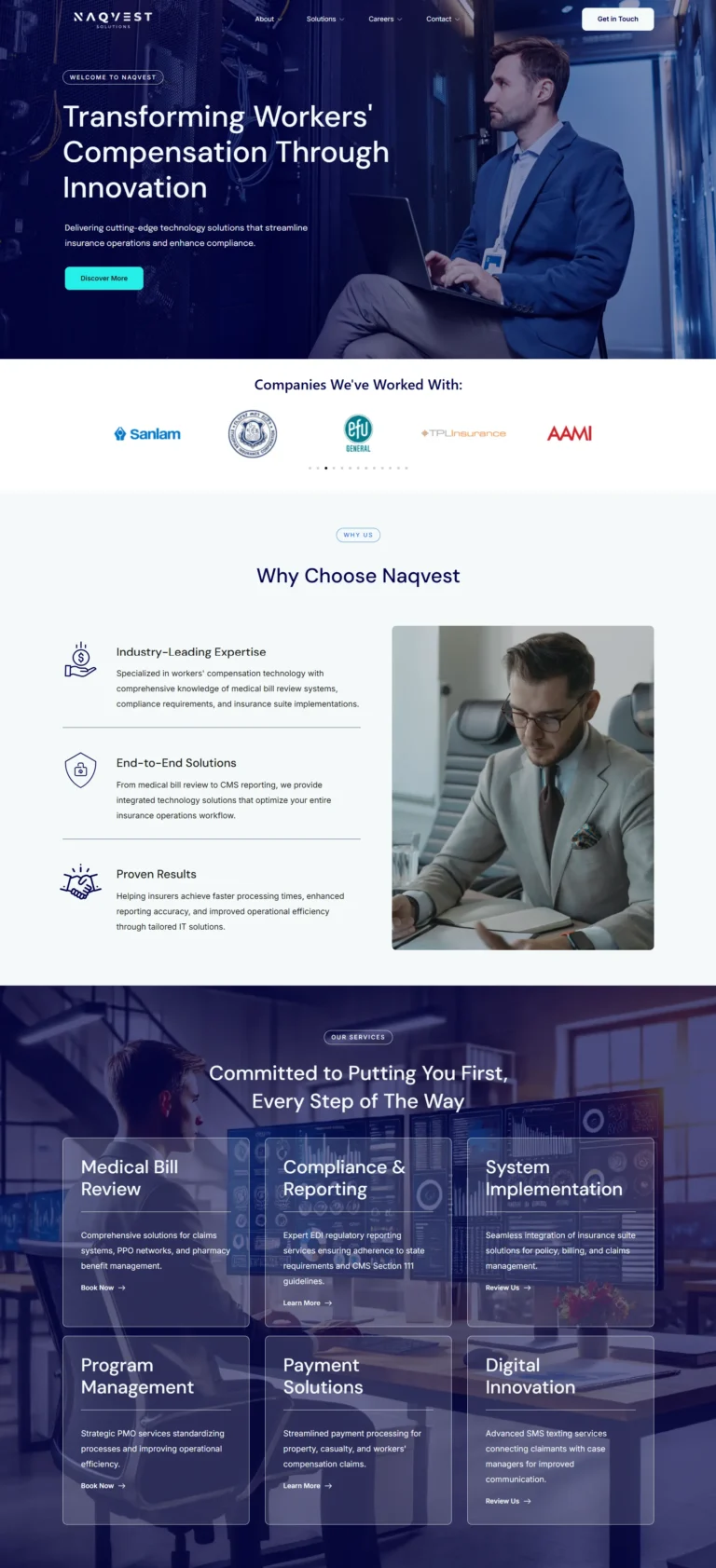
Naqvest Solutions
Technology-driven corporate platform showcasing insurance and workers compensation solutions with B2B lead generation.
Read case study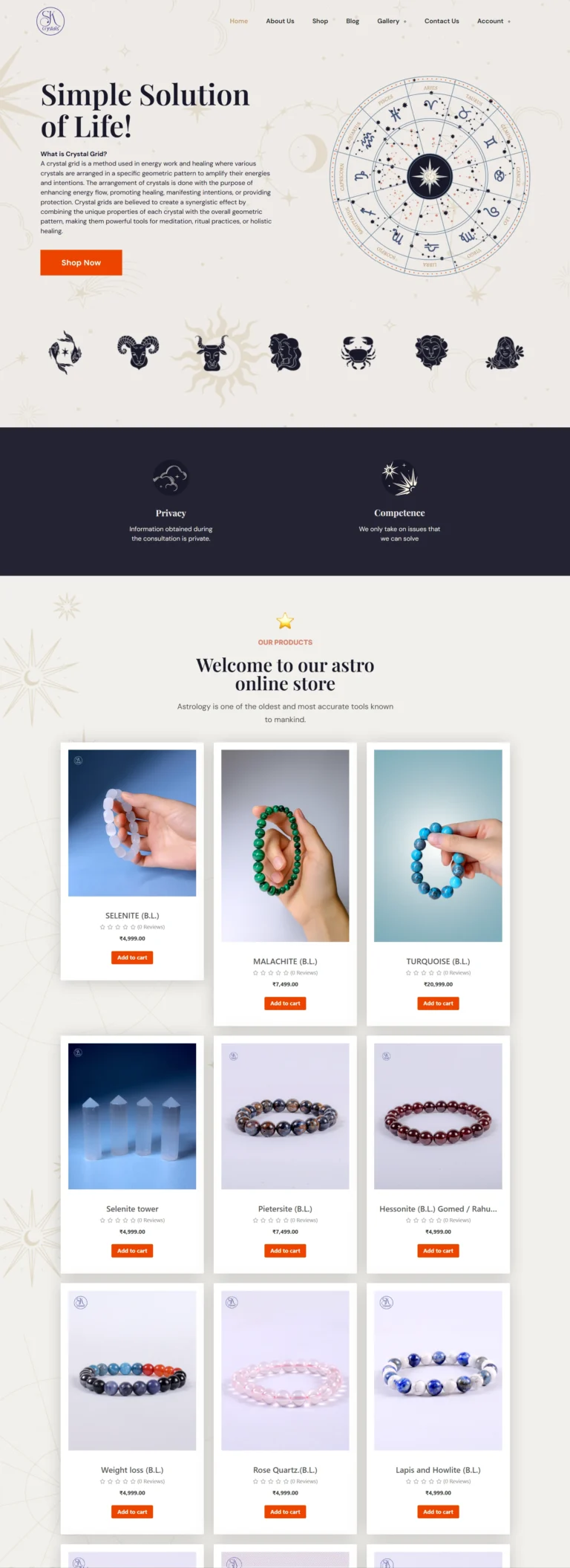
SK Crystals
Astrology and healing crystal e-commerce store with WooCommerce integration and modern spiritual aesthetic.
Read case studyReal numbers from real Custom WordPress Theme Development projects
What clients say
He is really really talented. He really did all the work according to my requirement and that too in one go. I don't need to explain him again and again, I was just explaining my…
Really great to work with. Super responsive and very helpful.
Devansh is just amazing. He is an expert in his field and it shows. His communication was great and he understands WordPress and PHP very well. He worked swiftly with me in this project, did…
Transparent Custom WordPress Theme Development pricing
Three tiers cover most Custom WordPress Theme Development projects. From a lean theme starter for small business sites, to standard custom themes with custom post types and ACF integration, to complex custom themes with custom widgets, integrations, or block theme support.
Lean Theme Starter
Small business or service site
- Lean custom theme, up to 8 templates
- Discovery and design strategy call
- Hello Elementor child or scratch theme
- Mobile-first responsive design
- Basic ACF integration if needed
- Custom post types up to 2
- Performance from code level
- WCAG 2.1 AA accessibility
- Rank Math SEO setup
- Loom handover walkthrough
- 30 days post-launch support
- No recurring license fees
- Delivered in 3-5 weeks
Standard Custom Theme
Most popular: custom theme with ACF + dynamic content
- Everything in Lean Theme tier
- Up to 20 page templates
- Multiple custom post types
- ACF Pro field groups throughout
- Block editor integration
- Custom Gutenberg blocks if needed
- WooCommerce template integration
- Schema markup implementation
- CRM and email platform integrations
- Migration from page builder included
- Performance budget enforcement
- 60 days post-launch support
- Delivered in 5-8 weeks
Complex Custom Theme
Advanced theme with custom widgets and integrations
- Everything in Standard Theme tier
- Unlimited page templates
- Custom widgets and shortcodes
- Advanced ACF integrations
- Custom REST API endpoints if needed
- Block theme with FSE option
- Multi-language setup (WPML or Polylang)
- Headless option (Next.js or Astro)
- Custom checkout flow if e-commerce
- Subscription or membership integration
- 90 days post-launch support
- Quarterly strategy calls (1 year)
- Delivered in 6-10 weeks
All prices in USD, fixed-quote per project, no hidden fees. Custom quotes for very large sites (50+ unique templates), enterprise multi-language platforms, headless WordPress builds with separate frontend, or custom marketplace platforms. ACF Pro license, premium plugin licenses, photography, and copywriting not included unless agreed.
Premium theme or page builder vs custom theme
Everything you need to know about Custom WordPress Theme Development
Custom WordPress Theme Development is the focused work of building a WordPress theme from scratch using clean PHP, HTML, CSS, and JavaScript rather than starting from a premium ThemeForest theme or stacking page builders on top of generic templates. The result is a lean codebase typically weighing 300KB to 900KB per page compared to 2MB to 5MB for page-builder-based sites, PageSpeed Insights scores of 85 to 98 instead of 40 to 65, and a foundation designed to extend cleanly for years rather than accumulate technical debt. This guide explains what real Custom WordPress Theme Development includes in 2026, what it should cost, and how to choose the right developer when your project deserves a foundation built specifically for your brand.
I’m Devansh Thakkar, a Top Rated freelancer on Upwork with 5+ years of experience and 100+ projects delivered. Custom WordPress Theme Development is one of my core specialties, with custom themes shipped for clients across the United States, United Kingdom, Australia, Canada, and beyond. Every theme engagement follows the same standard: write only the code your site actually needs, integrate Advanced Custom Fields for content-driven sites, follow WordPress coding standards for maintainability, optimize Core Web Vitals from the start, and produce code that other developers can extend without fighting against design decisions baked into a third-party builder.
What Custom WordPress Theme Development Actually Includes
Modern Custom WordPress Theme Development covers nine distinct areas. Most freelance theme work focuses on visual implementation and treats the theme as just a styled wrapper around content. Real specialists deliver complete WordPress development infrastructure because a custom theme is the foundation for everything else the site does.
Lean PHP, HTML, CSS, and JavaScript
The core of Custom WordPress Theme Development is writing only the code your specific site needs. No CSS for layout options the design never uses. No JavaScript libraries for animations the page never displays. No PHP for features the site never calls. Real custom themes ship 300KB to 900KB of total assets per page compared to 2MB to 5MB for page-builder-based sites. The performance difference is structural, not optimization-driven, which means it scales as the site grows rather than degrading.
Hello Elementor Child Theme or Theme From Scratch
Two approaches handle most Custom WordPress Theme Development engagements. The Hello Elementor child theme approach gives a proven lean foundation (about 5KB) and lets clients keep using Elementor for content editing while custom code handles styling, headers, footers, and templates. Building a theme from scratch using the WordPress Theme Handbook standards delivers the absolute leanest result without any builder dependency. Real specialists pick the approach based on client editing capability and long-term maintenance preferences rather than dogma.
ACF Integration and Custom Post Types
Most custom themes need content types beyond posts and pages. Real Custom WordPress Theme Development scaffolds custom post types (portfolio, case studies, services, team, testimonials, products) with Advanced Custom Fields field groups that match the design requirements. Content teams get structured editing interfaces tailored to their workflow rather than generic post editors. The site scales as new content gets added without requiring page rebuilds for each new entry.
Performance Built In From Code Level
Custom themes hit Core Web Vitals targets without bolt-on optimization plugins because the code itself is lean. Typical page load metrics include LCP under 2.5 seconds on mid-tier mobile, FID under 100ms, CLS under 0.1, and total page weight under 1MB. Real Custom WordPress Theme Development includes WebP image delivery with proper srcset, font loading strategy that avoids layout shift, only-needed-CSS inline for critical paths, and JavaScript scoped to components that need it. Sites pass Core Web Vitals on launch day. This overlaps with my WordPress Speed Optimization service for sites needing deeper work.
Block Editor Integration Where Useful
Modern Custom WordPress Theme Development integrates the WordPress block editor (Gutenberg) for content areas that benefit from flexible layouts while keeping page templates code-controlled. The hybrid approach gives content teams visual editing capability for body content while preserving design consistency for headers, footers, navigation, and structural elements. Real custom themes register only the blocks the site actually uses, configure block patterns that match the brand design system, and lock down options that would break visual consistency.
Mobile-First Responsive and Accessibility
Real Custom WordPress Theme Development is mobile-first not desktop-first. Layouts start from 320px width and progressively enhance for larger screens rather than retrofitting desktop designs to phones. WCAG 2.1 AA accessibility is built into every template through semantic HTML, proper heading hierarchy, color contrast meeting 4.5:1 minimum, keyboard navigation support, ARIA labels where appropriate, and form labels properly associated. Accessibility built into the foundation costs almost nothing; retrofitting it later costs significantly.
WooCommerce Custom Integration
For e-commerce sites, Custom WordPress Theme Development includes proper WooCommerce template integration. Single product templates, archive layouts, cart and checkout pages, and customer account areas are styled and structured to match the overall design system. Real custom themes follow WooCommerce template hierarchy correctly, override only what needs custom styling, and remain compatible with WooCommerce updates. This pairs with my WooCommerce Development service for stores needing custom functionality beyond visual design.
Block Theme Support for FSE
WordPress block themes with Full Site Editing reached production-ready maturity in 2025-2026. Real Custom WordPress Theme Development can deliver classic PHP themes (still the right choice for most projects in 2026) or block themes with FSE for clients prioritizing the modern WordPress editing approach. Block themes use theme.json for design system configuration, block templates for layouts, and block patterns for reusable sections. The choice depends on team capability, content workflow, and how willing the client is to commit to the FSE direction long-term.
Migration From Page Builder Sites
Many Custom WordPress Theme Development engagements start as migrations from Elementor, Divi, Bricks, or premium ThemeForest themes. The performance gains alone often justify migration for sites where the current page builder is the bottleneck. Real migration work includes complete site audit, design pattern recreation in clean code, content migration with custom fields preserved, redirect mapping where URL structures change, and Core Web Vitals verification on the new build. Sites typically load 3 to 5 times faster after migration with no change in visual design.
How Much Does Custom WordPress Theme Development Cost?
Custom WordPress Theme Development pricing varies based on project complexity. A lean custom theme starter (small business site, 5 to 8 page templates, basic ACF integration) typically costs $1,499 to $2,499 for most freelance projects. Standard custom themes with custom post types, dynamic content, and WooCommerce integration run $2,999 to $4,999. Complex custom themes with multiple custom post types, custom widgets, third-party integrations, or block theme support cost $4,999 to $9,999. Agency pricing for equivalent scope typically runs $5,000 to $15,000+ for small business projects.
Beware of pricing that seems too good. A $300 custom theme from cheap freelance services is almost always a premium ThemeForest theme installed and lightly customized, not actual custom code. The pattern looks fine on launch but leaves you with a heavy theme stuck in someone else’s design decisions, recurring license fees, and inability to extend cleanly. Equally beware of agency quotes at $20,000 to $50,000+ that bundle custom theme work with strategy decks, account managers, and project management overhead delivering similar technical results to good freelance work.
Custom WordPress Theme Development vs Premium Themes or Page Builders
The most common buyer comparison is custom theme work versus premium ThemeForest themes or Elementor and Divi page builders. Each path has tradeoffs that depend on project priorities and long-term plans for the site.
Premium themes ($40 to $100 one-time) are the cheapest path to a professional-looking site. The downside is generic design used by thousands of other sites, structural code bloat that loads CSS and JavaScript for every theme feature whether or not your site uses it, and a ceiling on customization that becomes painful as the business grows. Elementor, Bricks Builder, and Divi page builders give visual editing flexibility with annual or lifetime licensing. The downside is plugin-on-top-of-theme architecture that adds DOM weight and the visible page builder lock-in.
Custom WordPress Theme Development costs more upfront but delivers a lean codebase with no recurring license fees, design unique to your brand, performance scores impossible to match with page builders, and a foundation designed for long-term extension. For sites where the website is a primary revenue driver, the upfront investment pays back through better rankings, higher conversions, and reduced rebuild costs over the site’s lifetime.
The Real Cost of Cheap Custom WordPress Theme Development
Cheap Custom WordPress Theme Development has measurable downsides that compound over months and years. Most clients see the upfront cost difference and underestimate the cascading damage from poor execution.
- Premium theme disguised as custom. Cheap “custom” projects often install a ThemeForest theme and apply light styling. You pay custom theme prices for a generic foundation, ending up with bloat you cannot remove without rebuilding.
- No design system documentation. Brand colors and typography hardcoded inline rather than centralized as variables. Sitewide design changes require touching every template manually.
- Performance ignored at code level. Custom theme work that does not consider Core Web Vitals from the start produces sites scoring 60 to 75 on PageSpeed when proper builds reach 90+. The performance investment gets wasted.
- Accessibility skipped. Semantic HTML, proper heading hierarchy, ARIA, keyboard navigation all skipped to save time. ADA lawsuit risk grows as accessibility expectations tighten through 2026.
- No documentation, undocumented handover. Theme files lack comments, custom functions are uncommented, design decisions are undocumented. Next developer spends weeks understanding the build before any change is safe.
- Plugin dependency hell. Theme requires 8 to 12 plugins to function, including premium ones with annual fees. Plugin conflicts compound over time, increasing support costs and reducing reliability.
The real cost of cheap Custom WordPress Theme Development is rarely the build itself. It is the wasted opportunity, the recurring optimization costs trying to compensate for a poor foundation, and inevitable rebuild costs when the next developer has to start over.
Why Custom WordPress Theme Development Wins on Performance
The performance difference between custom themes and page-builder-based sites is structural, not just optimization-driven. Custom themes typically ship 300KB to 900KB of total assets per page. Equivalent page builder sites ship 2MB to 5MB. The 4-5x difference comes from how the code gets generated.
Page builders create wrapper-heavy DOM structures where every visual element produces extra div nesting. They ship CSS and JavaScript for every layout option the builder supports, including ones your specific site never uses. They generate inline styles that prevent browser caching of design decisions. Premium themes from ThemeForest similarly ship code for every demo configuration, with site owners loading kitchen-sink stylesheets to use 5 percent of the theme’s features.
Custom themes ship only the code your site actually needs. CSS scoped to layouts you actually use. JavaScript loaded only on pages that need it. PHP queries optimized for your specific content structure. The result is sites that score 85 to 98 on PageSpeed Insights as a baseline, before any optimization plugins, CDN configuration, or aggressive caching. This translates to better Quality Score on Google Ads, faster perceived performance, lower bounce rates, and higher conversion rates.
Who Needs Custom WordPress Theme Development?
Not every WordPress project benefits from custom theme work. Small static brochure sites with minimal content can succeed on a quality premium theme. Custom WordPress Theme Development becomes worth the specialist investment when any of the following apply.
Your website is a primary lead source where Quality Score, conversion rate, and search rankings directly affect business revenue. You compete in an SEO-driven market where Core Web Vitals affect your competitive position against rivals. You have a strong brand identity that deserves design unique to your business rather than a template thousands of other sites use.
You have a content team that needs structured editing interfaces tailored to their workflow rather than generic post editors. You are migrating from a page builder site where performance has become the bottleneck on growth. You are planning to scale and want a foundation that supports future enhancements without requiring rebuilds. You want to own your codebase outright with no recurring license fees that compound over years.
How to Choose a Custom Theme Specialist
The freelance market for custom theme development is smaller than the page builder market but more uneven in quality. Most providers list theme development as a skill, but few deliver lean code that competes on performance with mature page builder approaches. Look for these signals when hiring a real specialist.
Real focus on lean code, not just visual implementation. A genuine specialist names their approach (Hello Elementor child, theme from scratch, block theme), explains why they chose it, and shows live examples with actual page weights and PageSpeed scores. Performance benchmarks they can demonstrate. Ask for live URLs of custom themes they built and check PageSpeed Insights yourself. Anything below 85 on mobile suggests the developer is not actually delivering the performance custom themes should provide.
WordPress coding standards adherence visible in code samples. The WordPress development handbook defines specific conventions that separate quality theme work from improvised PHP. Verified client reviews on platforms like Upwork mentioning specific custom theme projects with performance metrics carry weight. Direct work without agency middlemen, since custom theme work involves rapid iteration and code review that does not delegate well across handoffs.
Custom WordPress Theme Development Trends in 2026
The custom theme landscape evolved significantly in 2024-2025, and the trends shaping Custom WordPress Theme Development in 2026 reflect both platform evolution and competitive pressure from page builders that improved their performance baselines.
Block themes with Full Site Editing reached production maturity through 2025, with serious agencies adopting them for new projects where the editing model fits team workflow. Classic PHP themes remain the right choice for most projects in 2026, particularly for sites prioritizing maximum performance control or working with established ACF-based content workflows. Hybrid approaches gained adoption: classic themes with selective block editor use for body content combine the performance of custom themes with the flexibility of block-based editing.
Tailwind CSS adoption grew significantly in custom theme work, replacing traditional CSS frameworks with utility-class approaches that produce smaller stylesheets. Vite and modern build tools became standard for theme asset compilation, replacing legacy webpack and Gulp workflows. Headless WordPress with React, Next.js, or Astro frontends gained ground for high-traffic sites willing to trade editing simplicity for maximum performance, though most projects still benefit from traditional WordPress theme architecture rather than full headless complexity.
The Custom WordPress Theme Development Process and Timeline
Real Custom WordPress Theme Development follows a methodical process designed to maximize what custom code can deliver. Skipping phases creates the underperforming custom themes that give the approach a mixed reputation when compared to mature page builder workflows.
Discovery and design strategy take 3 to 5 business days for most projects. The phase covers content architecture planning, custom post type identification, design system definition, performance targets, and technical approach decisions (Hello Elementor child vs theme from scratch vs block theme). Design and prototyping run 5 to 10 business days based on customization complexity and revision rounds, including mobile and desktop layouts for key page templates plus design system documentation.
Theme development with PHP, HTML, CSS, and JavaScript takes 8 to 20 business days depending on page count, dynamic content complexity, and custom functionality. WooCommerce setup if applicable adds 3 to 7 business days. Performance tuning, accessibility verification, and Core Web Vitals validation take 2 to 4 business days. Pre-launch testing includes mobile device testing across iOS and Android, real form submission testing, dynamic content verification, accessibility testing with screen readers, and cross-browser checks. Total timeline from kickoff to launch ranges from 3 weeks for lean theme starters to 10 weeks for complex custom themes with extensive integrations.
Get a Custom WordPress Theme Development Quote Today
If your next WordPress project deserves a foundation built specifically for your brand rather than a generic theme styled to look custom, the next step is a free 30-minute discovery call. We’ll review your project requirements, design preferences, performance targets, content team capability, and timeline constraints. Within 48 hours of that call, you’ll receive a written proposal with fixed-quote pricing, phase breakdown, and projected timeline.
You can also browse my portfolio of recent work to see real Custom WordPress Theme Development examples across industries, or read what past clients have said about working with me on custom theme projects.
Custom WordPress Theme Development questions, answered
How much does Custom WordPress Theme Development cost?
How long does Custom WordPress Theme Development take?
Custom theme vs page builder, which is better?
Will my custom theme be future-proof?
Can you migrate my page builder site to a custom theme?
Do I need custom post types for my project?
What about block themes and Full Site Editing?
Will my custom theme work with WooCommerce?
Can my team still edit content without a developer?
What happens if my developer disappears?
More to dig into
-
Hire Best WordPress Developer: Avoid 9 Costly Mistakes
A working developer's method for vetting WordPress developers: a 5-minute source-code test, the 9 mistakes that cost the...
Read article -
WordPress Block Theme vs Classic Theme: The Complete 2026 Guide
🕑 12 min read Updated: June 2026 Table of Contents The Quick Verdict The Real Difference Where a...
Read article -
Do I Need a Custom WordPress Theme? The Complete 2026 Answer
🕑 12 min read Updated: June 2026 Table of Contents The Short Answer What Custom Actually Means When...
Read article
-
Custom WordPress Plugin Development
Custom WordPress Plugin Development by a Top Rated freelancer specializing in WPCS-compliant code, security hardening, REST API endpoints,...
View service -
Divi Website Development
Divi Website Development by a Top Rated freelancer specializing in Divi 5 native architecture. Variable Manager design tokens,...
View service -
Bricks Builder Website Development
Bricks Builder Website Development by a Top Rated freelancer specializing in performance-first WordPress builds. Class-first design with ACSS...
View service
Ready to start?
Book a free 30-minute call. No pitch, no pressure. We discuss your project and decide if we're a fit.