
Elementor Website Development That Loads Fast and Stays Editable
Elementor Website Development by a Top Rated freelancer specializing in performance-tuned Elementor Pro builds. Theme Builder for full-site editing, Container layouts over legacy nesting, ACF dynamic content, and Core Web Vitals passing on day one.
- 90+ PageSpeed scores standard with proper builds
- Theme Builder mastery for full-site editing
- Container layouts, never legacy section-column
- ACF dynamic content + custom widgets

What is Elementor Website Development?
Elementor Website Development is the focused work of designing and building WordPress sites using Elementor Pro as the primary page builder, with Theme Builder for site-wide templates, Container layouts for clean code, ACF integration for dynamic content, and performance optimization that prevents the slow loads Elementor sites are infamous for. Real Elementor Website Development covers Theme Builder mastery, Container layouts over legacy nesting, global design system setup, performance optimization, ACF integration, WooCommerce Builder, custom widget development, native forms and popups, and migration from Divi or Avada or WPBakery. Sites built this way consistently score 90+ on PageSpeed Insights.
What goes wrong with cheap Elementor builds
Most underperforming Elementor sites share the same six issues. Generic Elementor freelancers drag and drop widgets without using the Pro features that make Elementor worth choosing in the first place.
Slow page loads from default builds
No asset cleanup, no image optimization, no font loading strategy. Site scores 50-70 on PageSpeed Insights when proper builds reach 90+. Quality Score and conversions both suffer.
Legacy section-column nesting
Built with deprecated Section-Column structure instead of modern Container layouts. 30-50% more DOM nodes for the same visual output. Editor gets slower as content grows.
Theme Builder skipped entirely
Headers, footers, archives still come from the active theme. Every page hand-built individually. Global changes require touching dozens of templates one by one.
Heavy plugin stack
Elementor Pro plus 5-8 add-on plugins (Essential Addons, ElementsKit, JetEngine, Crocoblock) for functionality that custom widgets would handle cleaner. Plugin conflicts compound over time.
Custom Fields data unused
ACF fields exist in the database but never display through Dynamic Tags. Pages remain hand-built when templated approach with dynamic data would scale.
Generic widget styling everywhere
No global Site Settings configuration, no design system. Every element styled individually with inline CSS. Design drifts within months as different developers add inconsistent values.
Everything included in Elementor Website Development
Theme Builder full-site editing
Headers, footers, archive layouts, single post templates, 404 pages, WooCommerce templates, account areas. Conditional logic for one template across multiple post types.
Global Site Settings + design system
Brand colors, typography scales, button styles, form styles, spacing as design tokens applied site-wide. One change updates the entire site instead of dozens of templates.
Container layouts, never legacy
Modern Container element with Flexbox and CSS Grid replacing Section-Column-Widget. 30-50% less DOM nesting, smaller HTML output, faster editor performance.
Performance optimization built in
Asset cleanup, WebP image conversion, lazy loading, font loading strategy, deferred non-critical scripts. Sites consistently hit 90+ on PageSpeed Insights at launch.
ACF + Dynamic Tags integration
Custom field values, post meta, user meta, taxonomy data pulled into any element. Templates that handle different content automatically rather than hand-built pages.
WooCommerce Builder for stores
Single product templates, archive layouts, cart and checkout pages, account areas. Visual control over every store page without bolting on commercial extensions.
Custom widget development
PHP widgets for client-specific functionality instead of stacking three commercial add-on plugins. Lean stack that other developers can maintain without learning every premium plugin.
Forms + popups + marketing
Native Form Builder with multi-step and conditional logic. Popup Builder for welcome, exit intent, scroll, time-based displays. CRM and email platform integrations.
Migration from Divi or Avada
Complete site audit, design pattern recreation in Container-based Elementor, content migration with custom fields preserved, redirect mapping, performance verification.
How an Elementor Website Development engagement works
-
01
Discovery + strategy call
Free 30-minute call covering project goals, content architecture, performance targets, Elementor Pro license status, and timeline constraints.
30 min -
02
Audit + fixed quote
Existing site audit if migrating, content type identification, integration requirements, Theme Builder template planning. Written proposal with fixed-quote pricing.
2-3 business days -
03
Design + Site Settings + Theme Builder
Mockups for key page templates, Site Settings configuration with brand tokens, Theme Builder header and footer design, custom post types and ACF fields scaffolded.
4-8 business days -
04
Container-based Elementor build
Page templates with Containers, Theme Builder template logic, Dynamic Tags integration, custom widgets where needed. Internal QA on staging.
5-12 business days -
05
Performance + accessibility tuning
Asset cleanup, WebP image conversion, font loading optimization, lazy loading. WCAG 2.1 AA accessibility verified. Mobile device testing.
2-3 business days -
06
Launch + 30-day monitoring
Coordinated launch with Search Console resubmission. 30 days monitoring of Core Web Vitals, search rankings, and conversion metrics. Loom handover walkthrough.
Final + 30 days
The Elementor Website Development stack I work with
I work with the full Elementor Pro ecosystem rather than treating the page builder in isolation. Most projects use the technologies below in the right combination for your design system preference, content architecture, and performance requirements.
Real projects, real outcomes
Recent work delivered for clients worldwide.

FilmTex Smart Windows
Bilingual e-commerce website with integrated filmsheet measurement and ordering functionality for smart window films.
Read case study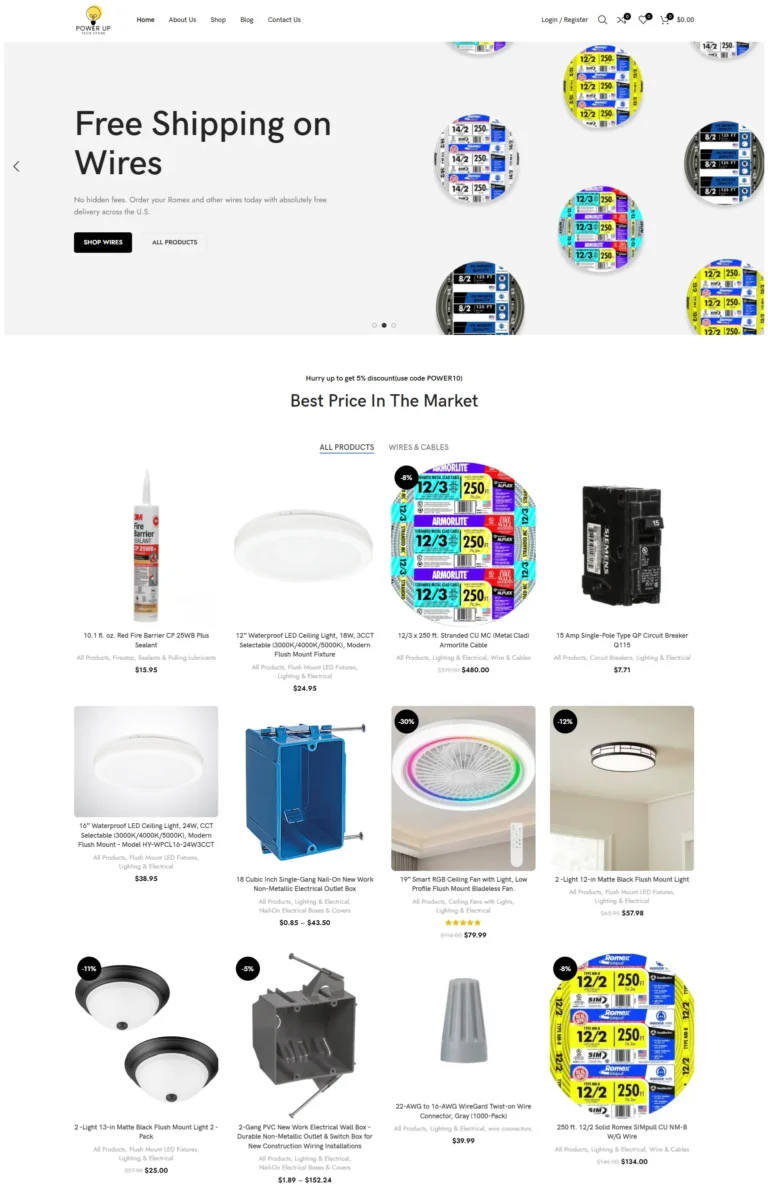
PowerUp Tech Store
High-performance WooCommerce store for electrical products with dynamic catalogs, advanced filters, and optimized checkout.
Read case study
ICTC
Professional corporate website showcasing financial services, investor relations resources, and thought-leadership content for enterprise clients.
Read case studyReal numbers from real Elementor Website Development projects
What clients say
Really great to work with. Super responsive and very helpful.
Excellent work! Very trustworthy. Thank you!
Always supportive and ready to work. I recommend him a lot.
Transparent Elementor Website Development pricing
Three tiers cover most Elementor Website Development projects. From a small business site, to multi-page custom builds with dynamic content and custom widgets, to ongoing specialist retainers for agencies that need consistent Elementor expertise across multiple client projects.
Single Elementor Site
Small business or service site
- Single Elementor site, up to 8 templates
- Discovery and strategy call
- Site Settings + design system
- Theme Builder header and footer
- Container-based layouts (no legacy)
- Mobile-first responsive design
- Performance optimization included
- WCAG 2.1 AA accessibility
- Basic ACF integration if needed
- Rank Math SEO setup
- 30 days post-launch support
- Loom handover walkthrough
- Delivered in 2-4 weeks
Custom Elementor Build
Most popular: full custom site with dynamic content
- Everything in Single Site tier
- Up to 20 page templates
- Multiple custom post types with ACF
- Dynamic Tags throughout templates
- Custom widget development with PHP
- WooCommerce Builder if applicable
- Form Builder + Popup Builder setup
- CRM and email platform integrations
- Migration from Divi or Avada included
- Schema markup implementation
- Performance budget enforcement
- 60 days post-launch support
- Delivered in 4-8 weeks
Elementor Specialist Retainer
For agencies with ongoing Elementor work
- Up to 6 hours of Elementor work per week
- New page builds and template work
- Performance optimization on existing sites
- Elementor Pro updates and compatibility
- Theme Builder template iterations
- Custom widget refinements
- WooCommerce template tuning
- Bug fixes within 24 hours
- Quarterly design system reviews
- Direct Slack or email access
- Cancel anytime
- Best for agencies with Elementor portfolios
All prices in USD, fixed-quote per project for one-time work, no hidden fees. Custom quotes for very large sites (50+ unique templates), complex multi-language Elementor builds, custom Elementor widget plugin development, or marketplace platforms. Elementor Pro license, premium add-on licenses, photography, and copywriting not included unless agreed.
Generic Elementor freelancer vs Elementor specialist
Everything you need to know about Elementor Website Development
Elementor Website Development is the focused work of designing and building WordPress sites using Elementor Pro as the primary page builder, with Theme Builder for site-wide templates, Container-based layouts for clean code, ACF for dynamic content, and performance optimization that prevents the slow loads Elementor sites are infamous for. Done right, Elementor Website Development delivers sites that load fast, score 90+ on PageSpeed Insights, and stay editable for content teams. Done badly, you get a heavy site with legacy section-column nesting, eight overlapping add-on plugins, and PageSpeed scores in the 40s. This guide explains what real Elementor Website Development includes in 2026, what it should cost, and how to choose the right specialist.
I’m Devansh Thakkar, a Top Rated freelancer on Upwork with 5+ years of experience and 100+ projects delivered. Elementor Website Development is one of my core specialties, with high-performance Elementor sites shipped for clients across the United States, United Kingdom, Australia, Canada, and beyond. Every Elementor engagement follows the same standard: use Container layouts instead of legacy section-column nesting, leverage Theme Builder for full-site editing, integrate Advanced Custom Fields for content-driven sites, optimize Core Web Vitals from the start, and keep the plugin stack lean enough that the site stays maintainable for years.
What Elementor Website Development Actually Includes
Modern Elementor Website Development covers nine distinct areas. Most generic Elementor work touches three or four of them and treats Elementor as just a drag-drop tool. Real specialists use the full Pro feature set deliberately because Elementor rewards developers who understand its architecture rather than fighting against it.
Theme Builder for Full-Site Editing
Elementor Pro Theme Builder lets you design every template type visually: headers, footers, archive layouts, single post templates, 404 pages, search results, WooCommerce product templates, and user account areas. Conditional logic lets one template adapt across post types, taxonomies, or user roles. Real Elementor Website Development uses Theme Builder as the foundation rather than building each page individually. Most generic Elementor work skips Theme Builder entirely, producing sites where every page is hand-built and global changes require touching dozens of templates.
Container Layouts Over Legacy Sections
Elementor’s Container element replaces the legacy Section-Column-Widget structure with modern Flexbox and CSS Grid layouts. Containers produce significantly less wrapper div nesting, smaller HTML output, and faster rendering. Real Elementor Website Development uses Containers exclusively for new builds. Sites built on legacy Section-Column structures generate 30 to 50 percent more DOM nodes for the same visual output, which directly affects load time, Core Web Vitals, and editor performance over time.
Global Design System and Site Settings
Elementor Pro Global Site Settings let you define brand colors, typography scales, button styles, form styles, and spacing as design tokens applied site-wide. Change a color in Site Settings and every element using that color updates instantly. Real Elementor Website Development establishes the global design system before any page work begins. Most generic Elementor sites style every element individually, leading to design drift within months as different developers add inconsistent values.
Performance Optimization Built In
Elementor’s performance reputation is its biggest weakness. Default Elementor builds typically score 70 to 85 on PageSpeed Insights without aggressive optimization. Real Elementor Website Development includes asset cleanup (removing unused widget CSS), optimized image delivery with WebP conversion, lazy loading configuration, font loading strategy, and selective deferring of non-critical scripts. Sites built this way consistently hit 90+ on PageSpeed Insights and pass Core Web Vitals on launch day. This overlaps with my WordPress Speed Optimization service for sites needing deeper work.

ACF Integration for Dynamic Content
Elementor integrates natively with Advanced Custom Fields through Dynamic Tags. Custom field values, post meta, user meta, and taxonomy data can be pulled into any element without writing PHP. Real Elementor Website Development uses ACF extensively for content-driven sites where templates need to handle different content automatically. Sites with portfolios, case studies, team pages, services, or product catalogs become editable templates instead of hand-built individual pages.
WooCommerce Builder for Custom Stores
Elementor Pro WooCommerce Builder gives complete control over single product templates, archive layouts, cart and checkout pages, and account areas. Combined with Elementor’s flexible widgets, you can design stores that feel custom-coded but remain editable. Real Elementor Website Development for e-commerce uses this capability to build conversion-optimized stores. This pairs with my WooCommerce Development service for stores requiring custom functionality beyond visual design.
Custom Widget Development With PHP
Elementor’s widget API lets developers extend the builder with custom widgets that integrate cleanly with the visual editor. When the right widget does not exist in the ecosystem, custom widgets are often a better choice than stacking three commercial add-on plugins. Real Elementor Website Development uses custom widgets for client-specific functionality rather than bloating the plugin stack. The result is a leaner site that other developers can maintain without learning every premium add-on plugin.
Forms, Popups, and Marketing Tools
Elementor Pro includes native form, popup, and marketing widget features that integrate with most CRMs and email platforms. Form Builder supports multi-step forms, conditional logic, and custom integrations. Popup Builder handles welcome popups, exit intent, scroll triggers, and time-based displays. Real Elementor Website Development uses these native features rather than installing additional form and popup plugins, keeping the plugin stack lean while delivering the functionality marketers need.
Migration From Divi, Avada, or WPBakery
Many Elementor Website Development projects start as migrations from Divi, Avada, WPBakery, or older themes. Real migration work includes complete site audit, design pattern recreation in Container-based Elementor, content migration with custom fields preserved, redirect mapping where URLs change, and Core Web Vitals verification on the new build. Migrations from heavy themes like Avada often produce sites that load 2 to 3 times faster with no change in visual design. This overlaps with my WordPress Migration Services for sites combining platform changes with the Elementor rebuild.
How Much Does Elementor Website Development Cost?
Elementor Website Development pricing varies based on project scope. A small business site (5 to 8 page templates) typically costs $499 to $999 for most freelance projects. Multi-page custom builds (15 to 25 templates) with custom widgets, ACF dynamic content, and WooCommerce integration run $999 to $4,999. Elementor specialist retainers for agencies and ongoing client work start at $799 monthly. Senior North American Elementor developers charge $80 to $150+ per hour, while quality offshore freelancers run $35 to $90 per hour for comparable technical output.
Beware of pricing that seems too good. A $50 to $100 Elementor “build” from cheap freelance services usually means a generic theme installed with stock images, no Theme Builder use, no Container layouts, and a heavy plugin stack that creates technical debt. The pattern looks fine on launch but breaks rankings, breaks editor performance within months, and produces unmaintainable sites that need complete rebuilds within 18 months. Equally beware of agency quotes at $10,000 to $25,000+ that bundle Elementor work with strategy decks, account managers, and project overhead that delivers similar technical results to good freelance work.
Elementor Pro Features That Power Real Elementor Website Development
The free version of Elementor handles basic page building. Real Elementor Website Development requires Elementor Pro features that unlock the platform’s full potential. Theme Builder is the most important Pro feature because it transforms Elementor from a page builder into a complete WordPress design system. Without Theme Builder, headers, footers, and archives still come from the active theme, limiting design control significantly.
Dynamic Tags pull custom field data, post meta, and taxonomy data into any element. Form Builder creates multi-step forms with conditional logic and CRM integrations. Popup Builder handles all conversion popup scenarios. WooCommerce Builder gives complete e-commerce template control. Global Site Settings provide design system tokens. Custom CSS at every element level lets developers extend visual styling without touching theme files. Most quality Elementor Website Development engagements assume Pro is in use because the free version simply does not support the workflow that produces professional results.
The Real Cost of Cheap Elementor Website Development
Cheap Elementor Website Development has measurable downsides that compound over months and years. Most clients see the upfront cost difference and underestimate the cascading damage from poor execution.
- Slow page loads from default Elementor builds without optimization. Sites typically score 50 to 70 on PageSpeed Insights when proper builds reach 90+. The difference directly affects Quality Score on Google Ads, conversion rate, and search rankings.
- Legacy section-column nesting instead of modern Container layouts. Generates 30 to 50 percent more DOM nodes for the same visual output, slowing both visitor load times and editor performance over time.
- No Theme Builder use, every page hand-built individually. Global changes require touching dozens of templates instead of one. Sites become impossible to update consistently as content teams change.
- Heavy plugin stack with Elementor Pro plus 5 to 8 add-on plugins for functionality that custom widgets would handle cleaner. Plugin conflicts grow exponentially with stack size, increasing support costs and reducing reliability.
- Custom Fields data unused in the database while pages remain hand-built. Sites have the appearance of templates but the maintainability of static pages, defeating much of why ACF integration exists.
- Generic widget styling instead of custom CSS at element level. Visual output looks acceptable but produces inconsistent design tokens across pages, leading to design drift within months.
The real cost of cheap Elementor Website Development is rarely the build itself. It is the wasted Pro license value, slow load times that hurt rankings, and inevitable rebuild costs when the next developer has to start over because the original work did not leverage what makes Elementor Pro worth choosing.
Elementor Website Development vs Bricks or Divi
Buyers often compare Elementor against Bricks Builder or Divi as the page builder choice. Each platform has tradeoffs that determine the right fit for specific projects and team capabilities.
Elementor offers the largest WordPress page builder community, the most third-party widgets and add-ons, the most tutorials and documentation, and the most familiar interface for content teams who already know it. The downside is annual recurring licensing for Elementor Pro, code output that requires aggressive optimization to compete with Bricks performance, and a plugin-on-top-of-theme architecture that adds DOM weight. Bricks Builder offers cleaner code output and a one-time lifetime license but a smaller community and steeper learning curve. Divi offers strong design flexibility and a lifetime license option but produces heavier code output than either Bricks or modern Elementor with Containers.
For sites where editing flexibility for non-developers matters most, Elementor often wins because non-technical content teams already know it. For sites where raw performance matters most, Bricks typically wins. For agencies running 50+ client sites, the licensing math may favor Bricks lifetime over Elementor Pro renewals. The right choice depends on team capability, ongoing budget, and which tradeoffs matter most for your specific project.
Who Needs Elementor Website Development?
Not every WordPress project benefits from a specialist Elementor approach. Small static sites with minimal content can succeed on simpler stacks. Elementor Website Development becomes worth specialist investment when any of the following apply.
You already chose Elementor and need someone to build it properly with Theme Builder, Containers, and performance optimization. You are migrating from Divi, Avada, WPBakery, or older heavy themes specifically because performance and editing flexibility have become unacceptable. You have a content team that needs visual editing capability and Elementor is the most familiar option for non-technical staff.
You are building a content-heavy site with custom post types, ACF fields, and dynamic content that needs Elementor’s Dynamic Tags integration. You are running paid traffic and need Elementor sites that pass Core Web Vitals despite the platform’s performance reputation. You are building a WooCommerce store and want Elementor Pro WooCommerce Builder for visual product page control. You want a site that other Elementor-familiar developers can pick up later, not a site locked to one specific developer’s workflow choices.

How to Choose an Elementor Website Development Specialist
The freelance market for Elementor Website Development is the largest in WordPress page builders, which means it has both the most talent and the most generic providers. Most freelancers list Elementor as a skill but few have deep expertise in Theme Builder, Container layouts, performance optimization, and custom widget development. Look for these signals when hiring a real specialist.
Real Theme Builder fluency, not just page-by-page building. A genuine specialist names specific Theme Builder template types they have built, explains conditional logic patterns, and shows live examples of full-site editing. Verified client reviews on platforms like Upwork that mention specific Elementor projects with performance metrics carry weight because the platform is competitive enough that fake claims get exposed.
Performance benchmarks they can demonstrate. Ask for live URLs of Elementor sites they built and check PageSpeed Insights yourself. Anything below 80 on mobile suggests the developer is using legacy Section-Column structures or skipping optimization. Knowledge of Container layouts as the default rather than legacy structures. Direct work without agency middlemen, since Elementor Website Development involves rapid iteration with the visual editor that does not delegate well across handoffs.
Elementor Website Development Trends in 2026
The Elementor ecosystem evolved significantly in 2024-2025, and the trends shaping Elementor Website Development in 2026 reflect both platform maturity and competitive pressure from Bricks Builder.
Container layouts became the standard for new builds, with most serious Elementor specialists treating legacy Section-Column structures as deprecated. Theme Builder adoption grew significantly as agencies recognized the maintainability advantage over hand-built pages. Performance optimization moved from optional to non-negotiable as Quality Score on Google Ads and Core Web Vitals became measurable revenue factors. Elementor responded by improving asset loading, adding the Performance Lab module, and deprecating heavy legacy code paths.
Elementor One subscription bundle launched in late 2025, packaging Editor Pro with AI generation, image optimization, email deliverability, and accessibility tools into one subscription. Migrations from Divi, Avada, and WPBakery to Elementor accelerated, particularly for sites where editing flexibility for content teams became more important than the source theme’s design heritage. AI-driven layout generation features started appearing in Elementor and competitors, accelerating the strategy and wireframe phases of new projects without replacing the developer skill that quality builds still require.
The Elementor Website Development Process and Timeline
Real Elementor Website Development follows a methodical process designed to maximize what Elementor Pro can deliver rather than treating it as a generic page builder. Skipping phases creates the underperforming Elementor sites that give the platform a mixed reputation.
Discovery and strategy take 2 to 3 business days for most projects. The phase covers existing site audit if migrating, content architecture planning, custom post type identification, Theme Builder template planning, and integration requirements. Design and global styles run 4 to 8 business days, including Site Settings configuration with brand tokens, Theme Builder header and footer design, and key page template mockups.
Elementor development with Container layouts takes 5 to 12 business days depending on page count, dynamic content complexity, and custom widget requirements. WooCommerce setup if applicable adds 3 to 7 business days. Performance tuning, accessibility verification, and Core Web Vitals validation take 2 to 3 business days. Pre-launch testing includes mobile device testing, real form submission testing, dynamic data verification across templates, and cross-browser checks. Total timeline from kickoff to launch ranges from 14 days for simple business sites to 8 weeks for complex multi-template builds with custom integrations.
Get an Elementor Website Development Quote Today
If your next WordPress project deserves a properly built Elementor site rather than a generic drag-drop result, the next step is a free 30-minute discovery call. We’ll review your project requirements, design preferences, performance targets, and timeline constraints. Within 48 hours of that call, you’ll receive a written proposal with fixed-quote pricing, phase breakdown, and projected timeline.
You can also browse my portfolio of recent work to see real Elementor Website Development examples across industries, or read what past clients have said about working with me on Elementor projects.
Elementor Website Development questions, answered
How much does Elementor Website Development cost?
How long does an Elementor build take?
Will my Elementor site be slow?
Should I use Elementor Pro or stick with the free version?
What are Elementor Containers and why do they matter?
Can you migrate my Divi or Avada site to Elementor?
What is Elementor Theme Builder?
Does Elementor work well with WooCommerce?
Will my Elementor site be maintainable by other developers?
Do I need to buy Elementor Pro to work with you?
More to dig into
-
Custom WordPress Theme vs Page Builder: The Complete 2026 Guide
🕑 13 min read Updated: June 2026 Table of Contents The Quick Verdict The Real Difference Performance and...
Read article -
Convert Figma to Elementor: 3 Easy, Proven Methods
🕑 11 min read Updated: June 2026 Table of Contents Can You Convert Figma to Elementor? Method 1:...
Read article -
Elementor to Custom Theme Migration: 7 Safe, Proven Steps
🕑 11 min read Updated: June 2026 Table of Contents What Is an Elementor to Custom Theme Migration?...
Read article
-
WordPress Development Services
Custom WordPress Development by a Top Rated freelancer with 5+ years and 100+ projects delivered. Clean code, real...
View service -
WordPress Bug Fixing Services
Site broken? WordPress Bug Fixing by a Top Rated freelancer. White screen, Elementor errors, WooCommerce checkout failures, plugin...
View service -
Figma to WordPress Conversion
Figma to WordPress Conversion by a Top Rated freelancer specializing in manual implementation rather than AI plugin auto-converters....
View service
Ready to start?
Book a free 30-minute call. No pitch, no pressure. We discuss your project and decide if we're a fit.