
- AI website builders win on speed and simplicity, a live site in minutes with little skill.
- Elementor wins on control, design quality, SEO depth, ownership, and long-term scalability.
- The biggest hidden difference is lock-in. Hosted AI builders rent you a walled garden, WordPress you own.
- It is not strictly either/or. Some AI builders run on Elementor, and Elementor has its own AI tools.
- The Elementor vs AI website builder choice comes down to speed and simplicity versus control and ownership.
The Elementor vs AI website builder debate has one honest answer: they solve different problems. AI website builders win on speed for simple sites, while Elementor wins on control, quality, and long-term ownership. Which is right depends entirely on your project and goals. Here is the full, honest comparison.
Need a simple site live fast with no skills? An AI website builder is hard to beat. Building something custom, SEO-strong, and built to grow without being locked in? Elementor on WordPress wins. The best results often combine both: generate fast, then refine with control.
Across 250+ WordPress projects, clients increasingly ask whether they should skip a proper build and just let an AI tool generate their site. It is a fair question, the AI builders are genuinely impressive now. But impressive at launch and right for your business are not the same thing. Let me break down what each option really is, where each one wins, and how to choose without regret.
What is an AI website builder?
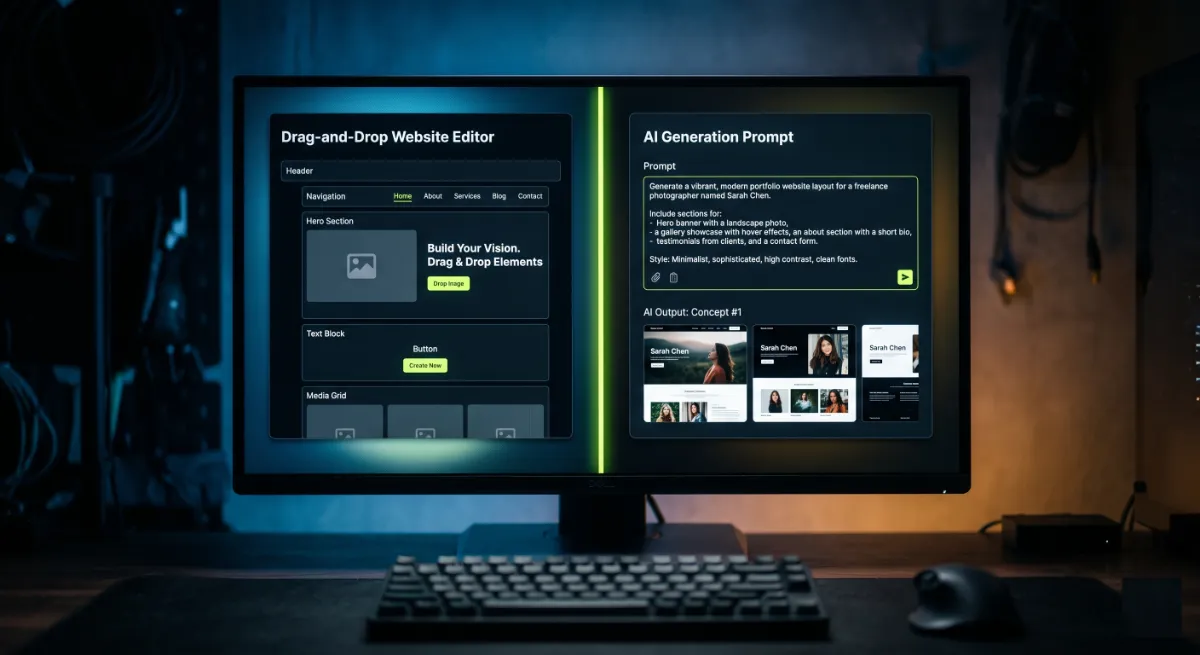
An AI website builder generates a complete site from a prompt or a few business details: pages, layout, copy, and images, often in minutes. You describe what you want, and the AI assembles a starting point you can then edit. In 2026 the popular options include 10Web, Hostinger AI, Wix AI, Framer, and Durable, alongside WordPress-native tools like ZipWP and SeedProd.
They come in two flavors. Hosted builders like Hostinger and Wix bundle the AI with their own servers, fast and simple, but you live on their platform. WordPress-based builders like 10Web generate a site you can edit in a familiar editor. In fact, 10Web generates its sites using the Elementor editor, which already hints that the Elementor vs AI website builder line is blurrier than it looks. You can browse current options in this tested roundup of AI builders.
What is Elementor?
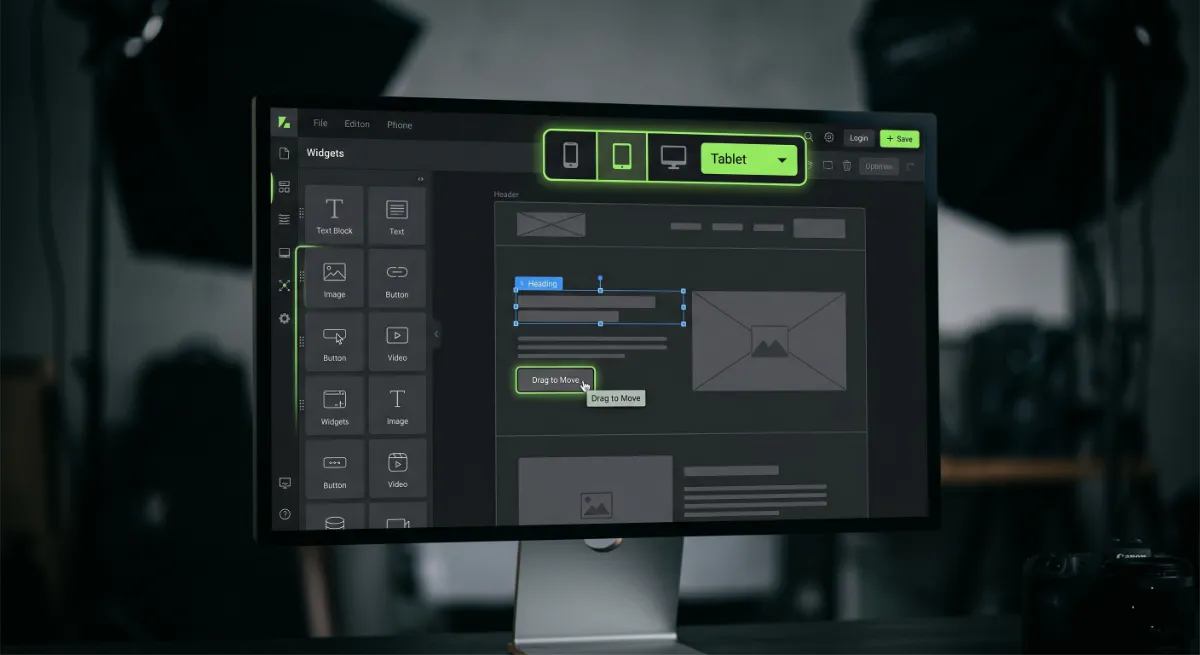
Elementor is the most popular WordPress page builder, powering well over 20 million sites. It is a visual, drag-and-drop editor that gives you pixel-level control with more than a hundred widgets, per-breakpoint responsive settings, custom CSS, and a full theme builder. You can install the core plugin from the WordPress plugin directory.
Crucially, Elementor runs on WordPress, which is open source. You own the code and the database, you are not renting space on someone else’s platform. Elementor has also added its own AI tools, an AI Site Planner and the Angie copilot, so it is not as if Elementor lacks AI. The real distinction in the Elementor vs AI website builder question is control and ownership versus speed and simplicity.
Elementor vs AI website builder: the key differences
Here is the comparison at a glance, across the factors that actually affect your decision.
| Factor | AI website builder | Elementor (WordPress) |
|---|---|---|
| Speed to launch | Minutes, AI generated | Fast, but more setup |
| Ease for beginners | Very easy, plain language | Has a learning curve |
| Design control | Limited, template led | Full, pixel level |
| Code and quality | Can be heavy or generic | Native, refined by you |
| SEO control | Often restricted | Full, plugins and permalinks |
| Ownership | Walled garden, lock-in | You own it, no lock-in |
| Cost over time | Cheap start, recurring | Scales cheaper long term |
| Best for | Simple, fast sites | Custom, growing sites |
The pattern is clear. AI builders optimize for getting online fast and easy, Elementor optimizes for control, quality, and owning your asset. Keep that frame as we look at where each genuinely wins.

Where AI website builders win
Give the AI builders their due, they are genuinely strong at certain things.
- Speed. From prompt to a live, responsive site in minutes. Some hosted builders claim a full site in under a minute.
- Simplicity. No themes, plugins, or hosting decisions. You answer a few questions and get a site.
- Low entry cost. Bundled hosting plans can start very cheap, attractive for micro-businesses.
- No skill required. Perfect for non-technical owners who just need a presence online quickly.
If your goal is a simple brochure site, a quick landing page, or just getting online this afternoon, an AI website builder is hard to beat. The convenience is real, and for the right project it is exactly enough.
It is worth being honest that this speed is not a gimmick. For a solo owner who would otherwise stall for weeks, getting a clean, responsive site live in an afternoon has genuine value. In the Elementor vs AI website builder trade-off, that head start is the AI side’s strongest card.
Where Elementor wins
For anything beyond simple, Elementor pulls ahead, and the gaps matter more over time.
- Design control and quality. Pixel-level control and a hundred-plus widgets produce distinctive, polished sites, not template lookalikes.
- SEO and performance depth. Full control of permalinks, schema, and SEO plugins like Rank Math, rather than a platform’s restrictions.
- Ownership, no lock-in. You own your code and database on WordPress, and can move hosts anytime. Hosted builders can trap your site, media, and URLs.
- Scalability. WordPress and WooCommerce scale indefinitely, with no platform sales fees eating your store’s revenue.
- Flexibility. Thousands of plugins and integrations for whatever your business needs next.
The lock-in point deserves weight. Outgrowing a closed platform can mean a costly full rebuild and painful migrations later, while a WordPress site is a business asset you actually hold the keys to. For custom, SEO-driven, or growing sites, the Elementor vs AI website builder verdict is not close, Elementor wins.
These advantages compound. A distinctive design helps you convert, strong technical SEO helps you rank, and ownership means none of that work is trapped if you switch hosts. Each is modest alone, but together they are the difference between a site that merely exists and one that grows your business.
An AI builder gets you online fast. Elementor on WordPress makes sure that, two years and a thousand sales later, the site still belongs to you.
The best of both worlds
Here is the nuance most comparisons miss: it is not strictly either/or. Because some AI builders run on the Elementor editor, and because Elementor now has its own AI Site Planner and copilot, you can often get AI speed and Elementor control together.
The smart workflow for many projects is to use AI to generate a fast first draft, then refine it properly in Elementor for quality, SEO, and performance. You skip the blank page without surrendering control or ownership. That hybrid approach is frequently the real answer to the Elementor vs AI website builder question, rather than picking a single rigid side.
The migration question most people forget
The factor that decides many Elementor vs AI website builder choices in hindsight is not design or speed, it is what happens when you want to leave. With Elementor on WordPress, you can move to a new host in an afternoon, because you own the files and database. With a closed AI builder, leaving can be genuinely painful.
Hosted platforms often make your media awkward to export in bulk and force fixed URL structures, so migrating away can mean rebuilding the site and writing hundreds of redirects to protect your SEO. There is also vendor risk: if the platform changes terms, raises prices, or shuts down, your site is tied to its fate. None of this matters for a tiny brochure site, but for anything you are investing in, it should weigh heavily in the Elementor vs AI website builder decision.
Which should you choose?
Match the tool to the project, not the hype. As a quick guide:
- Choose an AI website builder if you need a simple site live fast, have no technical skills, are on a tight budget, and do not expect to scale much.
- Choose Elementor if you want custom design, strong SEO, an online store, full ownership, and room to grow, or if the site is revenue-critical.
- Combine them if you want speed now and control later, generate a draft, then build it properly.
One more practical filter: think about where the site will be in two years, not just at launch. The Elementor vs AI website builder decision is easy to make for today and regret later, so weigh your likely growth, not only your current needs.

Use the picker below to see which fits your top priority, then read my developer take underneath.
What matters most to you?
Tap your top priority for an instant recommendation. Nothing stored.
My take as a developer
I am not anti-AI-builder, they are great for getting a simple site online fast, and I sometimes use AI generation to skip the blank page. But for any business that needs to rank, convert, and grow, I build in Elementor on WordPress, because control, SEO depth, and ownership decide the outcome long after launch day.
The mistake I see is owners choosing the fastest launch and discovering a year later that they cannot customize what they need, their SEO is capped, or they are trapped on a platform. Speed is seductive, but you are choosing where your business lives. If you want a site that is fast to launch and built to last, that is exactly the work I do. See my recent projects or my WordPress and Elementor development services. And if you are weighing Elementor’s own AI tools, here is my honest take on whether Elementor AI is worth it.
Frequently asked questions
Is an AI website builder better than Elementor?
Neither is universally better. AI website builders are better for speed and simplicity on basic sites. Elementor is better for control, design quality, SEO, ownership, and scalability. The right choice depends on your project and goals.
Is Elementor an AI website builder?
Not exactly. Elementor is a WordPress page builder that has added AI tools, including an AI Site Planner and the Angie copilot. It gives you AI assistance plus full manual control, rather than fully generating a site for you.
Are AI website builders good for SEO?
They can be. Google does not penalize AI-built sites, and rankings depend on content, user experience, and speed. But WordPress with Elementor gives you far more SEO control, like custom permalinks, schema, and plugins, than most closed AI builders.
What is the catch with AI website builders?
Usually lock-in. Hosted AI builders keep your site on their platform, which can make migrating away costly and complicated later. You also get less design control and may hit scaling limits as you grow.
Can I move a site off an AI website builder later?
Sometimes, but it can be hard. Closed platforms can trap your media and force specific URL structures, so a move may mean a rebuild and many redirects. WordPress sites, by contrast, are portable and host-independent.
Which is cheaper, an AI website builder or Elementor?
AI builders often look cheaper upfront, especially bundled with hosting. Over time, recurring fees, add-ons, and platform sales fees can make WordPress with Elementor more economical, particularly for stores and growing sites.
Can I use both Elementor and AI generation?
Yes, and it is often the best approach. Use AI to generate a fast first draft, then refine it in Elementor for quality, SEO, and performance, keeping speed without giving up control or ownership.
Which should a small business choose?
A very simple, short-term site can do fine on an AI builder. But most small businesses that want to rank, sell, and grow are better served long term by Elementor on WordPress, ideally with professional help for the build.
Conclusion
The Elementor vs AI website builder choice comes down to what you value. If you need simple and fast, an AI website builder gets you online today with no skills required. If you need control, SEO, ownership, and room to grow, Elementor on WordPress wins clearly, and the lock-in you avoid matters more every year. For many, the smartest move is both: generate quickly, then build properly. Pick based on where your business is heading, not just how fast you can launch, and you will choose right.
I build custom, SEO-strong WordPress sites in Elementor that you actually own. See my WordPress and Elementor development services, or book a free call.
This comparison was last updated in June 2026. AI website builder features and pricing change quickly, so confirm current details on each provider’s site.