

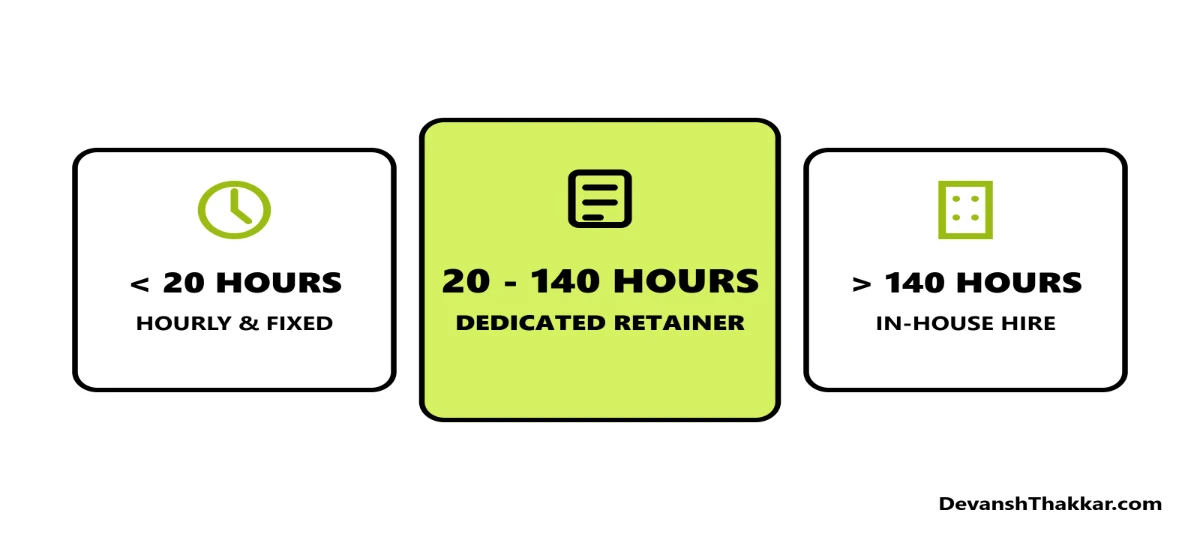
- Hire dedicated WordPress developer capacity only when you can name 20 or more backlog hours every month.
- “Dedicated” is a billing term, not a staffing guarantee. Name the individual in the contract.
- A US full-time WordPress developer averages 84,542 dollars a year before benefits and overhead.
- Under 20 hours of monthly work, hourly or fixed-price beats any retainer on cost per outcome.
- Settle rollover, notice period, and account ownership before signing, never after the first invoice.
Hire dedicated WordPress developer capacity when you have steady, recurring work rather than one project. The model reserves a set number of monthly hours with a named developer, usually 20 to 140. It suits agencies, multi-site owners, and stores with constant changes. Below 20 hours a month, fixed-price or hourly work costs less and delivers the same output.
Across 250+ projects I have seen both sides of this deal. I have been the named developer on agency retainers under NDA. I have also cleaned up after retainers that nobody used. The failure looks the same every time. A business buys 40 hours a month, fills nine of them, then cancels in month four feeling cheated. So this guide starts with the maths that decides whether you should hire dedicated WordPress developer support at all.
What a Dedicated WordPress Developer Actually Is
A dedicated WordPress developer reserves a set block of hours for you each month, works from your backlog, and stays on your account between projects. You are buying booked time, not a finished product. However, that gap matters, because it changes who carries the risk. On a fixed-price project, scope is the vendor’s problem. When you hire dedicated WordPress developer hours, keeping the queue full is yours.
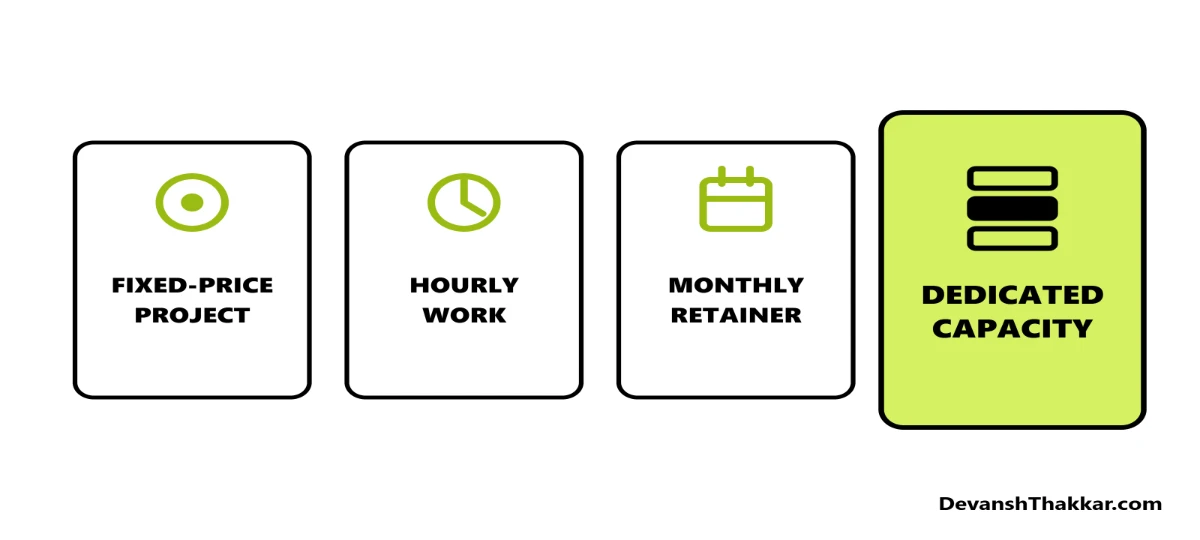
Four models chase the same budget, and the labels blur. For example, an agency selling “dedicated resources” may mean one person at 160 hours. Alternatively, it may also mean a rotating pool at 40. A freelancer offering a retainer usually means a set response time plus a capped bank of hours. Therefore the first question is never price. It is what gets booked, and for whom.
Pro tip: Ask one question on the first call. “If I buy 40 hours a month, whose calendar are those hours blocked on, and what else is on it?” A straight answer names a person. A vague answer names a team. Ask it before you hire dedicated WordPress developer hours from anyone.
That answer also tells you how much the 2026 changes below will affect your account.
What Changed in 2026 and Why Ongoing Capacity Matters More
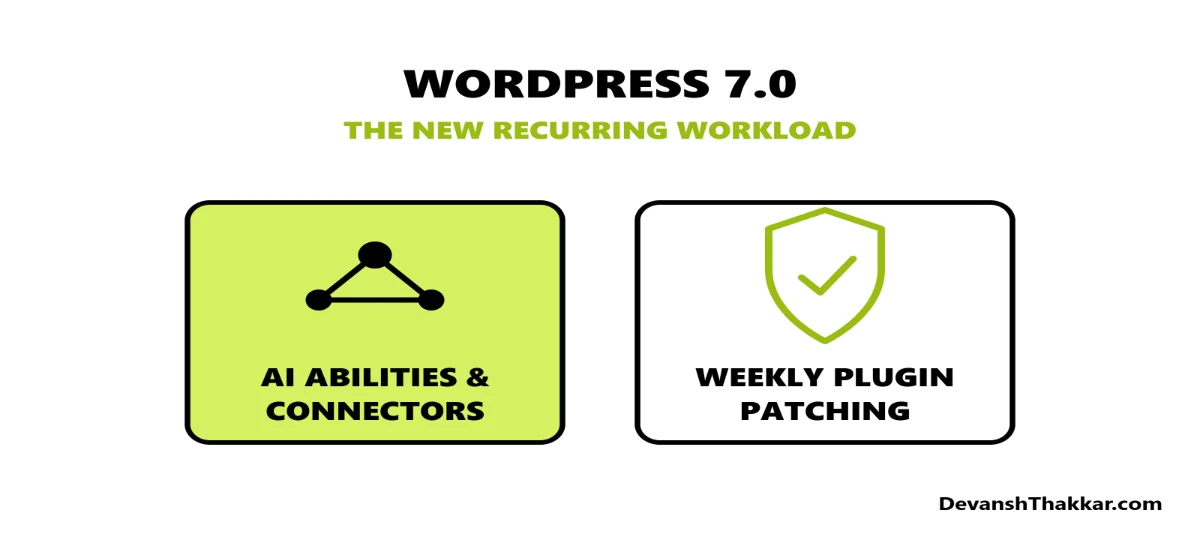
Two shifts this year moved WordPress work from now and then to all the time. That is exactly why more agencies and store owners now hire dedicated WordPress developer hours instead of one-off builds.
First, AI moved into core. Agents can now create posts, insert blocks, and change settings through set abilities. That helps, although it adds a review job that did not exist in 2025. In addition, someone now has to own it. Someone has to hold the Connectors keys. Furthermore, someone has to decide which abilities are open, then check what the agent shipped. Since that work never ends, it fits booked monthly hours far better than a one-off project.
Second, the maintenance load grew. Patchstack’s State of WordPress Security in 2026 recorded 11,334 new vulnerabilities across the ecosystem during 2025, a 42 percent rise, with 91 percent of them in plugins. Specifically, the median time from public disclosure to mass attack was five hours. As a result, patch testing is now a weekly job rather than a quarterly chore. That alone pushes many site owners to hire dedicated WordPress developer time each month.
Both shifts push in the same direction, which is exactly why the hours question deserves real arithmetic.
The 20/60/140 Rule: Do You Actually Need Dedicated Capacity?
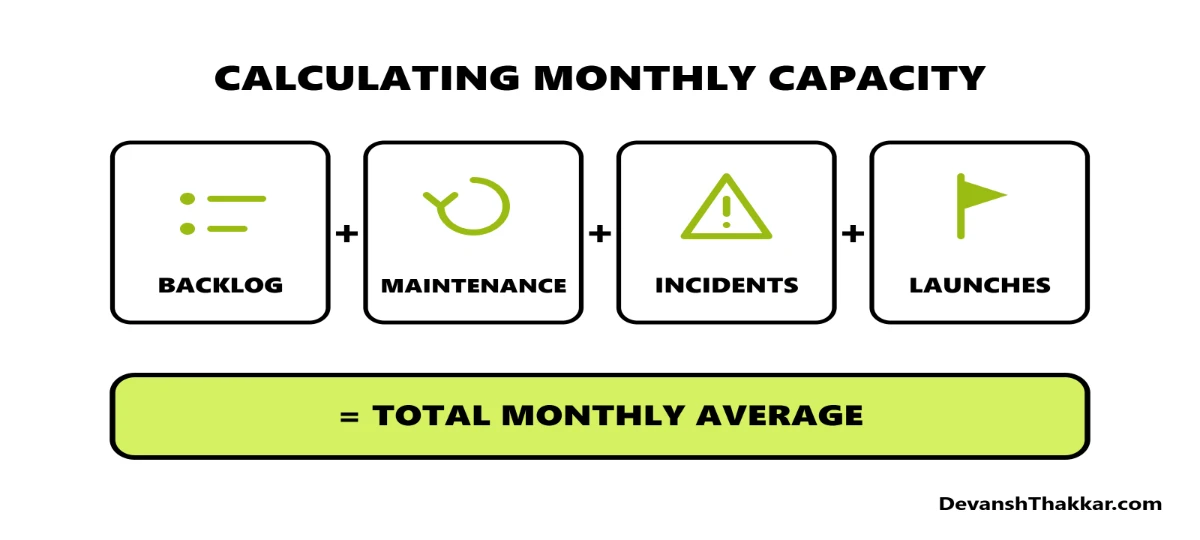
The 20/60/140 Rule is the test I run before quoting any retainer. It takes fifteen minutes with a spreadsheet. First, count the work you can name for the next quarter. Then turn it into hours per month and read the band. The point is not to be exact. Instead, the point is to refuse to buy hours you cannot describe. Run it before you hire dedicated WordPress developer time from anyone.
List four things. Every open backlog item with an hour estimate. A base of 4 to 8 hours a month for updates and staging tests. An allowance of 2 to 4 hours for incidents, or more if you rely on same-day emergency support. Then any planned launches. Finally, add them up and divide by three for a monthly average.
- Under 20 hours a month: pay hourly or per project. A retainer will lose you money, because you pay for booked time nobody uses. Scoped fixes are the better buy here.
- 20 to 60 hours a month: a monthly retainer with a named developer. This is the band where it pays to hire dedicated WordPress developer hours, since the queue stays full and you stop re-explaining the site.
- 60 to 140 hours a month: real dedicated capacity, part-time up to near full-time, with a booked weekly slot and a shared board. Recurring speed work and feature builds usually land here.
- Over 140 hours a month for two quarters straight: run the in-house numbers. At that volume a staff hire may cost less, as long as you can keep the role busy in quiet months.
What most guides get wrong: they sell this as a quality choice, claiming dedicated developers care more. That is marketing. It is a usage choice. A great developer on a half-empty retainer gives you worse value than an average one on scoped work, because you pay for idle booked time either way.
A dedicated retainer is a season ticket, not a personal trainer. The seat is booked for you every month. However, showing up with a plan is still your job. For that reason, the people who hire dedicated WordPress developer hours and win are the ones with a queue.
Once the band is clear, the next question is what that band actually costs.
The Real Cost Math Against a Full-Time Hire
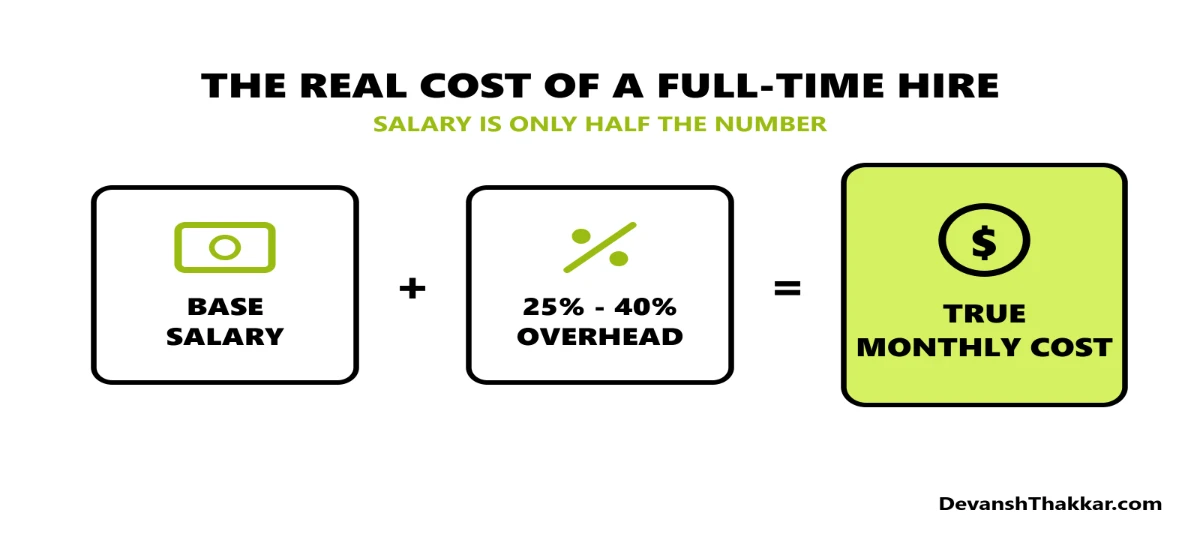
Most people weigh this against a staff hire, so start with the salary. ZipRecruiter data from August 2026 puts the average US WordPress developer at 84,542 dollars a year. That is roughly 40.65 an hour, or 7,045 a month. Senior roles average 128,400 dollars, about 61.73 an hour. Neither number includes payroll tax, benefits, kit, or hiring costs. Those add 25 to 40 percent on top.
| Model | Typical monthly cost | Hours you get | Who fills the queue |
|---|---|---|---|
| Fixed-price projects | From 79 USD per engagement | Scope, not hours | Vendor owns scope |
| Maintenance retainer | From 49 USD | Updates and monitoring | Vendor, on schedule |
| Dedicated, light (20 hrs) | 600 to 1,500 USD | 20 | You do |
| Dedicated, standard (60 hrs) | 1,800 to 4,500 USD | 60 | You do |
| Dedicated, heavy (140 hrs) | 4,200 to 10,000 USD | 140 | You do |
| US full-time employee | 8,800 to 9,900 USD all-in | ~160 | You do, every month |
Therefore two numbers decide this, and neither is the hourly rate. The first is usage, meaning the share of booked hours you actually spend. The second is what it costs you when the person leaves. A staff hire at 60 percent usage costs far more per real hour than a retainer at 95 percent. So before you hire dedicated WordPress developer hours, test the relationship cheaply. My pricing page lists project work from 79 dollars and maintenance retainers from 49.
Pro tip: Divide the monthly fee by the hours you truly used, not the hours you bought. Do this for three months. If the real rate drifts above senior freelance rates, drop a band rather than haggle over price.
Cost is only half the risk though, and the other half rarely appears in any proposal.
Running an agency and need reliable WordPress capacity under your own brand?
That is exactly what the white-label retainer exists for, including NDA coverage and direct access to your project managers. See white-label WordPress development.
The One Risk Nobody Names: “Dedicated” Is a Billing Term
Dedicated describes how you are billed, not who does the work. No standard body defines the word. So a vendor can sell you dedicated hours while rotating three people through your account. For example, they can put a junior on the tickets. They can split one developer across four clients. All of it is legal, common, and invisible until quality slips.
Meanwhile the signs arrive in a set order. At first, reply times stay fine, because support is a different team. Then code style shifts between tickets. Next, a fix breaks something the last person built, since the context left with them. Finally you explain your own site to a stranger. That is the exact cost you pay to hire dedicated WordPress developer hours to avoid.
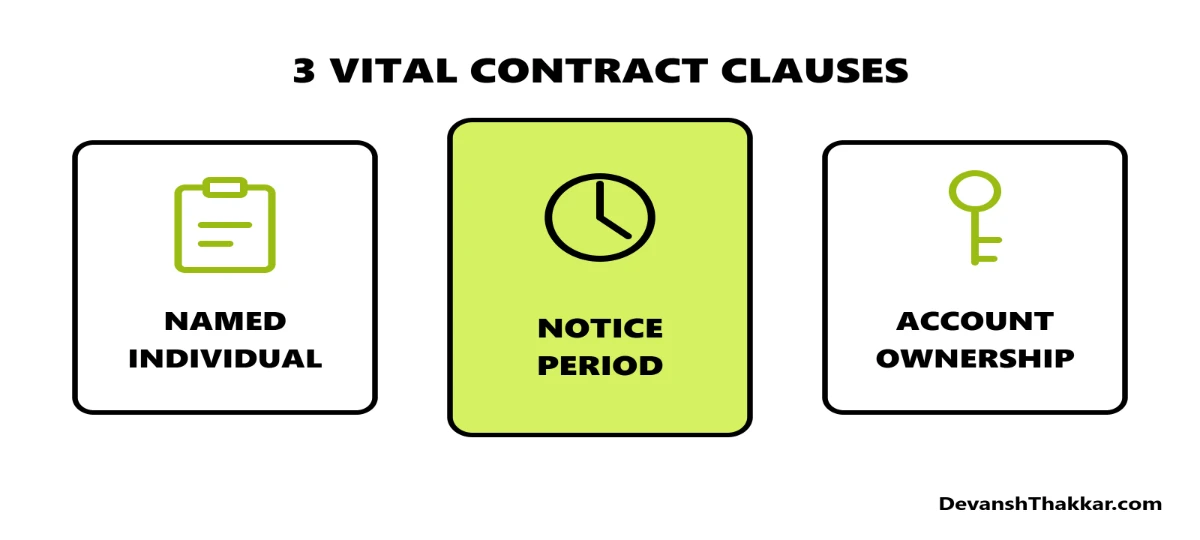
Ask these three questions before signing, and get the answers in the agreement rather than in chat:
- “Who, by name, and what is their allocation?” A real answer sounds like “Devansh, 40 hours a month, two other accounts this quarter.”
- “What happens if they leave or are reassigned?” You want written notice, a handover document, and an approval right over the replacement.
- “Who reviews their code?” Solo specialists should say a standard such as WPCS and show you a repository. Teams should name a reviewer.
Naming the person solves the biggest risk, while the rules below handle the rest.
6 Rules for Structuring the Engagement
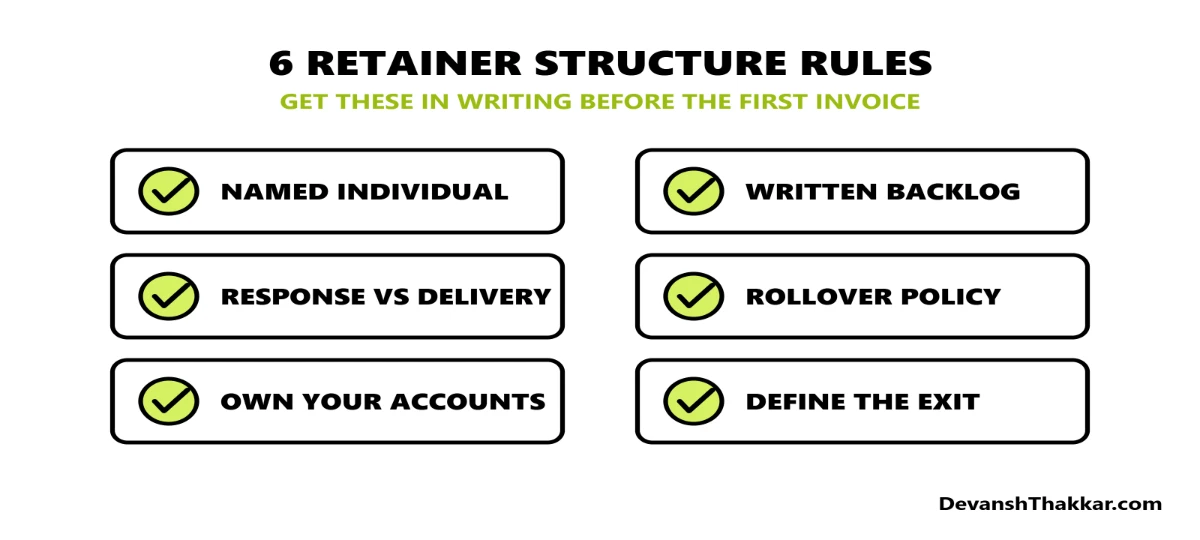
These come from running agency retainers under NDA, and from fixing deals that were built badly. Each rule is a clause, not a feeling. Put all six in writing before you hire dedicated WordPress developer hours.
1. Name the individual, with a substitution clause
Write the developer’s name into the deal. Then add a line that requires written notice before any swap, plus your right to approve who replaces them. Because of that, continuity is a promise rather than a term. Agencies often accept this for a named lead even when the support cast changes. That is a fair trade if the lead really stays.
2. Buy hours against a written backlog
Never sign for “capacity” alone. Attach a live board or a shared sheet that lists the work, with estimates. Furthermore, review it each month and close the gap between hours bought and hours queued. This one habit prevents the usage problem that kills most retainers by month four.
3. Separate response time from delivery time
These are two different promises and they need two different numbers. A four-hour reply time tells you when a human answers. A delivery date tells you when the fix ships. Blend them and you get arguments, because a fast reply on a slow ticket still feels like a broken promise.
4. Decide rollover before the first invoice
Unused hours cause more friction than any other clause. In practice, three fair setups exist. No rollover with a lower rate. Partial rollover of 25 percent. Or full rollover with a hard expiry at 90 days. For example, I use partial rollover on agency retainers. It removes use-it-or-lose-it pressure and still keeps planning honest.
5. Keep accounts, licences, and repositories in your name
Hosting, domain, premium plugin licences, and the Git repo all belong in your accounts from day one. This is not about trust. It is about what happens on a bad day. For instance, getting a domain or a licence back from a former supplier is slow, and sometimes it fails. Good developers prefer it this way too, since it keeps ownership clear.
6. Define the exit on day one
Agree a notice period, usually 30 days. Add a handover doc that covers the build, custom code, logins, and known issues. State code ownership in plain words. Although nobody enjoys this conversation, a deal you cannot end cleanly is not a partnership. The clause costs nothing while things are going well.
With the structure settled, the last step is confirming the model itself is right.
Dedicated, Retainer, Project, or Hourly: Which Model Fits
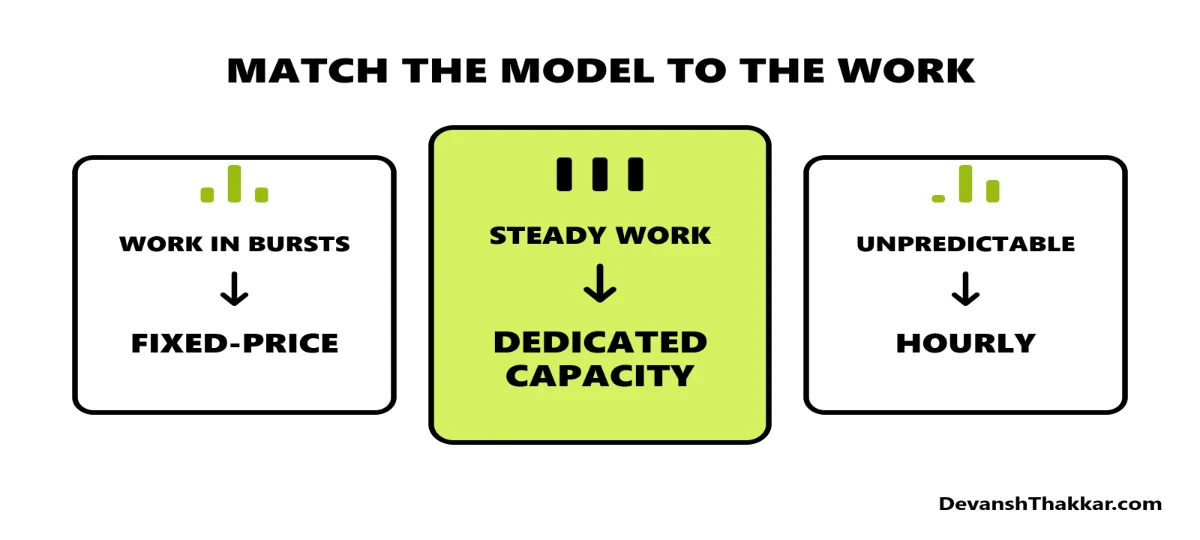
First, match the model to how your work arrives, not to how much you want to spend. Work that comes in bursts suits fixed-price projects. Steady work suits booked hours. Unpredictable work suits hourly billing with a set reply time. Similarly, get this wrong and no rate will save the deal. That is true whether you hire dedicated WordPress developer hours or buy a single build.
| Model | Best when | Main strength | Main weakness |
|---|---|---|---|
| Fixed-price project | Scope is clear and finite | Vendor carries estimation risk | Change requests get re-quoted |
| Hourly, no commitment | Work is sporadic and small | You pay only for output | No guaranteed availability |
| Maintenance retainer | Site is stable, needs care | Patching happens on schedule | Excludes feature work |
| Dedicated capacity | 20+ hours a month, ongoing | Context and continuity | You must keep the queue full |
| In-house hire | 140+ hours a month, sustained | Full control and availability | Overhead, hiring risk, quiet months |
Agencies are the clearest case to hire dedicated WordPress developer hours, because client work never stops and rarely arrives on schedule. Marketplaces work well for a first test, then you move the relationship direct once the fit is proven. Meanwhile multi-site owners and busy stores usually sit in the 20 to 60 band. There, a named developer on a monthly deal beats both extremes.
The calculator below applies the 20/60/140 Rule to your own numbers.
Not sure which band you are in?
Send me your backlog and the site URLs. You will get an honest hours estimate and a straight answer on whether a retainer is worth it. Send the details here or message me on WhatsApp.
Frequently Asked Questions
What is a dedicated WordPress developer?
A developer who reserves an agreed block of hours for you each month, works from your backlog, and stays on your account between projects. You buy availability and continuity rather than a finished deliverable. Agencies, multi-site owners, and busy stores hire dedicated WordPress developer hours most often, because their work never stops.
How much does it cost to hire a dedicated WordPress developer per month?
Roughly 600 to 1,500 dollars for 20 reserved hours, 1,800 to 4,500 for 60 hours, and 4,200 to 10,000 for 140 hours, depending on seniority and region. Compare that against a US full-time developer averaging 84,542 dollars a year before payroll tax, benefits, and kit. Cost per used hour matters more than the headline fee.
How many hours per month do I actually need?
Count open backlog items, add 4 to 8 hours for updates and staging tests, then add 2 to 4 for incidents. Under 20 hours means stay on scoped work. Between 20 and 60 means a named retainer. Above 60 means it is time to hire dedicated WordPress developer hours properly.
Is a dedicated developer better than a freelancer?
They are often the same person on different terms. Dedicated describes the billing arrangement, meaning reserved hours and continuity, while freelance describes the employment status. The useful comparison is booked hours against scoped project work, not one label against the other.
Can I hire a dedicated WordPress developer part-time?
Yes, and part-time is the most common arrangement. In practice, blocks of 20, 40, or 80 hours a month are standard, usually with an agreed weekly slot. Most firms that hire dedicated WordPress developer time go part-time, because few can fill 160 hours a month without inventing tasks.
What should be in a dedicated developer contract?
Six things: the named individual, a substitution clause with notice, a written backlog, separate response and delivery commitments, a rollover policy for unused hours, and an exit clause covering notice period, handover, and code ownership. In addition, accounts and licences should sit in your name throughout.
Do dedicated developers work in my time zone?
Most offer overlap rather than full alignment. Ask for the overlap window in hours, then confirm the reply time separately. Generally, four hours of daily overlap is enough for reviews and standups, provided deploys and incidents are scheduled rather than improvised.
How long does onboarding take?
Expect two to four weeks before output looks normal, whichever way you hire dedicated WordPress developer capacity. The first week covers access, hosting, staging, and the existing codebase. The second covers conventions and the backlog. Budget for it, since a retainer judged on month one almost always looks like a poor deal.
Is dedicated capacity cheaper than hiring a full-time employee?
Below roughly 140 hours a month, usually yes. A US full-time developer averages 84,542 dollars annually, and payroll taxes, benefits, equipment, and recruiting add another 25 to 40 percent. Above that volume the salaried route can win, provided the role stays busy through slower quarters.
Can I switch from a dedicated retainer back to project work?
Yes, and good suppliers expect it. Work volume changes with seasons and launches, so many relationships move between fixed-price projects, hourly work, and retainers over time. Therefore confirm the notice period upfront, so the switch is admin rather than an argument.
When should I hire a dedicated WordPress developer instead of an agency?
Choose dedicated capacity when the brief is technical and continuous, and you want the person writing the code rather than a project manager relaying messages. Choose an agency when design, copy, and paid media must run alongside the build. To hire dedicated WordPress developer hours instead, see maintenance and retainer plans.
Conclusion
Hire dedicated WordPress developer hours once your backlog clears 20 hours a month, and not before. Three things decide whether it works. Usage beats hourly rate, since idle booked time is the real cost. Naming the person in the contract turns a promise into a term. Owning your accounts, licences, and repo protects you on the day it ends. Count your hours this week, pick the band honestly, then agree the six clauses before the first invoice.
You have the numbers. Here is the fastest way to act on them.
I am Top Rated on Upwork with a 100 percent job success score and 250+ projects delivered across 15+ countries, working white-label for agencies under NDA and direct for site owners. If you want to hire dedicated WordPress developer hours without a long search, send your backlog and site URLs. You get an hours estimate, a recommended band, and fixed pricing within 48 hours.
Book a free call
This article was last reviewed and updated in {{UPDATED}} to reflect current rates to hire dedicated WordPress developer capacity, WordPress 7.0 changes, and retainer best practices.