
White Label WordPress Developer for Agencies
What clients say
Brilliant work with Devansh and 100% completed successfully and fast.
I worked many times with this person and it's always better and better. I totally recommend him!
Excellent work! Very trustworthy. Thank you!
Everything you need to know about White Label WordPress Developer for Agencies
Hiring a white label WordPress developer is the fastest way for an agency to add build capacity without adding headcount. You keep the client, the brand, and the margin. Someone else does the WordPress work and stays invisible while doing it.
This guide covers how a white label WordPress developer arrangement actually works, what it costs, where it goes wrong, and what to check before you route a client project to anyone. It is written for agency owners and project managers rather than for developers.
What a white label WordPress developer does differently
A normal freelancer sells to the end client. A white label WordPress developer sells to you, the agency, and never appears in front of your client at all. That single distinction is the whole model.
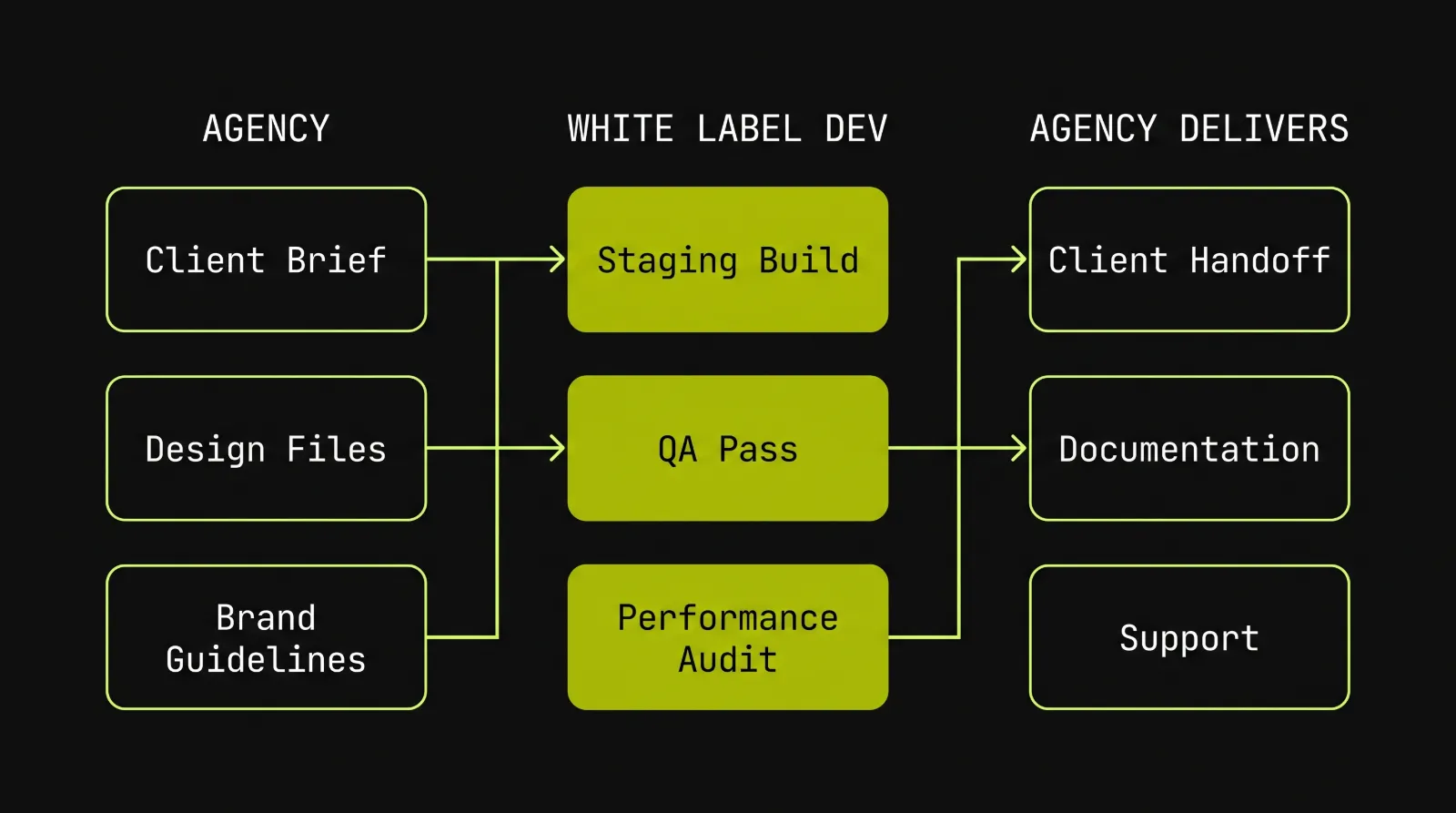
That difference changes almost everything about the working relationship. Communication runs through your project manager rather than the client. Progress updates get written so you can forward them without editing out a stranger’s name. Handoff documentation is drafted in your agency voice, not theirs. Nothing goes into a public portfolio.
The technical work is the same work. The commercial and confidentiality layer around it is what you are actually buying.
It also changes who carries the risk. When a marketplace freelancer disappears mid build, the client hears about it from you. A white label WordPress developer working on a retained arrangement has an ongoing relationship to protect, which is a far stronger incentive than a single invoice.
When outsourcing WordPress work makes commercial sense
Not every agency needs a white label WordPress developer. The arrangement pays for itself in four specific situations, and outside them it usually adds coordination cost without adding capacity.
You are turning down retainer work
This is the expensive one. A client you already have asks for a WooCommerce build and your team is booked solid. You say no. Six months later that client has a new agency for everything, not just the store.
WordPress is not your core offering
Plenty of strong agencies are design led, brand led, or paid media led. They sell websites because clients ask for them, not because WordPress is where their edge is. Routing that work out protects the quality of what they are actually good at.
Your senior developers are stuck on maintenance
Plugin updates, broken forms, and small content changes eat senior time that should go to strategy and new builds. A partner absorbing that layer buys back the most expensive hours on your team.
Demand is spiky rather than steady
Hiring a full time developer for work that arrives in bursts creates dead payroll between projects. A retained hours arrangement flexes with the pipeline instead.
What to check before you hire a white label WordPress developer
Most bad outsourcing experiences trace back to skipping one of these checks. Work through them before you brief any white label WordPress developer, not after the first invoice.
- NDA before the brief. If a developer wants the client name before signing anything, that tells you how they treat confidentiality generally.
- Attribution policy in writing. Ask directly whether a credit link, theme header comment, or readme name gets left behind. Get the answer in the contract.
- IP transfer terms. Custom themes, custom plugins, and scripts should transfer to you on final payment with no ongoing license.
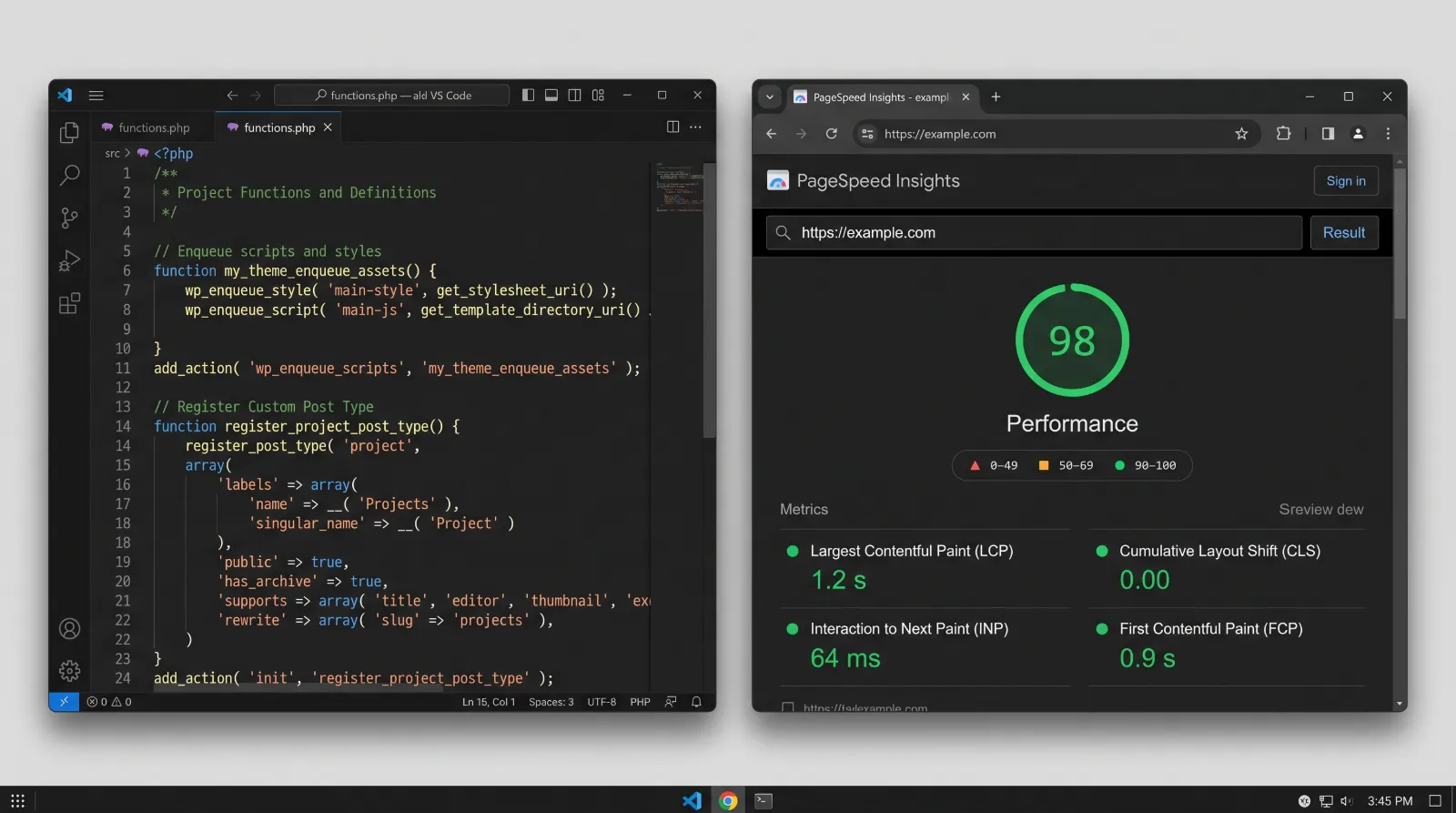
- A live site you can inspect. Screenshots prove nothing. Ask for a URL, then run it through PageSpeed Insights yourself.
- Plugin count philosophy. Ask how many plugins a typical build ships with. If the answer is above fifteen, you will inherit the maintenance cost.
- Emergency availability. Find out the realistic response window for a site down at 11pm, not the marketing promise.
- Documentation samples. Ask to see a handoff document from a previous project with the client details removed.
The skills that actually matter
Agencies tend to screen on builder preference. Elementor or Bricks, Divi or blocks. That is the least important question on the list.
What separates a competent white label WordPress developer from an expensive rebuild is diagnostic ability. Can they read a slow site and tell you which of the six possible causes it is? Can they trace a plugin conflict without reinstalling everything? Can they migrate a store without dropping order history?
Builder fluency is table stakes
Any developer worth routing work to should move between Elementor, Bricks Builder, Divi, and the native block editor without complaint. Your clients inherited whatever they inherited, and a partner who only works in one tool will decline half your pipeline.
Commerce depth is the real differentiator
WooCommerce is where most agency projects get expensive. Custom checkout flows, subscription logic, tax and shipping rules, B2B wholesale pricing, and multi currency all sit outside what a general WordPress developer handles comfortably. Ask specifically about commerce work rather than accepting WordPress experience as a proxy.
Hosting and caching knowledge saves emergencies
A large share of the fires an agency deals with are not code problems. They are caching collisions, cron failures, file permission issues, and DNS misconfigurations. A white label WordPress developer who is fluent across Hostinger, SiteGround, Cloudways, WP Engine, and Kinsta will resolve those in an hour rather than a week.
How white label WordPress developer pricing works
Three models cover almost every agency arrangement, and choosing the wrong one is where margin quietly disappears.
Per project suits work with a clear scope. A brochure site, a store build, a redesign from finished designs. You get a fixed number before anything starts, which means you can quote your own client with a known cost base. The risk sits with the developer, not you.
Retained hours suit steady overflow. You reserve a block of capacity each month and your project managers draw against it without raising a new quote every time. This is the model most agencies settle into after the first few projects, because the friction of quoting small tasks is what kills the relationship.
Hourly suits triage. Nobody can fixed price a mystery 500 error. You set a cap, get a diagnosis first, and decide whether to proceed once the actual problem is known.
Agency rates should sit below direct client rates. You are bringing volume, handling client management, and absorbing the sales cost. If a white label WordPress developer quotes you the same number they quote a direct client, they are not set up for agency work.
One more pricing note that catches agencies out. Ask whether revision rounds, handoff documentation, and post launch bug fixes are inside the quoted number or billed separately. Two quotes that look identical can differ by thirty percent once those land.
Getting the technical standards right
The part agencies underprice is what happens after launch. A build that ships fast and breaks in three months costs more than a build that ships a week later and holds.
Set these as non negotiable before work starts. Core Web Vitals must pass on mobile, not just desktop. Plugin count stays lean, with custom code preferred over a plugin for anything simple. Heading structure follows a single H1 and a logical H2 sequence. Redirects are mapped before any URL changes on a rebuild. Schema markup ships with the site rather than being retrofitted later.
A developer who treats speed optimisation and technical SEO as separate paid extras will hand you sites that need those extras. One who builds them in hands you sites that do not.
Common failure points and how to avoid them
Four patterns account for most of the agency partnerships that collapse.
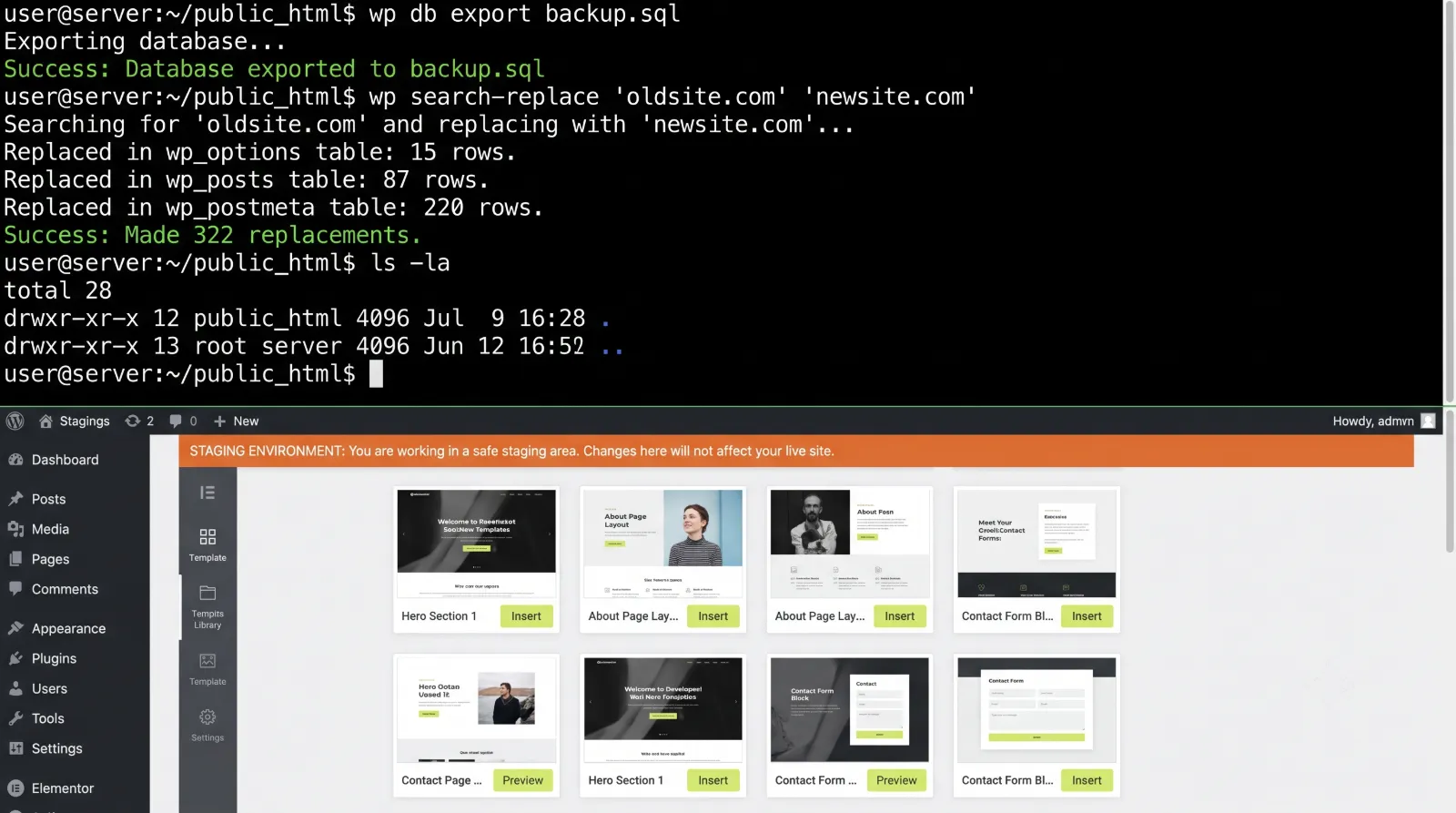
Scope drift with no paper trail. Your client asks the PM for one more thing, the PM asks the developer, and nobody logs it. Three weeks later the timeline slipped and nobody can say why. Fix it by requiring every change to go through a written note, however short.
Single point of contact on both sides. If only one person at your agency talks to the developer and that person goes on leave, the project stalls. Keep two people briefed.
No test project. Routing a flagship client build to an untested white label WordPress developer is a bad first move. Start with something small and low risk so both sides can see how the other actually works.
Assuming timezone overlap. A twelve hour gap is workable with a fixed overlap window and unworkable without one. Agree the window explicitly rather than hoping.
Making the relationship worth keeping
The value of a white label WordPress developer compounds. The first project costs more in explanation than the fifth, because by then the partner knows your design conventions, your hosting preferences, your QA checklist, and how your clients like to be spoken to.
That accumulated context is the real return. Treat it as a partnership rather than a series of transactions and the per project cost falls while the quality rises.
Agencies that get the most out of a white label WordPress developer tend to do three things. They brief in writing rather than on calls. They keep a single shared document of standards the partner can check against. And they give feedback on the first two projects rather than quietly switching after a disappointing one.
If you run an agency and you are evaluating a white label WordPress developer, the practical next step is a short call about your pipeline, your stack, and how you prefer to communicate. You can book a partner call, browse the full service list, or look at recent project work first.
What a white label WordPress developer engagement looks like in month one
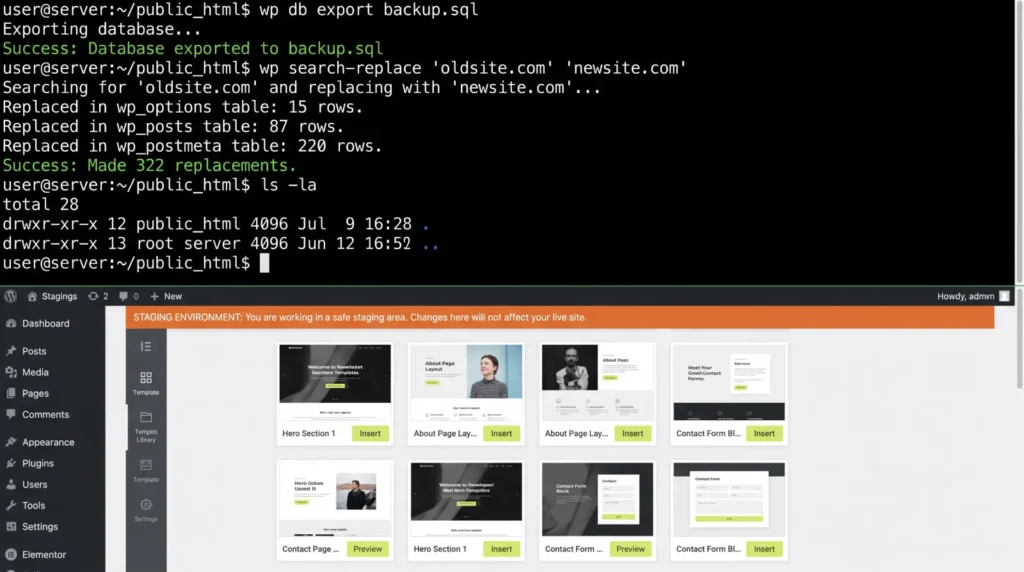
NDA signed in the first day. A small scoped project agreed in the first week, usually a fix or a landing page rather than a full build. Written updates twice weekly. A handoff document you can forward without editing. If all four of those land cleanly, route something bigger in month two.
For background on the technical standards referenced here, the official WordPress coding standards are worth sharing with any developer you are assessing.
More to dig into
-
Freelance WordPress Developer: 5 Costly Gaps, Proven Fixes
What the role covers, why the same work costs 20 or 120 dollars an hour, the five gaps...
Read article -
Hire Dedicated WordPress Developer: 6 Proven Rules, 1 Risk
How the dedicated model actually works: the 20/60/140 Rule for sizing a retainer, real 2026 cost math against...
Read article -
Hire Best WordPress Developer: Avoid 9 Costly Mistakes
A working developer's method for vetting WordPress developers: a 5-minute source-code test, the 9 mistakes that cost the...
Read article
-
Custom WordPress Theme Development
Custom WordPress Theme Development by a Top Rated freelancer specializing in lean PHP, HTML, CSS, and JavaScript foundations....
View service -
WordPress Website Redesign
WordPress Website Redesign by a Top Rated freelancer. Modern design, lifted conversions, Core Web Vitals from the start,...
View service -
Figma to WordPress Conversion
Figma to WordPress Conversion by a Top Rated freelancer specializing in manual implementation rather than AI plugin auto-converters....
View service
Ready to start?
Book a free 30-minute call. No pitch, no pressure. We discuss your project and decide if we're a fit.