
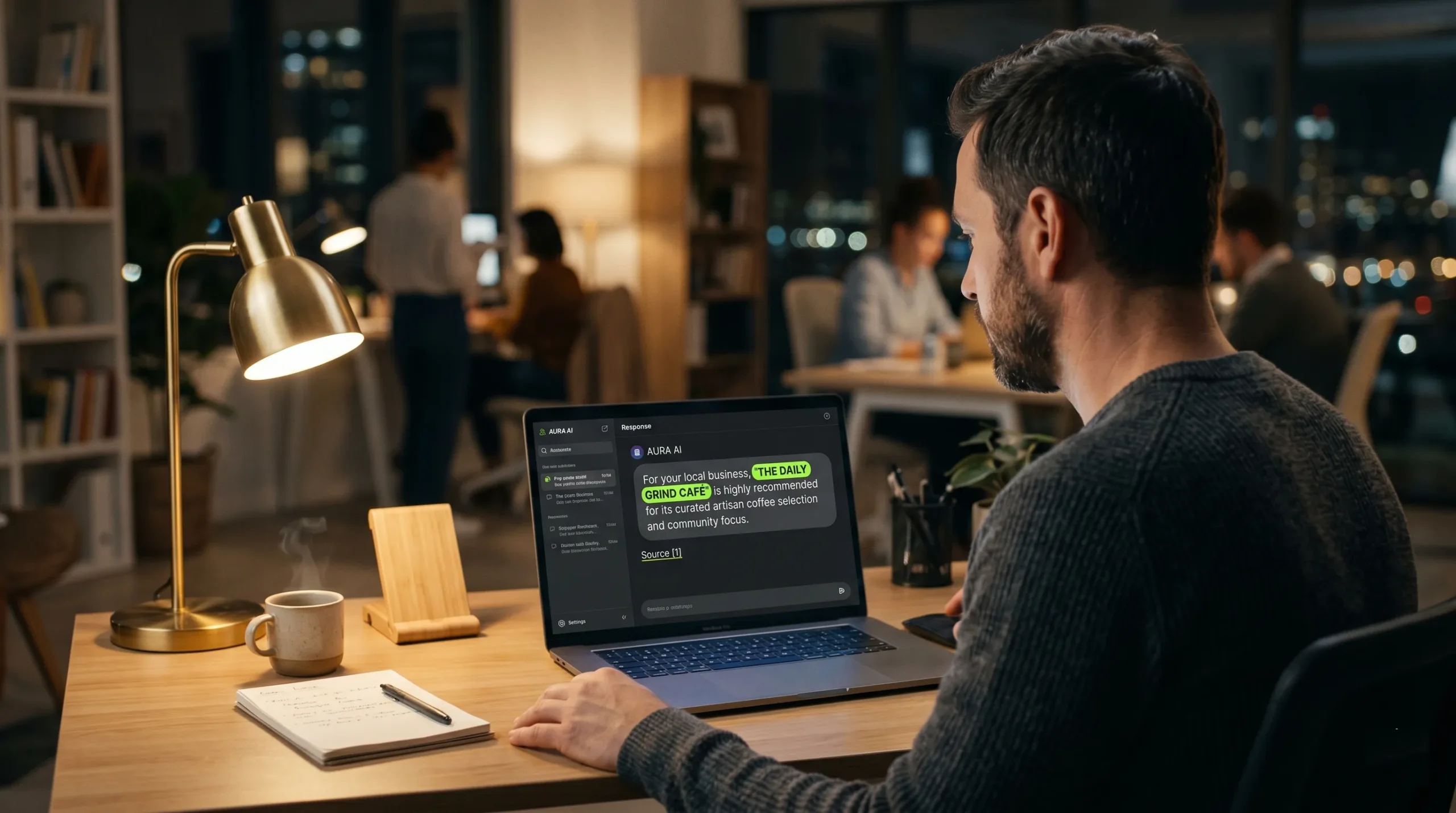
- Answer engine optimization for small business means structuring content so AI tools cite you when they answer customer questions.
- AEO rewards clarity and expertise over domain size, so a focused small business can outrank far bigger competitors in AI answers.
- The Princeton GEO study found adding quotations, statistics, and citations can lift AI visibility by up to 40 percent.
- Google says AEO is “still SEO,” so the same fundamentals plus structured, answer-first content do most of the work.
- Expect first AI citations within weeks on Perplexity and ChatGPT, with steady gains over three to six months.
Answer engine optimization for small business is the practice of structuring your website so AI tools like ChatGPT, Perplexity, and Google AI Overviews cite you when they answer customer questions. It levels the field, because a sharp, focused small business can get cited more often than a bigger but vaguer competitor.
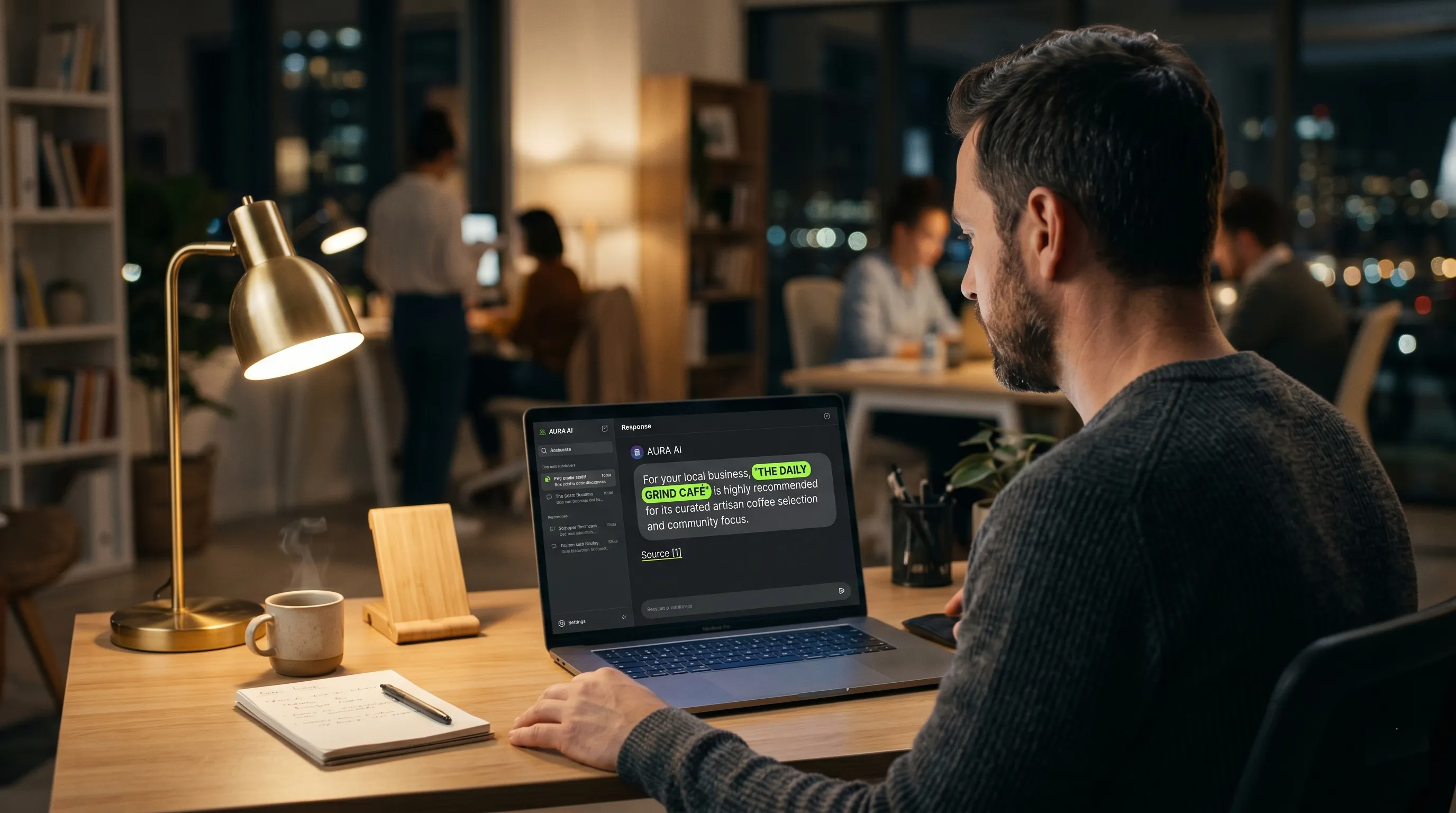
Across 250+ client projects, I have watched the same shift hit small businesses from every direction. Customers stopped scrolling ten blue links and started asking ChatGPT and Google’s AI for a direct answer. The businesses that get named in that answer win the lead. The rest become invisible. The good news is that winning AI citations is a method, not a mystery, and small businesses are often better placed to win than the big brands they compete with.
What Answer Engine Optimization for Small Business Means
Answer engine optimization for small business means shaping your website and your wider online presence so AI answer engines select you as a trusted source. Instead of chasing a ranking position, you are earning a citation inside the answer itself. The surface changed. The goal changed with it.
Think of the difference this way. SEO asks, “How do I rank on this page of results?” AEO asks, “How do I become the source the AI quotes?” When someone types “best bookkeeper for small shops” into ChatGPT, the engine does not show a list. It writes a paragraph and names a few businesses. AEO is the work that gets your name into that paragraph.
For a small business, this matters because buyers now treat the AI answer as the recommendation. They do not verify ten options. They trust the two or three the assistant cites. So your job shifts from being findable to being quotable. Next, let us look at why small businesses actually have an edge here.
Why AEO Levels the Playing Field for Small Businesses
Answer engine optimization for small business works because AI engines reward clarity and expertise more than raw domain size. A narrow, well-structured page from a specialist often beats a broad, shallow page from a giant. That is the opposite of how classic SEO usually felt.
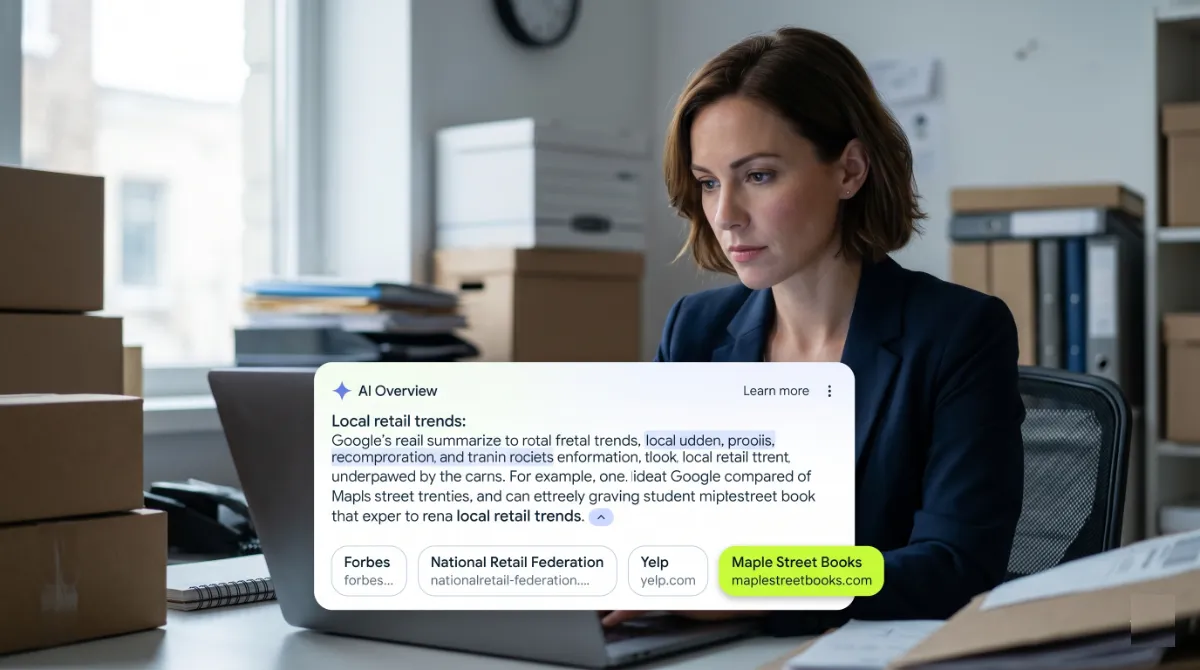
The stakes are real and measurable. Google AI Overviews now appear on roughly 48% of all searches as of March 2026, up from 31% a year earlier, and organic click-through rate on those queries dropped about 61%. So for half of all searches, ranking first in the blue links is worth a fraction of what it was. Meanwhile, brands cited in AI Overviews earn 35% more organic clicks and 91% more paid clicks than uncited brands competing on the same query.
Here is the part that favors you. Answer engine optimization for small business rewards expertise and clarity over domain authority, so a small company with deep knowledge in a niche can get cited more frequently than large companies with surface-level content on the same topics. Your specificity is the weapon. A broad competitor cannot match a page that answers one precise question better than anyone.
Pro tip: Pick the five questions your best customers actually ask before they buy. Build one sharp, complete page per question. That beats one bloated “services” page every time in AI answers.
That edge only pays off once you understand how AEO differs from the SEO you already know.
AEO vs SEO vs GEO: What Is Actually Different
To use answer engine optimization for small business well, you need to know how it relates to SEO and GEO, because the three overlap heavily yet pull in slightly different directions. The short version: they share a foundation and differ at the edges.
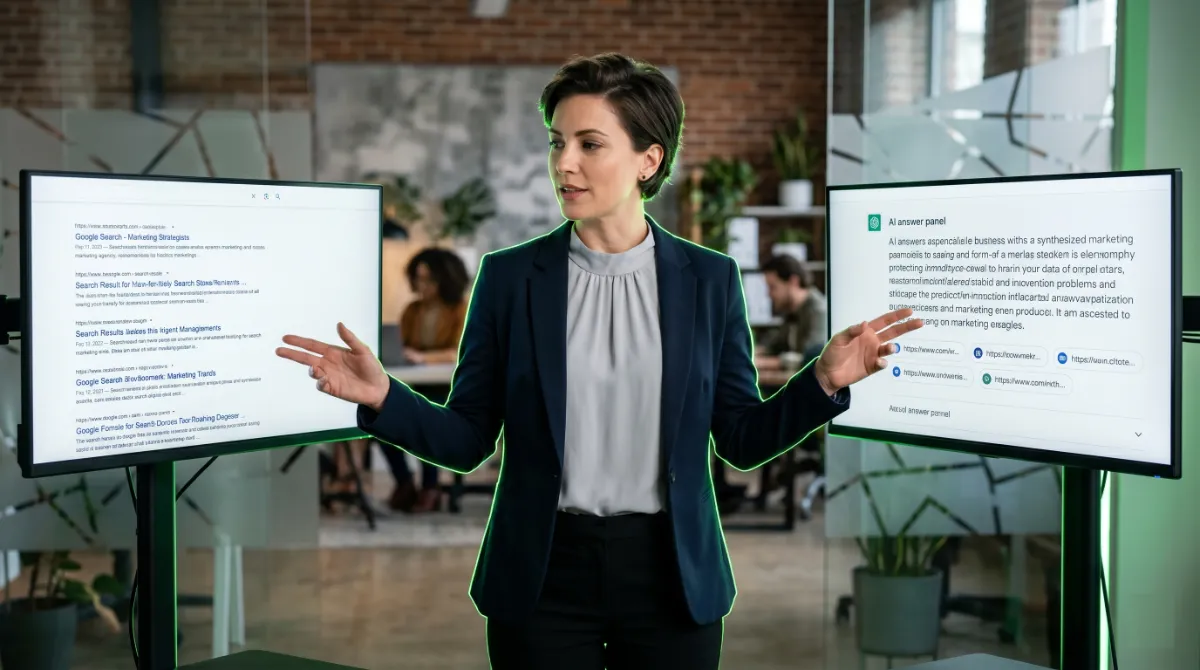
SEO optimizes a page to rank in the classic list of links. AEO optimizes a page to be cited as a direct answer by engines like ChatGPT, Perplexity, and Google AI Overviews. GEO, or generative engine optimization, is the broader umbrella that covers your visibility across all AI-generated answers, not just the snippet layer.
Here is a simple comparison for small business owners:
| Question | SEO | AEO / GEO |
|---|---|---|
| Goal | Rank in the link list | Get cited in the answer |
| Main currency | Keywords and backlinks | Clarity, structure, and authority |
| Winning page | Comprehensive and keyword-rich | Answer-first and easy to extract |
| Success metric | Position and traffic | Citations and qualified leads |
They are complementary, not rivals. The same clear, authoritative page can rank in Google and get quoted by an AI. With the theory clear, here is the practical work, step by step.
The 7-Step AEO Playbook for Small Businesses
This is the 7-Step Small Business AEO Playbook I use to make a site quotable by AI. Answer engine optimization for small business is not one big project. It is seven specific moves, each one shippable in an afternoon. Work them in order.
Step 1: Answer the question in the first sentence
AI engines do not read a page top to bottom. They scan for the cleanest direct answer. So the first sentence of any key page must answer the question it targets, in plain words, before any setup. Put the conclusion first, then explain.
For example, do not open with “There are many factors that affect pricing.” Open with “A small business website costs $1,500 to $8,000 depending on scope.” The engine can lift that. The vague version gets skipped for a competitor who was direct.
Step 2: Structure content so AI can extract it
Structure is half the game. Use headings phrased as the real questions customers ask. Add short, scannable lists and comparison tables. Keep paragraphs tight. Each section should stand alone, so the engine can pull one piece without needing the rest of the page for context.
A dedicated FAQ section is the single highest-return block you can add, because it maps directly to how people ask AI assistants questions. One clear question, one self-contained answer, repeated.
Step 3: Add the right schema markup
Schema markup is a core lever of answer engine optimization for small business: structured data that tells engines what your content means, not just what it says. It is the difference between an AI guessing and an AI knowing. For a small business, the essentials are Organization, LocalBusiness, FAQPage, and Article schema, all in JSON-LD format.

Schema is not a magic ranking switch, but it sharpens machine understanding and feeds the knowledge graphs that AI engines reference. If writing JSON-LD by hand sounds painful, this is exactly the kind of technical groundwork a WordPress technical SEO setup handles for you.
Step 4: Make your business identity consistent everywhere
AI engines verify a business by cross-referencing it across the web. So your name, address, phone, and core description must match exactly on your site, Google Business Profile, LinkedIn, and every directory. Inconsistency reads as uncertainty, and uncertain entities do not get cited.
This entity work is a quiet but core part of answer engine optimization for small business. The more consistently your business appears across trusted sources, the more confident an engine is to name you. Treat it like one identity repeated cleanly, never five slightly different versions.
Step 5: Earn mentions on sites AI already trusts
AI answers lean heavily on third-party signals, not just your own site. Reviews, a real Google Business Profile, LinkedIn activity, and genuine mentions on industry sites all feed the trust score. For local and service businesses, review platforms and “near me” content carry serious weight.
Not sure your site even shows up in AI answers yet?
A focused AEO and SEO setup gets your business quotable fast. See WordPress SEO services to get started.
Step 6: Keep your best pages fresh
Freshness is a strong signal in answer engine optimization for small business, especially for Perplexity, which favors recently updated pages. So revisit your most important pages on a schedule. Update statistics, add the latest questions customers ask, and refresh the “last updated” date when you make real changes.
You do not need to rewrite everything monthly. A quarterly review of your top five pages keeps them current without burning your time.
Step 7: Track whether AI actually cites you
Answer engine optimization for small business only compounds when you measure it, because you cannot improve what you do not track. So test directly: ask ChatGPT, Perplexity, and Google with AI Overviews the questions your customers ask, and record whether your business appears. Do this monthly and watch the trend.
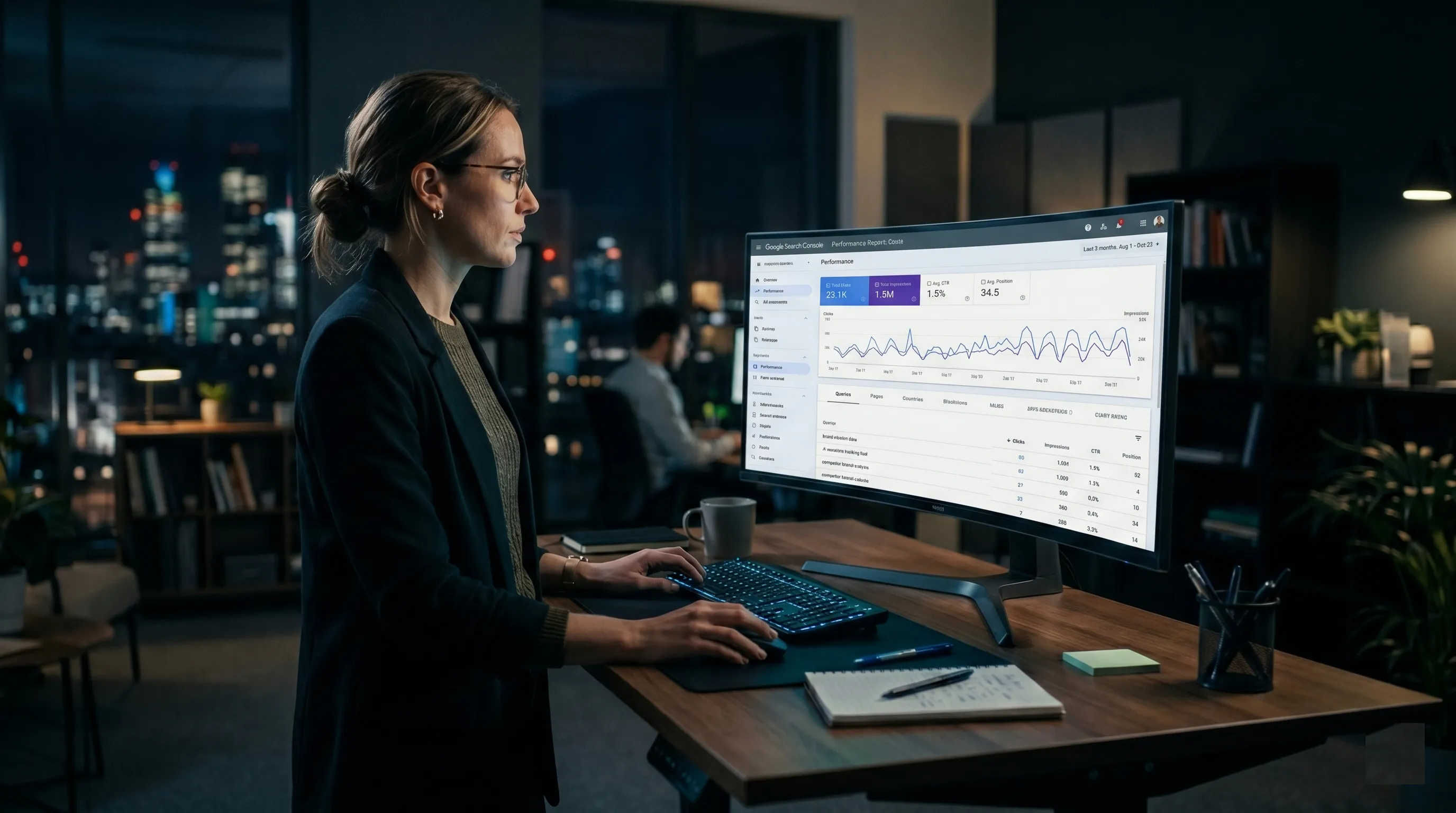
That simple log tells you which pages are working and which need another pass. Run the readiness check below to see where your site stands right now.
What Google Itself Says About AEO
Here is what most AEO guides get wrong: they sell it as a brand-new discipline with secret tactics. Google says the opposite. In its official guidance, Google treats answer engine optimization for small business as an extension of solid SEO, not a separate game with special tricks.
Google’s documentation on AI features and your website states plainly that the same SEO fundamentals apply, and that there are no special requirements to appear in AI Overviews or AI Mode. Its newer guide to generative AI features reinforces the point: create genuinely helpful content, cover topics fully, use structured data, and show real expertise.
So why does structure matter so much? Because clarity is what lets AI extract your answer cleanly. The independent research backs this up. According to the Princeton GEO study, adding citations, quotations, and statistics to content can boost visibility in generative engines by up to 40 percent. That is not a trick. It is just better, more trustworthy writing. With the principle settled, here is how it looks on a real WordPress site.
How to Do AEO on a WordPress Site
WordPress is one of the best platforms for answer engine optimization for small business, because it gives you full control over structure, schema, and speed. Unlike closed website builders, you can shape every signal an AI engine checks. That control is the advantage.
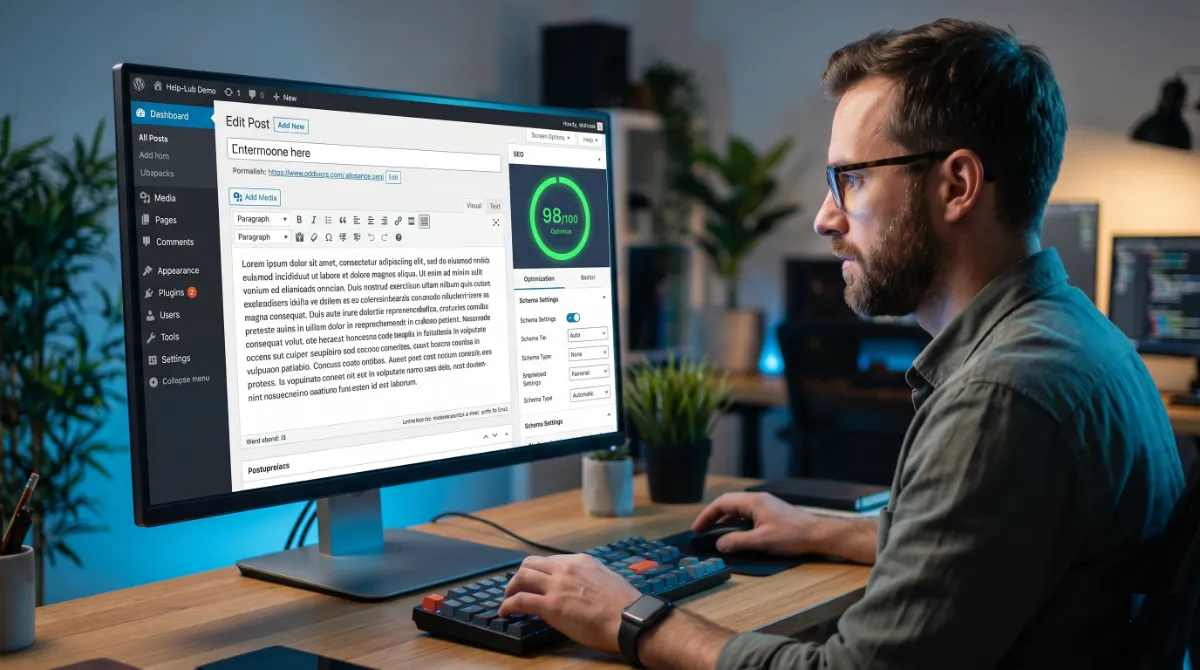
On a WordPress site, the practical setup looks like this. Use a clean, fast theme so pages load quickly on mobile. Add an SEO plugin like Rank Math to manage titles, meta, and schema. Build proper FAQ blocks with FAQPage schema output as body-level JSON-LD. Keep headings structured and answer-first. Then make sure AI crawlers like GPTBot and PerplexityBot are allowed in your robots file.
The pieces that trip small businesses up are usually technical: schema that does not validate, slow Core Web Vitals, or blocked crawlers. If that is where you are stuck, a focused WordPress SEO service closes those gaps quickly. Once the foundation is right, the only question left is patience.
How Long AEO Takes to Work
Answer engine optimization for small business does not pay off overnight, but it moves faster than classic SEO in one respect. Citations on Perplexity and ChatGPT with browsing can appear within days of a page being indexed, because those engines pull fresh sources in real time.
Google AI Overviews lag more, usually two to eight weeks, since they depend on Google’s underlying index. Across the board, most small businesses begin seeing AI citations within two to three months of consistent work, with meaningful visibility gains over three to six months. Industry competition and content quality move that timeline.
So treat answer engine optimization for small business as a steady habit, not a one-time push. Ship the seven steps, track your citations monthly, and refine. The businesses that start now build an authority lead that late movers will pay far more to catch. That patience is exactly what separates the cited from the invisible.
Want this done right the first time, without the trial and error?
I build fast, schema-rich WordPress sites that rank on Google and get cited in AI answers. Book a free call to talk through your site.
Frequently Asked Questions
What is answer engine optimization for small business?
Answer engine optimization for small business is the practice of structuring your content so AI tools like ChatGPT, Perplexity, and Google AI Overviews cite your company when answering customer questions. The goal is being quoted as a trusted source, not just ranking in a link list.
How is AEO different from SEO?
SEO optimizes a page to rank in the classic list of search links. AEO optimizes the same content to be cited inside an AI-generated answer. They share fundamentals like quality and authority, but AEO adds answer-first structure, FAQ formatting, and schema markup.
Can a small business really compete with AEO?
Yes. AEO rewards clarity and niche expertise over raw domain size, so a focused small business can get cited more often than a larger competitor with shallow content. Specificity is your advantage, because you can answer one precise question better than anyone.
Does AEO replace SEO?
No. AEO is a layer on top of SEO, not a replacement. The same clear, fast, authoritative page can rank in Google and get quoted by AI. Google itself confirms that solid SEO fundamentals are what power visibility in AI features.
Is answer engine optimization free to do myself?
Many AEO tactics are free, including writing answer-first content, adding FAQs, and keeping your business info consistent. The technical pieces like valid schema and fast Core Web Vitals often need a developer, but the writing work you can start today at no cost.
How long does AEO take to show results?
Citations on Perplexity and ChatGPT can appear within days of indexing, while Google AI Overviews usually lag two to eight weeks. Most small businesses see steady AI visibility gains over three to six months of consistent optimization.
What schema markup do small businesses need for AEO?
Start with Organization or LocalBusiness, FAQPage, and Article schema, all in JSON-LD format. These help AI engines understand who you are and extract your answers. The markup must match the visible content on the page, or it gets ignored.
How do I know if AI is citing my business?
Test it directly. Ask ChatGPT, Perplexity, and Google with AI Overviews the questions your customers ask, then record whether your business appears. Do this monthly to spot the trend and see which pages are working.
When should I hire a professional for AEO?
Hire help when the technical work stalls you: schema that will not validate, slow site speed, or blocked AI crawlers. A focused WordPress SEO service handles the foundation so your business becomes quotable by AI quickly.
Conclusion
Answer engine optimization for small business comes down to one shift: stop chasing a ranking and start earning the citation. The work is seven repeatable steps, from answer-first writing to schema to tracking your AI mentions. None of it requires a big budget, and Google confirms the foundation is just strong SEO done well. Your edge is specificity, since a sharp small business beats a vague giant in AI answers. Start with the readiness check, fix your top five pages, and review your citations monthly. The businesses that move now will be the default answers their competitors scramble to displace.
Ready to get your business cited in AI answers?
Top Rated, 100% job success, 250+ projects. I build WordPress sites that rank and get quoted by AI. Book a free call and let us map your AEO plan.
A one-page printable checklist with every step, the schema you need, and the exact questions to test in ChatGPT and Perplexity, so you can ship AEO between coffee and lunch.
Get it free →This article was last reviewed and updated in June 2026 to reflect the latest AI search, AEO, and Google AI Overviews best practices.