
- You do not rank on Perplexity, you get cited. It quotes 3 to 8 trusted sources per answer.
- Allow PerplexityBot in robots.txt first. Block it and your full content never appears in answers.
- Put the answer in the first two sentences. Perplexity lifts the top of the page, not paragraph four.
- Freshness, clean structure, and specific data raise your citation odds more than keyword density does.
- Most brands have not optimized for this yet, so the citation landscape is far less crowded than Google.
How to rank on Perplexity comes down to one shift: you stop chasing positions and start earning citations. Perplexity reads the web, trusts a small set of sources, and quotes 3 to 8 of them in every answer. Get cited by answering fast, structuring cleanly, staying fresh, and letting its crawler reach your pages.

Across 250+ client projects and more than 5 years building and fixing WordPress sites, I have watched the same pattern repeat. A page ranks well on Google, the owner assumes AI search will follow, and then it never shows up in a single Perplexity answer. The rules are different. This guide breaks down exactly how Perplexity picks sources, then gives you a 7-step stack to get your pages cited.
What ranking on Perplexity actually means
Ranking on Perplexity means getting cited, not getting a position. Google hands you a numbered list of links. Perplexity does not. It writes one synthesized answer and attaches a short list of numbered citations beside it.
So the goal changes completely. You are not fighting for spot number three. You are trying to be one of the few sources Perplexity trusts enough to quote. If you are not in that citation list, you are invisible for that query, even when you sit at the top of Google for the same search.

This matters more every month. As of 2026, Perplexity serves around 45 million monthly active users and handles roughly 780 million queries a month, and in February 2026 it dropped advertising for a subscription-only model. Its users skew technical, research-driven, and high-intent. Those are often the exact buyers you want. Therefore a single citation can carry real weight, and that is why the rest of this matters.
How does Perplexity choose its sources?
Perplexity chooses sources through retrieval augmented generation, or RAG. In plain terms, it works in three stages, and each stage filters you out or keeps you in.
- Retrieve. It pulls candidate pages from its own web index, supported by third-party search infrastructure.
- Rerank. A fine-tuned model scores those candidates on how directly they answer the question, how trustworthy the source looks, and how clean the content is.
- Answer. It writes the response and cites the top few sources, usually between 3 and 8.
Here is a useful way to picture it. Perplexity behaves like an editor building a briefing from a stack of reports. It does not reprint a whole report. Instead, it lifts the two clearest lines from the most trustworthy ones and footnotes where they came from. Your job is to be the report with the cleanest, most quotable lines on the topic.

One detail changes your whole strategy: Perplexity rarely searches your exact keyword. It splits a question into several related sub-queries and gathers sources for each, so to rank on Perplexity you need to be findable across many phrasings, not one.
Perplexity AEO vs Google SEO
Answer engine optimization and traditional SEO reward different things. Optimize a page only for Google clicks and you can actively lower your Perplexity citations. The table below shows why.
| Factor | Google SEO | Perplexity AEO |
|---|---|---|
| What you win | A ranked position | A citation inside the answer |
| Optimized for | Click probability | Helpfulness and accuracy |
| Reads your page as | A human who might click | A model that extracts a fact |
| Rewards | Keywords, intent, links | Direct answers, clean structure, fresh data |
| Punishes | Thin content | Long intros, ad clutter, pop-ups before the answer |
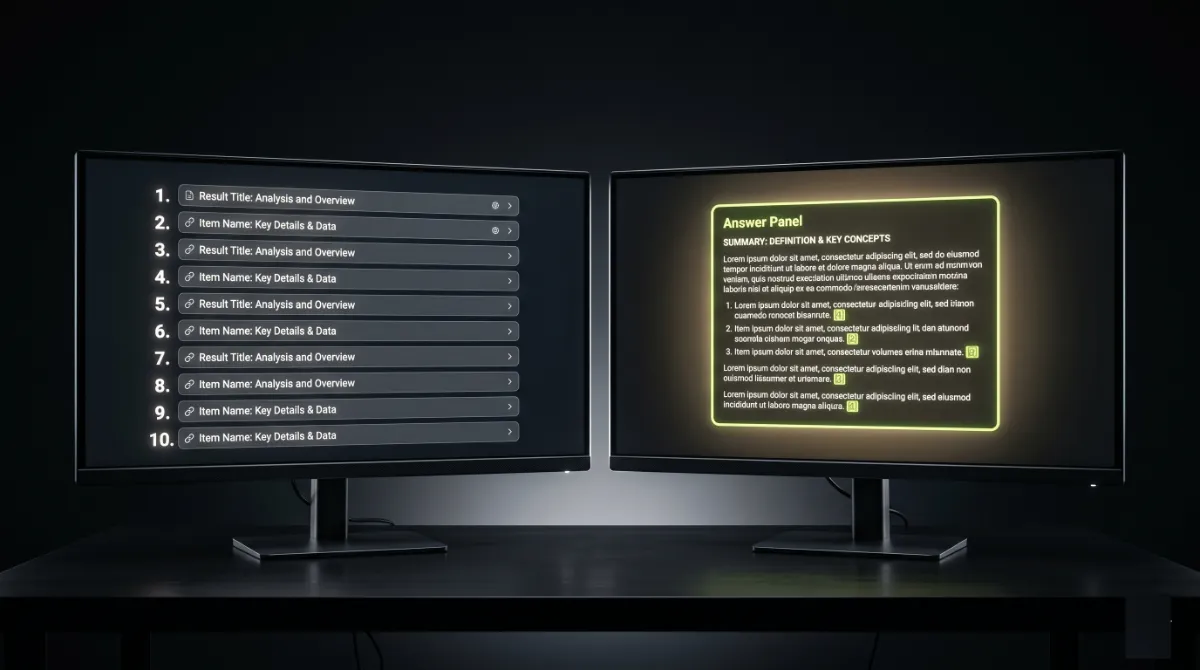
Pro tip: The same conversion pop-up that lifts your Google lead rate can interrupt extraction and push you out of a Perplexity answer. Delay intrusive elements until after the reader scrolls past your core answer.
So the two are not opposites, but they are not the same job either. Next, here is the stack that satisfies both.
How to rank on Perplexity: the 7-layer citation stack
This is my own 7-Layer Citation Stack, built from real client SEO work, and it is the practical answer to how to rank on Perplexity. Each layer raises the odds that Perplexity cites your page. Work them in order, because the early layers gate the later ones.

Layer 1: Let PerplexityBot in
If Perplexity cannot read your pages, you cannot be cited. Its crawler is PerplexityBot. First, confirm your robots.txt allows it rather than blocking it by default. Perplexity’s help center confirms the crawler respects robots.txt directives.
User-agent: PerplexityBot
Allow: /

User-agent: Perplexity-User
Allow: /
Next, if you run a firewall like Cloudflare, whitelist Perplexity bots explicitly, because a WAF can silently block them even when robots.txt is open. Perplexity’s crawler documentation lists the user agents and behavior so you can verify access.
Layer 2: Answer in the first two sentences
Lead with the answer. The model lifts the top of your page, so the bottom line belongs in the first two sentences, not after a 300-word warm-up. Bury the answer and you almost never get cited.
Use the same rule inside every section. Open each heading with a direct, complete answer, then add context underneath. Think of it as inverted pyramid writing: conclusion first, detail second. This also wins Google featured snippets, so one habit serves both engines at once.
Layer 3: Structure for extraction
Make the answer easy to lift. Clean headings, short paragraphs, numbered steps, and comparison tables all let the model pull a tidy snippet. Walls of text do not extract well.
Phrase your headings as questions where it fits, because that mirrors how people actually ask Perplexity. A heading like “How does Perplexity rank content?” maps cleanly to a sub-query. Then keep each answer self-contained, so it reads correctly even when quoted on its own.
Layer 4: Publish specifics and original data
Generative engines hunger for specifics. Replace vague claims with numbers, dates, versions, and named tools. A page that states a concrete figure becomes the cited source whenever that fact comes up.
Original data is the strongest version of this. If you run a small survey, publish a benchmark, or share a real result from your own work, you create a fact that exists nowhere else. That is exactly the kind of line Perplexity loves to quote and attribute.
Stuck with a slow, messy site that AI bots struggle to read?
A clean, fast WordPress build is the foundation for both Google and AI search. See my WordPress and SEO services for a same-week start.
Layer 5: Stay fresh
Freshness is the easiest edge most sites ignore. Perplexity rewards recent and recently updated content, and it tends to skip stale pages because they are risky to cite.
So add a visible last-updated date and refresh pages when the topic moves. For fast-changing subjects like AI tools and platform features, a quarterly update can be the difference between getting cited and getting ignored.
Layer 6: Build trust and topical depth
On competitive topics, Perplexity leans toward sources it already trusts. You build that trust in two ways. First, on-page: real author bios, credentials, an about page, and structured data that explains who wrote what.
Second, off-page and across your own site: links from respected sites, reviews, comparisons, and a cluster of related articles instead of one stranded post. Depth signals genuine expertise, and a strong internal technical SEO foundation helps every page in the cluster get discovered.
Layer 7: Track citations and iterate
Measure what you are trying to win. Search Perplexity for the questions your customers ask, not your brand name, then note every domain that gets cited and how often. That list is your real competition.
Open the cited pages and study what they share: structure, freshness, length, and data. Rework your page to match or beat those patterns, then republish and recheck in a few weeks. AI mention tracking tools can automate this once you know what to look for.
Want this handled end to end?
If you would rather an expert audit your site, fix the crawl and structure, and build content that earns citations, book a free call and describe your setup.
The robots.txt trap that kills citations
Here is the trap that catches careful site owners. They want a page crawled but kept out of summaries, so they block it in robots.txt and add a noindex tag. That backfires.
If you block PerplexityBot in robots.txt, it cannot reach the page to read your noindex tag. As a result, your page can still appear as a bare citation, just a title and URL with no useful content, while losing any chance to be quoted properly. The fix is simple: allow the crawl in robots.txt, then use the meta robots tag to control indexing.
One more honest caveat. In 2025, Cloudflare publicly reported cases of crawling that worked around no-crawl directives, so do not assume blind compliance. Check your server logs to confirm what is actually accessing your site.
Still not getting cited after fixing the basics?
That usually means a deeper crawl, structure, or authority problem. I audit the site, fix the foundation, and build a content cluster that earns citations. Start with a free call or see my services.
Frequently Asked Questions
How do I rank on Perplexity?
Get cited rather than ranked. Allow PerplexityBot to crawl your site, answer the question in the first two sentences, keep formatting clean and extractable, publish specific data, and keep pages fresh. Those steps decide whether Perplexity quotes you.
Does Perplexity use Google rankings?
Not directly. Perplexity uses its own index plus third-party search infrastructure, then reranks candidates with its own model. You can sit at the top of Google and still never appear in a Perplexity answer for the same query.
How many sources does Perplexity cite?
Usually between 3 and 8 per answer. That small number is why a citation is so valuable, and why clean structure and trust signals matter so much when Perplexity decides which sources to quote.
Will Perplexity use my content to train AI models?
No. Perplexity states it does not build foundation models, so PerplexityBot indexes pages for citation and search rather than for model pre-training. Allowing it affects your visibility, not your data being used for training.
Should I block PerplexityBot?
Only if you do not want AI search visibility. Blocking it means Perplexity may show your URL and title but no full content, which removes you from answers. For most businesses, allowing it is the better call.
How long does it take to rank on Perplexity?
There is no fixed timeline. Crawl and robots changes can reflect within about a day, but earning citations on competitive topics depends on your structure, freshness, and authority improving over weeks, not hours.
Is my website ready to get cited by Perplexity?
Your site is ready when crawlers can reach it, the answer sits in the first two sentences, the structure is clean, the content is fresh, and it includes specific data. Use the readiness checker above to find your gaps in a minute.
When should I hire a professional for AI search optimization?
Hire help when crawl issues, slow load times, or weak structure keep blocking citations despite your fixes. A specialist can audit the site and build the content depth that earns trust. You can book a free call to talk through your setup.
Conclusion
Learning how to rank on Perplexity is really about earning citations, and that comes down to clarity and trust. Let the crawler in, answer in the first two sentences, structure your content for clean extraction, back it with specifics, and keep it fresh. Build authority around it and track which questions you win. Most brands have not done this yet, so the opening is wide. Pick one important page, run it through the 7-layer stack, and watch whether Perplexity starts to quote you.
Get your site cited by AI and ranked on Google, from one clean build.
I build and optimize fast WordPress sites for search and AI answer engines. Book a free call and tell me what you want to rank for.
A one-page checklist covering crawl setup, answer-first structure, freshness, and trust signals, so you can audit any page in minutes.
Get it free →This article was last reviewed and updated in June 2026 to reflect the latest Perplexity crawling and citation behavior.