
WooCommerce Speed Optimization That Lifts Conversion, Not Just Scores
WooCommerce Speed Optimization by a Top Rated freelancer. Store-specific tuning for product pages, cart, checkout, variations, and galleries with cache strategies that do not break customer experience.
- Store-specific optimization, not generic plugins
- Cart and checkout never broken
- Variation queries optimized properly
- Real conversion impact, not just scores

What is WooCommerce Speed Optimization?
WooCommerce Speed Optimization is the focused technical work of making WordPress e-commerce stores load fast, render quickly, and handle high traffic without breaking. It covers product page performance, cart and checkout speed, variation query optimization, image and gallery work, database tuning for stores, e-commerce-specific caching strategies, hosting and server tuning, plugin audits, and Core Web Vitals for stores. Done properly, it lifts conversion rate by reducing the friction caused by slow pages, cart delays, and slow checkout interactions.
What's making your WooCommerce store slow
Most slow WooCommerce stores share the same five root issues. Generic WordPress speed plugins do not address them because they require e-commerce-specific tuning rather than broad optimization.
Slow product pages
Variable products generate complex queries. Galleries render slowly. Related products and reviews load synchronously. Pages take 4+ seconds to render.
Cart and checkout delays
Cart calculations slow on every update. Checkout JavaScript blocks interactions. Payment gateway scripts add overhead. INP fails on mobile.
Wrong caching configuration
Generic caching breaks WooCommerce. Customers see wrong cart contents. Prices do not update. Coupons fail to apply. Caching needs e-commerce-specific rules.
Bloated database
Abandoned carts, expired sessions, order metadata, customer notes accumulate. Active stores accumulate hundreds of MB of bloat that slow every query.
Plugin overload
30 to 50 plugins for payments, shipping, marketing, analytics. Many load assets on every page when they only need specific pages. Performance dies under accumulation.
Poor hosting for stores
Cheap shared hosting cannot handle WooCommerce traffic patterns. TTFB above 800ms makes every other optimization fight uphill against slow server response.
Everything included in WooCommerce Speed Optimization
Product page optimization
LCP image priority, variation query reduction, lazy gallery loading, conditional related-product rendering. Product pages load in under 2 seconds.
Cart and checkout speed
Fragment caching, optimized cart calculations, deferred checkout JavaScript, payment gateway script optimization. INP under 200ms during interactions.
Variation query optimization
Database indexes for variations, query caching, smarter variation fetching, AJAX variation loading. Variable product pages load 3 to 5 times faster.
Image and gallery work
WebP and AVIF conversion, responsive srcset, lazy loading below fold, CDN delivery, thumbnail regeneration. Image weight cut by 60 percent typically.
E-commerce database tuning
Clear abandoned carts, expired sessions, old transients. Add proper indexes for order queries. Configure database for read-heavy product browsing patterns.
Store-aware caching
Page caching with correct WooCommerce exclusions, fragment caching for dynamic elements, object caching for product data, AJAX caching for variations.
Hosting + server tuning
PHP version, MySQL config, Redis or Memcached object caching, memory tuning. Migration recommendations if hosting cannot handle store traffic.
Plugin audit + cleanup
Identify which plugins slow the store. Recommend leaner alternatives. Configure conditional loading. Remove abandoned or unused plugins.
Before/after report + verification
PageSpeed Insights and GTmetrix on key pages, CrUX field data trends, real purchase flow tested. Detailed report with metrics. 30 days bug fixes included.
How a WooCommerce speed engagement works
-
01
Store performance audit
Run PageSpeed Insights and GTmetrix on homepage, product pages, category pages, cart, and checkout. Review CrUX field data. Identify store-specific bottlenecks.
2-4 hours -
02
Diagnosis report + fixed quote
Written report listing the issues, their conversion impact, and prioritized fixes. Fixed quote and timeline included. Approval before any work begins.
1-2 business days -
03
Hosting + caching configuration
Configure caching with WooCommerce-specific exclusions. Set up Redis or Memcached for object caching. Migrate hosting if the audit identifies it as a bottleneck.
1-3 business days -
04
Product + checkout optimization
Optimize variation queries, lazy-load galleries, prioritize LCP elements, configure fragment caching for cart and checkout, defer non-critical JavaScript.
2-4 business days -
05
Database + plugin cleanup
Clear database bloat, add proper indexes, audit plugin load, configure conditional loading, remove unused plugins. Database optimized for store traffic patterns.
1-2 business days -
06
Verification + handover
Re-run PageSpeed and GTmetrix, test real purchase flow on multiple devices, monitor CrUX over 28 days. Detailed before/after report. 30 days of free bug fixes.
Final + 30 days
The WooCommerce performance stack I work with
I pick tools based on what your specific store needs and what your hosting platform provides. Most engagements use the technologies below in the right combination for your store size, traffic, and product complexity.
Real projects, real outcomes
Recent work delivered for clients worldwide.
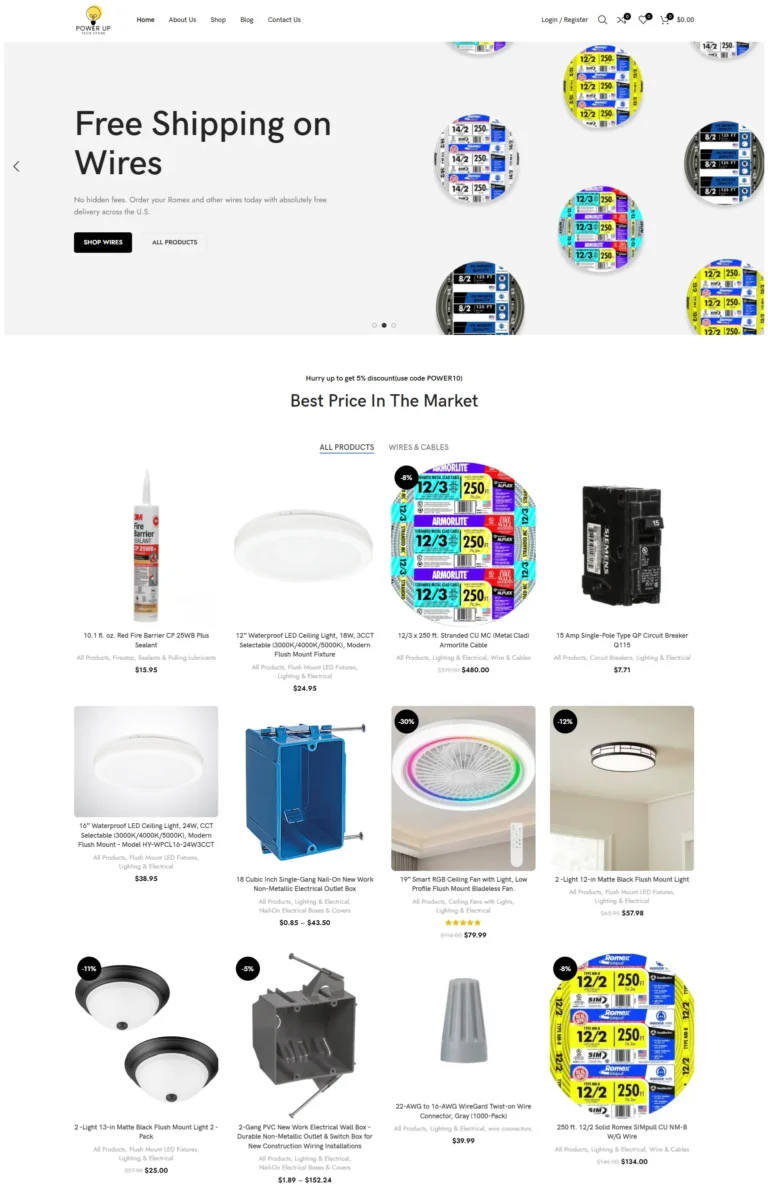
PowerUp Tech Store
High-performance WooCommerce store for electrical products with dynamic catalogs, advanced filters, and optimized checkout.
Read case study
Ethnik Ease
Modern fashion e-commerce platform specializing in ethnic wear with seasonal sales, discount logic, and responsive shopping layouts.
Read case study
SK Crystals
Astrology and healing crystal e-commerce store with WooCommerce integration and modern spiritual aesthetic.
Read case studyReal numbers from real WooCommerce store optimizations
What clients say
Lovely guy to work with!
Great and honest guy. I liked working with him as he is always available specially whenever there is an issue. All the best Devansh!!
Highly recommend working with him. We were working on very strict deadlines and Devansh managed to deliver exceptional results with quick turnaround time.
Transparent WooCommerce Speed Optimization pricing
Three options cover most stores. From a focused audit to identify your bottlenecks, to a full one-time optimization, to ongoing monthly programs for active stores that need continuous tuning.
Store Audit
Identify your store-specific bottlenecks
- PageSpeed audit on key store pages
- Homepage + product + category + cart + checkout
- GTmetrix and CrUX field data review
- Variation query analysis
- Plugin load assessment
- Hosting and server review
- Written report with prioritized fixes
- Fixed quote for full optimization
- 1 follow-up call
- Delivered in 3-5 business days
Full Store Speed
Most popular: complete WooCommerce overhaul
- Full audit included
- Hosting + caching configuration
- Product page optimization
- Cart and checkout speed work
- Variation query optimization
- Image and gallery optimization
- E-commerce database tuning
- Store-aware caching configuration
- Plugin audit and cleanup
- Real purchase flow testing
- Before/after report with metrics
- 30-day re-fix guarantee
- Delivered in 7-14 business days
Ongoing Store Care
For active stores that need continuous tuning
- Full optimization (everything in Fix tier)
- Plus monthly performance audits
- PageSpeed and Core Web Vitals tracking
- CrUX field data trend monitoring
- Plugin update regression testing
- Quarterly database maintenance
- New product page optimization
- Real purchase flow monitoring
- Priority response on speed regressions
- Monthly performance report
- Cancel anytime
- Best for active stores with growing inventory
All prices in USD, fixed-quote per project for one-time work, no hidden fees. Custom quotes for very large stores (5000+ products), high-traffic stores, marketplace platforms, or B2B stores with complex pricing rules. Hosting migration, premium plugin licenses, and CDN subscriptions not included unless agreed.
Generic speed plugin vs WooCommerce-specific optimization
Everything you need to know about WooCommerce Speed Optimization
WooCommerce Speed Optimization is the focused technical work of making WordPress e-commerce stores load fast, render quickly, and handle high traffic without breaking. Unlike general speed optimization, WooCommerce stores have unique performance challenges around product pages, cart and checkout, variation queries, and image-heavy galleries that generic plugins do not address. This guide explains what real WooCommerce Speed Optimization includes in 2026, what it should cost, and how to evaluate the right specialist for your store.
I’m Devansh Thakkar, a Top Rated freelancer on Upwork with 5+ years of experience and 100+ projects delivered. WooCommerce performance is one of my core specialties, with measurable speed wins shipped for stores across the United States, United Kingdom, Australia, Canada, Sweden, and beyond. Every WooCommerce Speed Optimization engagement follows the same standard: real before-and-after metrics, store-specific tuning, no broken cart or checkout functionality, and verification through real-user data on actual customer journeys.
What WooCommerce Speed Optimization Actually Includes
Modern WooCommerce Speed Optimization covers nine distinct areas. Most underperforming stores have problems in four or five of them simultaneously. Real specialist work identifies which specific issues actually limit your conversion rate, then addresses those with store-aware techniques rather than generic optimization.
Product Page Performance
Product pages are usually the slowest part of any WooCommerce store. They load product data, variations, related products, reviews, custom fields, and image galleries simultaneously. Each variable product runs additional database queries to fetch every variation combination. Real optimization reduces these queries through caching, lazy-loads variations until needed, and prioritizes the LCP image with proper fetchpriority hints.
Cart and Checkout Speed
Cart and checkout pages cannot be cached the same way as static pages because they show user-specific content. Most caching plugins break checkout when configured wrong. Real WooCommerce Speed Optimization configures fragment caching, exempts the right pages from cache, optimizes cart calculation logic, and ensures the checkout JavaScript loads efficiently without blocking interactions.
Variation Query Optimization
Variable products generate complex SQL queries that can dominate page load time on stores with many variations. A product with 5 attributes and 3 options each generates 15 variations, and the database queries to fetch them are not optimized by default. Real optimization adds proper indexes, caches variation data appropriately, and reduces the query load through smarter fetching strategies.
Image and Gallery Optimization
Product galleries with 8 to 20 high-resolution images are common in e-commerce. WebP and AVIF conversion alone reduces image weight by 50 to 70 percent. Lazy loading below the fold, responsive srcset, proper thumbnail generation, and CDN delivery through services like Cloudflare compound the savings. Most stores can cut image weight by 60 percent with no visible quality loss.

Database Optimization for Stores
WooCommerce stores accumulate database bloat fast: abandoned carts, expired sessions, transient data, order metadata, customer notes. A store running for two years without database maintenance can have 500MB+ of bloat that adds noticeable load time to every query. Real optimization clears bloat, adds proper indexes for WooCommerce-specific queries, and configures the database for the read-heavy patterns of product browsing combined with the write-heavy patterns of checkout.
Caching Strategy for E-commerce
Generic caching breaks WooCommerce in subtle ways. Logged-in customers seeing wrong cart contents, prices not updating after promotions, or coupons failing to apply are common symptoms of misconfigured caching. Real WooCommerce Speed Optimization configures page caching, fragment caching, and object caching with the specific exclusions and rules that WooCommerce needs. LiteSpeed and WP Rocket both handle this when configured correctly.
Hosting and Server-Level Tuning
WooCommerce stores need more server resources than blog or brochure sites. PHP version, MySQL configuration, Redis or Memcached for object caching, and adequate memory all affect store performance. Sites on cheap shared hosting often need migration to Cloudways, WP Engine, or Kinsta before any other optimization makes a meaningful difference.
Plugin Audit for E-commerce Stack
WooCommerce stores typically run 30 to 50 plugins for payment gateways, shipping, marketing, analytics, and customizations. Many of these plugins load unnecessary assets on every page when they only need to run on specific pages. A real plugin audit identifies which plugins are actually slowing the store, recommends leaner alternatives, and configures conditional loading where possible.
Core Web Vitals for E-commerce
Google’s Core Web Vitals apply to e-commerce sites with extra weight because mobile shopping is the primary use case. LCP on product pages, INP during cart interactions, and CLS during checkout all affect both rankings and conversion rates. This overlaps with my dedicated Core Web Vitals Optimization service for stores that need surgical metric-specific work.
How Much Does WooCommerce Speed Optimization Cost?
WooCommerce speed pricing reflects the complexity of e-commerce optimization compared to generic site speed work. A focused WooCommerce speed audit identifying store-specific bottlenecks costs $299 to $499. Complete one-time optimization that addresses all major performance areas runs $799 to $1,499 for most stores. Ongoing monthly programs with regression monitoring and continuous tuning typically run $399 to $1,499 per month depending on store size and traffic.
Beware of pricing that seems too good. A $99 “WooCommerce speed fix” usually means installing a generic caching plugin, which often breaks checkout or shows incorrect cart contents. The pattern looks fast in tests for two weeks then breaks customer purchases for two months until someone notices. Real WooCommerce Speed Optimization has higher base cost because it requires e-commerce-specific knowledge that generic speed work lacks.
The Real Cost of Slow WooCommerce Stores
Slow stores cost real money in measurable, compounding ways. Most store owners only see one of these costs at a time and underestimate the cumulative damage.
- Direct conversion loss of approximately 7 percent for every 100 milliseconds of added load time, according to Google’s research on speed and conversion. A store doing $50,000 monthly with a 2-second delay loses around $7,000 monthly in conversion alone.
- Cart abandonment increases sharply on slow checkout flows. Customers who reached the checkout page and gave up represent the most painful losses because they were ready to buy.
- Search ranking damage as Google demotes slow stores in product search results and Google Shopping. Competitors with faster stores win clicks even with similar pricing.
- Higher ad costs through worse Quality Score on Google Ads. Slow landing pages literally pay more per click than fast ones for the same keyword.
- Reduced repeat customer rate from frustrating first purchases. Customers who experienced a slow checkout often do not return for a second purchase.
- Mobile traffic loss at scale. Mobile shoppers abandon 53 percent of pages that take longer than 3 seconds to load, and most e-commerce traffic is now mobile.
The real cost of slow WooCommerce stores is not the speed itself. It is the conversions, rankings, and repeat customers you will never know you lost because shoppers left before they ever saw your offer.
WooCommerce Speed Optimization vs Generic WordPress Speed
Both services overlap, but they solve different problems. The right choice depends on what your site actually is and what’s failing.
Generic WordPress Speed Optimization targets overall page load and PageSpeed Insights scores across blog posts, landing pages, and standard WordPress content. It works well for content sites, brochure sites, and lead-gen sites. WooCommerce Speed Optimization targets the specific performance challenges of e-commerce stores: variable products, cart and checkout dynamics, payment gateway integration overhead, customer account pages, and product gallery rendering. Generic optimization that ignores these areas may move scores on the homepage while leaving product pages slow.
For stores where conversion rate matters, the WooCommerce-specific work pays for itself within weeks through measurable revenue lift. For sites where the store is secondary to other content, general speed work may be sufficient. Many engagements include both layers: general speed first to build the foundation, then WooCommerce-specific work to address store-specific bottlenecks.
Who Needs WooCommerce Speed Optimization?
Not every store needs specialist speed work. The investment makes sense when any of the following apply.
Your store generates meaningful revenue and conversion rate matters. Even small percentage improvements translate to substantial revenue gains. Your product pages or checkout feel slow and you suspect it is costing sales. Customer feedback or analytics suggests cart abandonment is high. You sell variable products with many variations and pages render slowly because of variation queries.
You operate a high-traffic store where server load becomes a bottleneck during peak hours. You compete in price-sensitive categories where every conversion percentage point matters. You spend on Google Ads and want to reduce cost per click through better Quality Score. You’ve already done general speed work and the homepage is fast, but product and category pages remain slow because they need different optimization.
How to Choose a WooCommerce Speed Specialist
The freelance market is crowded with WordPress speed providers, but few have real WooCommerce experience. Most apply generic speed plugins and hope it works for stores. Look for these signals when hiring a WooCommerce-specific specialist.
Real e-commerce experience, not just WordPress knowledge. A genuine specialist understands variation queries, payment gateway impact, fragment caching, and the specific edge cases of cart and checkout caching. Verified third-party reviews mentioning specific store optimization results. Client reviews on platforms like Upwork that describe e-commerce speed improvements carry weight because they cannot be faked.
Knowledge of WooCommerce ecosystem extensions, not just core. Subscription products, B2B plugins, marketplace platforms, multilingual stores, and HPOS migration all have unique performance considerations. Direct work with no agency middlemen, since e-commerce speed work involves carefully testing real purchase flows that does not delegate well.
WooCommerce Speed Trends in 2026
The WooCommerce performance landscape evolves with WordPress and broader web standards. The trends shaping WooCommerce Speed Optimization in 2026 reflect both technical changes and how stores now operate.
HPOS (High-Performance Order Storage) is now the default for new installations and most older stores have migrated. The new architecture queries dedicated tables instead of the legacy posts table, delivering significant speed improvements for stores with large order volumes. Stores running thousands of orders monthly see the biggest impact. Cart and Checkout blocks replaced the legacy shortcode-based checkout for new stores, with measurable INP improvements when properly implemented.
AI-driven product personalization plugins integrate directly with WooCommerce but add JavaScript overhead that affects INP if not implemented carefully. Headless WooCommerce combining a React or Next.js frontend with WooCommerce as commerce backend is gaining ground for high-traffic stores but remains complex enough that most stores get better ROI from optimizing traditional WooCommerce. Cloudflare image optimization through Polish and Mirage automates significant image performance work that previously required manual tuning.
WooCommerce Speed Maintenance and Monitoring
Speed optimization is not a one-time fix for active stores. WooCommerce stores slow down over time as products grow, plugins update, marketing scripts get added, and traffic patterns shift. A store optimized to PageSpeed 90 in January often drops to 65 by July without active monitoring.
Monthly performance audits using PageSpeed Insights and GTmetrix should run on the homepage, sample product pages, category pages, cart, and checkout. Field data from Search Console shows real customer experience, which can differ from lab tests. Catching regressions early through dedicated WooCommerce Speed Optimization monitoring prevents them from compounding into major rebuilds.
Plugin updates need performance regression testing because new versions sometimes ship with bloat or break previous optimizations. Database optimization to clear expired sessions, abandoned carts, and old transients should run quarterly. Most active stores accumulate 100 to 500 MB of database bloat per year without active cleanup. Image audits catch new product images that bypassed optimization automation.
Get WooCommerce Speed Optimization Today
If your WooCommerce store feels slow or analytics suggests speed is hurting conversions, the next step is a free 30-minute discovery call. We’ll review your current performance, identify the most likely bottlenecks specific to your store, and discuss realistic improvement targets. Within 48 hours of that call, you’ll receive a fixed-quote scope with a clear timeline and projected speed lift.
You can also browse my portfolio of recent work to see real before-and-after speed results across e-commerce categories, or read what past clients have said about working with me on store optimization projects.
WooCommerce Speed Optimization questions, answered
How much does WooCommerce Speed Optimization cost?
How much faster will my WooCommerce store be?
Will speed optimization break my WooCommerce store?
How long does WooCommerce Speed Optimization take?
Can you optimize my WooCommerce store on cheap hosting?
Do you fix slow product pages with many variations?
Will Cloudflare alone fix my WooCommerce speed?
How does this differ from your general WordPress speed work?
What's included in 30-day post-optimization support?
Do you optimize stores in any country or only US/EU?
More to dig into
-
Slow WooCommerce Store? 8 Fixes That Work in 2026
🕑 12 min read Updated: June 2026 Table of Contents Why Your WooCommerce Store Is Slow Diagnose Before...
Read article -
WooCommerce vs Shopify for SEO: An Honest 2026 Verdict
🕑 12 min read Updated: June 2026 Table of Contents The Short Answer Where WooCommerce Wins: Control Where...
Read article -
Headless WooCommerce Pros and Cons: Is It Worth It?
🕑 12 min read Updated: June 2026 Table of Contents What Is Headless WooCommerce? The Pros of Headless...
Read article
-
WordPress Speed Optimization Services
Real PageSpeed lifts of 25 to 60 points, Core Web Vitals that actually pass on mobile, no broken...
View service -
WordPress Landing Page Development
WordPress Landing Page Development by a Top Rated freelancer. High-conversion pages built for paid traffic, lead generation, and...
View service -
WordPress Technical SEO Services
WordPress Technical SEO Services by a Top Rated freelancer who combines SEO expertise with WordPress development capability. Crawl...
View service
Ready to start?
Book a free 30-minute call. No pitch, no pressure. We discuss your project and decide if we're a fit.