
White-Label WordPress Development That Scales Your Agency Without the Hire
White-Label WordPress Development by a Top Rated solo specialist for marketing, design, SEO, and digital agencies. Direct PM communication, NDA-protected partnership, multi-path delivery across Elementor, Bricks, Divi, custom themes, and custom plugins. No client contact, no PM layers, no junior rotation.
- NDA signed before project details exchange
- Direct PM communication, no large agency layers
- Same specialist every project, no junior rotation
- Multi-path: Elementor, Bricks, Divi, custom themes, custom plugins
What is White-Label WordPress Development?
White-Label WordPress Development is the focused work of building WordPress sites, custom themes, custom plugins, and WooCommerce stores for marketing agencies, design agencies, SEO agencies, and digital agencies who deliver the work to their end clients under their own brand. The agency owns the client relationship, brand, and contract; the white-label partner provides the WordPress development capacity. Real White-Label WordPress Development covers NDA and branded deliverables, direct project manager communication, multi-path WordPress site builds, theme customization and custom themes, plugin customization and custom plugins, performance tuning, WooCommerce setup and extensions, maintenance and ongoing support retainers, and migration and redesign projects. Agencies typically mark up these costs 30 to 60 percent when billing end clients.
Why agencies struggle with WordPress capacity
Most agencies hit the same six problems when they need WordPress development capacity beyond their internal team. Each problem has a different cost structure, but all of them quietly drain agency margins until the right white-label partnership replaces them.
Hiring senior WordPress dev costs $80K-$120K/year
Plus benefits, equipment, recruiting time, and management overhead. Fixed cost regardless of project flow. Slow months you pay for capacity you do not need; busy months you cannot scale fast enough.
Freelancers miss deadlines and disappear
Upwork and Fiverr freelancers juggle multiple clients, take vacations without notice, and have no accountability structure when projects slip. Your agency reputation absorbs the damage when their work fails.
Large white-label agencies create PM bottleneck
Communication routes through PM layers between your team and the actual developer. Translation losses, slower iteration cycles, more revision rounds. Junior developer rotation means context loss between projects.
Quality varies wildly across white-label providers
Cheap providers route work to whichever developer is available rather than the senior specialist initial conversations suggested. Code that ships to your client looks fine on launch but creates maintenance liability.
Communication friction across handoffs
Each project handoff between developers loses context. New developer needs onboarding to your standards, brand patterns, and client preferences. Extra revision rounds compensate for missing context.
Code quality issues affecting maintainability
WPCS not followed, security hardening skipped, accessibility ignored. Documentation absent. Next developer needs weeks to reverse-engineer the build before any change is safe to ship.
Everything included in the agency partnership
NDA + branded deliverables
Comprehensive NDA before project details exchange. Identity protection, no direct client contact, IP assignment, non-solicitation, defined breach consequences. All deliverables under your agency brand.
Direct PM communication
Your project manager communicates directly with the developer doing the actual work. No translation layers, no junior rotation. Same specialist with full memory of your agency standards on every project.
Multi-path WordPress site builds
Custom themes for performance and brand uniqueness. Elementor for marketing site editing flexibility. Bricks for performance-sensitive projects. Divi for clients with lifetime licensing.
Theme customization + custom themes
Premium theme customization (ThemeForest, StudioPress, Astra). Hello Elementor child themes. Block themes with FSE. Ground-up custom theme development with WPCS compliance and documentation.
Plugin customization + custom plugins
Existing plugin customization through proper hooks. Custom plugin development from scratch following WordPress Plugin Handbook. Security hardening, REST API endpoints, custom Gutenberg blocks.
Performance + Core Web Vitals
WebP image conversion, font loading strategy, lazy loading, asset cleanup, CDN integration. Sites pass Core Web Vitals on launch day supporting your SEO and paid traffic strategy.
WooCommerce setup + extensions
Complete WooCommerce setup, custom template integration, custom extensions for industry-specific commerce models (subscriptions, rentals, B2B wholesale, configurator products).
Maintenance + ongoing support
Monthly maintenance retainer support: plugin updates with compatibility testing, security monitoring, performance monitoring, content updates. Highest-margin recurring revenue for your agency.
Migration + redesign + Figma
WordPress migration (host, platform, domain). Website redesign with SEO preservation. Figma to WordPress conversion. One vendor for breadth rather than juggling multiple specialists.
How a White-Label WordPress Development partnership starts
-
01
Discovery + partnership fit
Free 30-minute call covering your agency profile, typical project types, client demographics, communication preferences, capacity needs. Initial assessment of fit.
30 min -
02
NDA + pricing model
Comprehensive NDA signed before any specific project details exchange. Pricing model selection (retainer vs hourly vs fixed-price). Reference checks with other agency partners on request.
1-2 business days -
03
Onboarding + brand setup
Your project management system access, email domain setup if required, reporting template alignment, communication channel configuration. Documentation handover process established.
1-2 business days -
04
First project delivery
Project scope intake follows your agency standard process. Regular updates through your PM tool. Code review and QA on staging. Documentation under your branding. Client-facing handoff through your team.
Per project scope -
05
Ongoing relationship management
Monthly check-ins keep partnership aligned as your agency grows. Capacity allocation tuning based on actual project flow. Process refinements based on lessons from completed projects.
Monthly -
06
Quarterly review + adjustment
Quarterly partnership review covering pricing model fit, capacity utilization, process improvements, and strategic capability gaps. Adjustments to retainer hours or pricing as your agency scales.
Quarterly
The White-Label WordPress Development stack I work with
I cover all major WordPress paths so your agency does not turn down projects because of platform limitations and does not need separate vendors for different page builders. Multi-path expertise means one White-Label partner for the full range of WordPress work your clients need.
Real projects, real outcomes
Recent work delivered for clients worldwide.
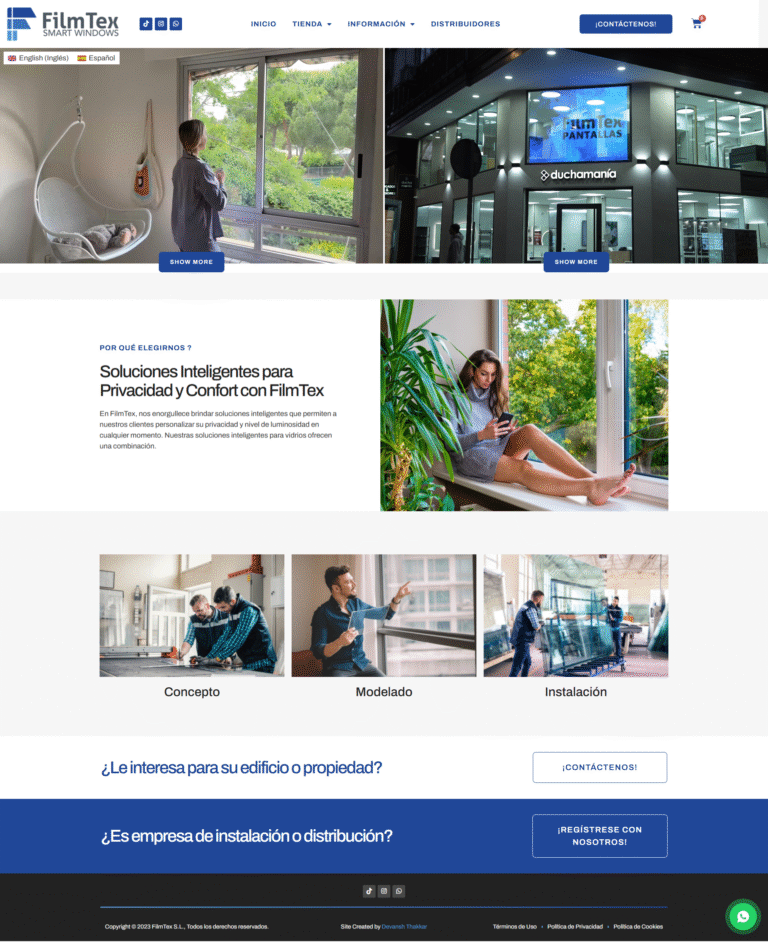
FilmTex Smart Windows
Bilingual e-commerce website with integrated filmsheet measurement and ordering functionality for smart window films.
Read case study
Vermeer Dakspecialisten
Roofing services platform with project galleries, customer reviews, and lead-generation forms for a Dutch roofing company.
Read case study
ICTC
Professional corporate website showcasing financial services, investor relations resources, and thought-leadership content for enterprise clients.
Read case studyReal numbers from real White-Label WordPress Development partnerships
What clients say
Devansh is top-notch in his craft. He is very responsive and gets the job done ASAP, I will definitely be using him again.
He is really really talented. He really did all the work according to my requirement and that too in one go. I don't need to explain him again and again, I was just explaining my…
He is the best in this whole bunch of freelancers. He did the work with full ease and according to your needs and going beyond your expectations. Because of his skills he can make anything…
Transparent White-Label WordPress Development pricing
Three pricing models cover most agency partnerships. Monthly retainers for ongoing partnership with predictable capacity. Larger retainers for higher-volume agencies needing dedicated capacity. Hourly billing for irregular project flow without monthly commitment.
Starter Retainer
10 hours per month for steady project flow
- 10 dedicated development hours per month
- NDA before project details exchange
- Direct PM communication
- Branded deliverables under your agency
- Multi-path WordPress capability
- WPCS-compliant code on every project
- Performance tuning included
- 4-hour average response time
- Priority queue access
- Monthly check-in calls
- Best for agencies with 2-4 projects monthly
- No long-term commitment, cancel anytime
Growth Retainer
Most popular: 25 hours for higher-volume agencies
- Everything in Starter tier
- 25 dedicated development hours per month
- Higher priority queue access
- Faster response times (2-hour target)
- Quarterly strategy review calls
- Custom plugin development included
- Custom theme work included
- Custom Gutenberg blocks if needed
- WooCommerce extension capacity
- Migration project support
- Best for agencies with 5-10 projects monthly
- Recommended starting point for most agencies
Hourly + Project
Ad-hoc capacity without monthly commitment
- Hourly billing for ad-hoc work
- No monthly commitment required
- $59-$79 per hour depending on scope
- NDA signed before any work begins
- Direct PM communication
- Same specialist every project
- Branded deliverables
- Multi-path WordPress capability
- WPCS-compliant code
- Best for agencies with irregular project flow
- Convert to retainer when volume stabilizes
- Project-based fixed quotes available
All prices in USD, billed in advance per month for retainers, weekly invoiced for hourly work. Custom quotes for Scale-tier dedicated capacity (40+ hours monthly), enterprise White-Label partnerships, or fixed-price project arrangements. Premium plugin licenses, hosting, and third-party service costs not included unless agreed.
Generic white-label agency vs solo specialist partnership
Everything you need to know about White-Label WordPress Development
White-Label WordPress Development is the focused work of building WordPress sites, custom themes, custom plugins, and WooCommerce stores for marketing agencies, design agencies, SEO agencies, and digital agencies who deliver the work to their end clients under their own brand. The agency owns the client relationship, the brand, and the contract; the white-label partner provides the WordPress development capacity. Done right, White-Label WordPress Development lets agencies take on 40 to 60 percent more client work without hiring full-time developers, expanding revenue and capability without the $80,000 to $120,000 annual salary commitment a senior in-house WordPress developer requires. This guide explains what real White-Label WordPress Development includes in 2026, how pricing works, and how to choose a partner who scales your agency without becoming a bottleneck.
I’m Devansh Thakkar, a Top Rated freelancer on Upwork with 5+ years of experience and 100+ projects delivered. White-Label WordPress Development is one of my core agency partnership services, with confidential work delivered for marketing, design, and SEO agencies across the United States, United Kingdom, Australia, Canada, and beyond. Every White-Label engagement follows the same standard: comprehensive NDA before any project details get shared, branded deliverables under your agency identity, no direct contact with your end clients ever, predictable response times, transparent pricing, and code quality that holds up to your senior team’s review.
What White-Label WordPress Development Actually Includes
Modern White-Label WordPress Development covers nine distinct areas. Most generic white-label arrangements focus on basic site builds and skip the supporting work that separates production-quality partnerships from junior offshore handoffs. Real specialists deliver complete WordPress development capability because the agencies hiring them need a reliable backend partner, not just a vendor.
NDA and Branded Deliverables
Real White-Label WordPress Development engagements begin with a comprehensive NDA covering identity protection, prohibition on direct client contact, IP assignment to your agency on payment, non-solicitation of your clients, and defined consequences for breach. All deliverables are branded under your agency identity (your project management system, your email domains where required, your reporting templates). Your end clients see your agency throughout the engagement, never the white-label partner. This foundational rule is non-negotiable for serious agency partnerships.
Direct Project Manager Communication
Working with a 150-developer white-label agency means communicating through PM layers that often add friction without adding value. Working with a solo specialist for White-Label WordPress Development means your PM communicates directly with the developer doing the actual work. No translation losses, no context drops, no junior developer rotation. The same person who built last month’s custom theme builds this month’s WooCommerce store with full memory of your agency’s standards and preferences.
Multi-Path WordPress Site Builds
Real White-Label WordPress Development covers all major WordPress paths rather than defaulting to one approach for every project. Custom theme development for projects prioritizing performance and brand uniqueness. Elementor for marketing sites needing content team editing flexibility. Bricks Builder for performance-sensitive projects. Divi for clients with existing lifetime licensing. Multi-path capability means your agency does not turn down projects because of platform limitations and does not need separate vendors for different page builders.
Theme Customization and Custom Themes
White-Label WordPress Development includes everything from premium theme customization (ThemeForest, StudioPress, Astra Pro) to ground-up custom theme development. Hello Elementor child themes for projects mixing custom code with builder flexibility. Block themes with Full Site Editing for clients committing to the modern WordPress direction. Theme work follows WordPress Coding Standards for maintainability across developer transitions, with documentation handed over so your senior team can pick up the work later if needed.
Plugin Customization and Custom Plugins
Most agency client requirements eventually need WordPress plugin work. White-Label WordPress Development covers existing plugin customization through proper hooks and filters (so customizations survive plugin updates), custom plugin development from scratch following WordPress Plugin Handbook conventions, and WooCommerce extension development for industry-specific commerce models. Plugins ship WPCS-compliant, hardened with proper security (nonces, sanitization, REST API authentication), and documented for future maintenance.
Performance Tuning and Core Web Vitals
White-Label WordPress Development includes performance tuning as standard rather than an upsell. WebP image conversion, font loading strategy, lazy loading configuration, asset cleanup, and CDN integration where appropriate. Sites delivered to your end clients pass Core Web Vitals on launch day, supporting whatever SEO or paid traffic strategy your agency runs. This pairs with my WordPress Speed Optimization service for client sites needing dedicated performance work.
WooCommerce Setup and Extensions
E-commerce projects represent a major portion of agency client work. White-Label WordPress Development includes complete WooCommerce setup (product structure, payment gateways, shipping configuration, tax handling), custom WooCommerce template integration for branded stores, and custom WooCommerce extensions for industry-specific requirements (subscriptions, rentals, B2B wholesale, configurator products). All work follows WooCommerce template hierarchy correctly so updates remain compatible.
Maintenance and Ongoing Support Retainers
Maintenance retainers are the highest-margin recurring revenue stream in white-label work, with agencies typically marking up 50 to 100 percent when billing clients. White-Label WordPress Development includes monthly maintenance retainer support (plugin updates with compatibility testing, security monitoring, performance monitoring, content updates, minor design tweaks) that your agency packages and resells under your brand as ongoing care plans, development partnerships, or maintenance agreements.
Migration and Redesign Projects
Many agency clients eventually need migration from one WordPress configuration to another or full site redesigns. White-Label WordPress Development covers WordPress migration services (host changes, platform changes, domain changes), WordPress website redesign projects, and Figma to WordPress conversion for projects where your design team produced the file and needs implementation. The breadth means your agency does not juggle multiple vendors for different project types.
How White-Label WordPress Development Pricing Works
White-Label WordPress Development pricing follows three primary models. Monthly retainers (most popular for ongoing agency partnerships) reserve a defined block of dedicated development hours each month with priority queue access. Typical retainers run $499 to $2,500 per month from various providers, with my retainers at $1,499 monthly for 10 hours and $2,999 monthly for 25 hours. Hourly rates ($59 to $79 per hour) cover ad-hoc work without monthly commitment, suitable for agencies with irregular project flow. Fixed-price project pricing covers well-scoped one-time builds, with custom quotes after scope review.
Agencies typically mark up these costs 30 to 60 percent when billing end clients on project work, and 50 to 100 percent on maintenance retainers. The math works because clients pay for the agency relationship, brand, project management, and ongoing partnership rather than just the development hours. A $7,000 custom WordPress site is the market rate in North America regardless of what the white-label partner cost is. Your pricing signals quality and protects your positioning. The fact that your white-label partner cost is $3,500 is your margin advantage, not your client’s discount.
The Solo Specialist Advantage in White-Label WordPress Development
White-Label WordPress Development providers fall into two categories: large agencies with 50 to 150+ developers operating through PM layers, and solo specialists like me operating through direct communication. Both models work; they fit different agency needs.
Large white-label agencies provide depth across many WordPress specializations and absolute capacity for high-volume agencies running 20+ concurrent client projects. The downside is communication friction (PM layers between your team and the actual developer), developer rotation (different developer per project means context loss), and quality variation (junior developer assignment risk on simpler projects). Solo specialists provide consistent context (same developer per project, full memory of your agency’s standards), faster communication (direct PM-to-developer contact, no translation layers), and predictable quality (the same senior specialist on every engagement).
Solo specialist White-Label WordPress Development works best for small to mid-sized agencies running 2 to 15 concurrent WordPress projects, agencies prioritizing communication quality over absolute capacity, and agencies where the developer’s specific WordPress expertise (Elementor, Bricks, Divi, custom themes, custom plugins) matches your client work patterns. Large agencies still make sense for high-volume operations where capacity matters more than context.
The Real Cost of Cheap White-Label WordPress Development
Cheap White-Label WordPress Development has measurable downsides that compound dangerously over time. Agency reputation depends on white-label partner quality, which means cheap partner failures become your agency’s failures.
- Junior developer assignment without disclosure. Cheap white-label agencies route work to whichever developer is available rather than the senior specialist your initial conversation suggested. Quality varies wildly across projects.
- Communication friction through PM layers. Your project request goes to a PM, gets translated to a developer, and the response comes back through the PM. Lost context, slower iteration, more revision rounds.
- Generic delivery without agency-specific context. New developer per project means no memory of your previous standards, brand patterns, or client preferences. Each project starts from scratch in terms of context.
- Code quality issues. WPCS not followed, security hardening skipped, accessibility ignored. Code that ships to your client looks fine on launch but creates maintenance liability.
- NDA enforcement weakness. Cheap providers have looser confidentiality processes, with developers sometimes posting screenshots or referencing client work publicly. Your client relationships expose to risk.
- Missing specializations. Cheap providers cover basic WordPress but lack depth in custom plugin development, performance optimization, custom Gutenberg blocks, or complex WooCommerce extensions. Projects requiring these get refused or delivered at low quality.
The real cost of cheap White-Label WordPress Development is rarely the build itself. It is the agency reputation damage when a partner-built project fails, the time lost to communication friction across PM layers, and the inevitable replacement of the cheap partner once your agency needs reliable scale.
NDA and Confidentiality in White-Label WordPress Development
Confidentiality is the foundation of White-Label WordPress Development. Without rigorous NDA enforcement, the partnership cannot work because your end clients learning a third party built their site damages your agency relationship and brand permanently. Real White-Label WordPress Development takes NDA seriously rather than treating it as a checkbox.
A proper White-Label WordPress Development NDA covers six specific areas. Identity protection means I do not disclose involvement to any third party, ever, including in casual conversation, social media posts, portfolio displays, or referral conversations. Prohibition on direct client contact means all communication routes through your agency’s project management system, with zero direct contact between me and your end clients. Brand guidelines require all deliverables (commits, documentation, handover videos) under your agency branding rather than mine. IP assignment to your agency on payment ensures clear ownership of all code and assets produced. Non-solicitation of your clients means I cannot accept direct work from clients you introduce, even after the engagement ends. Defined consequences for breach create legal recourse if confidentiality fails.
The NDA gets signed before any specific project details get shared, not after. Generic conversation about WordPress capability happens before NDA; anything specific about your clients, projects, or business processes happens only after signed agreement. This sequencing protects your agency from vendor evaluation discussions where competitive information might otherwise leak. Verbal “we won’t tell anyone” agreements are not enough for serious White-Label WordPress Development partnerships.
Which Agencies Need White-Label WordPress Development?
Not every agency benefits from white-label partnerships. Solo agency owners doing all client work themselves can succeed without white-label support. White-Label WordPress Development becomes the right operational model when specific conditions apply.
You are a marketing, design, SEO, or digital agency winning 2 or more WordPress projects per month with no senior in-house WordPress developer. You have client demand for WordPress development that exceeds your internal team capacity. You need confidentiality that freelancers from Upwork or Fiverr cannot reliably provide because of platform terms or freelancer practices.
You want to scale revenue without scaling headcount. Adding a senior WordPress developer costs $80,000 to $120,000 annually in salary plus benefits, equipment, and management overhead. White-label partnerships convert that fixed cost into variable cost you only pay when client projects are active. You need development specializations your team lacks (custom theme development, custom plugin development, complex WooCommerce extensions, performance optimization). You want to expand WordPress capability without commitment to specific page builder ecosystems your existing team prefers.
How to Choose a White-Label WordPress Development Partner
The white-label market includes everything from solo offshore freelancers at $15 per hour to large North American agencies at $150 per hour. Quality and partnership fit varies enormously. Look for these signals when evaluating a partner.
Real WordPress specialization rather than generic web development. A partner who lists 30 different platforms and frameworks rarely has deep WordPress expertise; specialists who focus on WordPress consistently outperform generalists on WordPress-specific projects. Verified client reviews on platforms like WordPress.org contributors, Upwork, or Codeable that mention agency partnership work specifically (not just end-client work) carry weight.
NDA process they can describe specifically. Generic “we keep things confidential” answers signal weakness; specific descriptions of what their NDA covers (identity protection, no direct client contact, IP assignment, non-solicitation) signal real partnership thinking. Multi-path WordPress capability rather than single-builder dependency. Communication style that matches your agency’s pace and standards. Time-zone overlap that supports your client communication needs (Indian time-zone offers strong overlap with US East Coast morning hours, UK afternoon hours, Australian evening hours when handled properly). Pricing transparency upfront rather than custom-quote-only opacity.
White-Label WordPress Development Trends in 2026
The White-Label WordPress Development market evolved significantly through 2024-2025 with platform changes and shifting agency operational patterns. The trends shaping White-Label WordPress Development in 2026 reflect both WordPress ecosystem direction and how agencies now structure delivery.
Solo specialist providers gained ground against large white-label agencies for small to mid-sized agency partnerships, with agencies prioritizing communication quality over absolute capacity. The economic shift toward variable-cost development partnerships continued accelerating as agencies realized in-house senior developer hiring made less sense for unpredictable client demand.
Multi-path expertise became table stakes for serious white-label partners as page builder fragmentation persisted (Elementor, Bricks, Divi, custom themes, block themes all maintaining mature user bases). Custom plugin development emerged as a higher-margin specialty than basic site builds, with agencies needing partners capable of WPCS-compliant security-hardened plugin work. Maintenance retainer revenue became the most predictable agency income stream, with white-label partners enabling 50 to 100 percent markups on monthly support packages. AI tools entered the picture but did not replace skilled white-label development; they accelerated specific phases (wireframing, content placeholder generation, copy assistance) without replacing the developer judgment that quality WordPress work requires.
The White-Label WordPress Development Engagement Process
Real White-Label WordPress Development partnerships follow a methodical onboarding designed to establish working patterns before any client projects start. Skipping phases creates the partnerships where communication friction and quality issues surface during the first urgent project deadline.
Discovery and partnership fit assessment take 1 business day for most agencies. The phase covers your agency profile, typical project types, client demographics, communication preferences, and capacity needs. NDA signing and pricing model selection (retainer vs hourly vs fixed-price) take 1 to 2 business days. Onboarding and brand setup (your project management system access, email domain setup if required, reporting template alignment) take 1 to 2 business days.
First project delivery establishes working patterns. Project scope intake follows your agency’s standard process. Development progresses with regular updates through your PM tool. Code review and QA happen on staging before any client-facing handoff. Documentation gets produced under your agency branding. Post-delivery review captures lessons for future projects. Ongoing relationship management through monthly check-ins keeps the partnership aligned as your agency grows. Quarterly review and adjustment ensure the pricing model and capacity allocation match your evolving client demand. Total time from initial conversation to first project kickoff ranges from 3 business days for simple retainer engagements to 2 weeks for comprehensive partnerships requiring extensive process documentation.
Start a White-Label WordPress Development Partnership Today
If your agency needs reliable WordPress development capacity without the in-house hire commitment, the next step is a free 30-minute discovery call. We’ll discuss your agency profile, typical project types, client demographics, communication preferences, and capacity needs. NDA gets signed before any specific project details enter the conversation. Within 48 hours of that call, you’ll receive a written proposal with pricing model recommendations and onboarding timeline.
You can also browse my portfolio of recent work to see the kind of WordPress builds my partner agencies’ clients receive, or read what past clients have said about working with me on WordPress projects.
White-Label WordPress Development questions, answered
How does White-Label WordPress Development pricing work?
Will my clients know I am using a white-label partner?
What time zone do you work in?
How quickly can you start on urgent projects?
Do you sign NDAs?
What WordPress paths do you cover?
Can you handle WooCommerce projects?
What about ongoing maintenance retainers?
How does direct client contact work?
What if I need to scale up suddenly?
More to dig into
-
Technical SEO Audit Checklist 2026: 5 Essential Layers
🕑 13 min read Updated: June 2026 Table of Contents The Right Order to Audit In 1. Crawlability...
Read article -
WooCommerce Subscription Setup: The Complete 6-Step Guide
🕑 12 min read Updated: June 2026 Table of Contents What You Need Before You Start Choosing a...
Read article -
WooCommerce Product Feed for Google and AI: 2026 Guide
🕑 12 min read Updated: June 2026 Table of Contents What Is a WooCommerce Product Feed? One Feed,...
Read article
-
WordPress Maintenance Plans
WordPress Maintenance Plans by a Top Rated freelancer. Scheduled updates, daily backups, security monitoring, performance checks, and direct...
View service -
Custom WordPress Plugin Development
Custom WordPress Plugin Development by a Top Rated freelancer specializing in WPCS-compliant code, security hardening, REST API endpoints,...
View service -
AI Search Optimization Services
Traditional SEO gets you ranked. AI search optimization gets you quoted. I structure your content, schema, and entities...
View service
Ready to start?
Book a free 30-minute call. No pitch, no pressure. We discuss your project and decide if we're a fit.