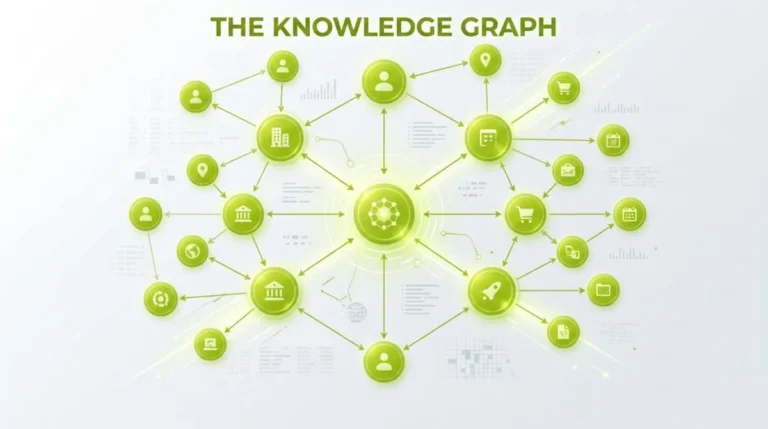


- To improve E-E-A-T for a website, demonstrate real experience and expertise, build recognition, and earn trust, since it describes qualities, not a score you can toggle.
- E-E-A-T stands for Experience, Expertise, Authoritativeness, and Trustworthiness, and Trust is the most important of the four.
- It is not a direct ranking factor. It is the framework Google’s human raters use to train the ranking systems.
- First-hand Experience is the strongest differentiator in the AI era, because generic or AI-paraphrased content cannot fake it.
- Some signals improve in weeks, like author bios and HTTPS, but real authority takes months of consistent work.
To improve E-E-A-T for a website, you demonstrate first-hand experience, prove genuine expertise, build recognition as a source, and earn trust through accuracy and transparency. It is not a setting you switch on, because E-E-A-T describes qualities Google’s systems reward, not a score in the algorithm. This guide shows exactly how to strengthen each of the four, starting with the one that matters most.
After building content strategies and SEO for clients in 15+ countries, here is the reframe that makes E-E-A-T click. Stop treating it as a box to tick and start treating it as a reputation to earn. You cannot bolt it on with an author box and a badge. You build it by genuinely being the kind of source Google and readers trust, and then making that visible. Here is how to do exactly that.
What E-E-A-T Actually Is
E-E-A-T stands for Experience, Expertise, Authoritativeness, and Trustworthiness, the four qualities Google uses to judge whether content is credible and worth ranking. It comes from Google’s Search Quality Rater Guidelines, the document thousands of human raters use to evaluate search results, and it underpins Google’s guidance on creating helpful, people-first content. Each letter describes a different kind of credibility.
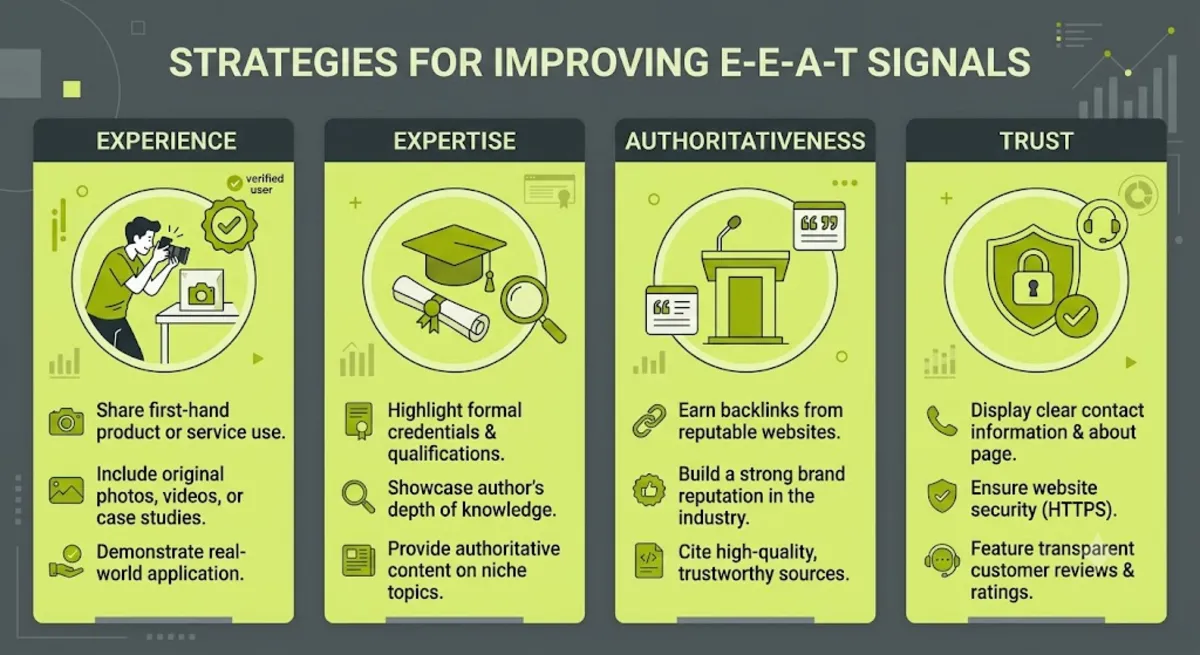
- Experience. The content is created by someone with real, first-hand knowledge of the topic, not just theory.
- Expertise. The creator has demonstrated subject-matter knowledge, often backed by credentials or a track record.
- Authoritativeness. The creator or site is recognized by others as a go-to source in its field.
- Trustworthiness. The content is accurate, the site is secure, and the business is transparent about who it is.
The “Experience” letter is the newest, added in December 2022, which turned the older E-A-T into E-E-A-T. It reflects Google’s push to reward genuine, lived knowledge over content that merely sounds authoritative. And of the four, one matters more than the rest.
Pro tip: Trust is the center of E-E-A-T, not just one of four equal parts. Google has said Trust is the most important member of the family. Experience, Expertise, and Authoritativeness all exist to support it. Without trust, strong signals on the other three count for very little.
That raises the question everyone asks next: does any of this directly move rankings?
Is It a Ranking Factor?
E-E-A-T is not a direct ranking factor, and understanding why is the key to getting this right. There is no E-E-A-T score in Google’s algorithm. Instead, it is the quality framework that roughly 16,000 human raters use to judge search results, and their judgments train the systems that actually do the ranking.
The mechanism works like this: raters evaluate pages against these criteria, Google’s engineers use those assessments to check whether the algorithms are rewarding quality, and the systems are then tuned to replicate those judgments across the whole web. So while there is no literal score, the qualities E-E-A-T describes are deeply woven into how ranking works. Think of it as a quality compass, not a lever you pull.
Why this distinction matters: because there is no score to game, you cannot shortcut E-E-A-T with tricks. The only reliable way to improve it is to genuinely become a more credible source and make that credibility visible and verifiable. That is slower than a hack, but it is durable, and it survives core updates.
The framework matters most for Your Money or Your Life topics, health, finance, legal, safety, where Google demands the highest credibility. Now, how to actually strengthen each of the four.
How to Improve Each Component
You improve a website’s credibility by strengthening each of the four components with real, visible signals, and the highest-leverage place to start is Experience, the one competitors and AI cannot fake. Here is what to do for each, in order of impact.

| Component | How to strengthen it |
|---|---|
| Experience | Add first-hand proof: original photos, real test results, case studies, and “here is what happened when I did this” detail. |
| Expertise | Publish accurate, in-depth content, cite sources, and show author credentials and a track record. |
| Authoritativeness | Earn mentions, links, and reviews from other respected sources, and build a recognizable brand entity. |
| Trustworthiness | Secure the site, keep content accurate and current, and be transparent with clear contact, about, and policy pages. |
The pattern to notice: Experience and Expertise are things you demonstrate on your own pages, while Authoritativeness is largely earned off-site through what others say about you. Trust is the sum of all of it, plus the technical and transparency basics. Work on all four, but if you only had time for one, richer first-hand Experience is the fastest way to stand out.
Pro tip: The single most underused credibility lever is original, first-hand detail. Screenshots you took, numbers from your own tests, a photo of the actual product in use. Generic content and AI output cannot produce these, so they are exactly what marks your page as genuinely experienced.
Several of those signals depend on making your authors visible and machine-readable, which is worth its own step.
Author Signals and Schema
Author signals are a practical, on-site way to build credibility, because they connect your content to real, credentialed people. Google wants to know who created a page and why they are qualified, and its Search Essentials reward sites built for people, so making authorship clear and verifiable is one of the most concrete steps you can take.
The author signals worth implementing:
- Real bylines. Attribute content to named people, not a generic “admin” or the brand alone.
- Detailed author pages. Give each author a bio page showing credentials, experience, and links to their work.
- Author schema. Use Person structured data with a sameAs property linking to the author’s profiles and professional presence.
- An About and Contact page. Make it easy to see who is behind the site, a core trust signal Google looks for.
- Consistent entity details. Keep names, titles, and facts consistent across your site and the wider web, so search engines connect the dots.
Those signals matter more than ever, because a second audience is now reading them.
Why It Matters More in AI Search
This framework matters more in 2026 than ever because it now shapes AI search visibility, not just traditional rankings. AI Overviews and answer engines like ChatGPT and Perplexity favor sources they can trust, and the same signals that satisfy Google’s raters are what make content citable by AI.
The AI era has sharpened why this framework matters. As the web fills with AI-generated content that sounds fluent but says nothing new, search engines and answer engines increasingly reward the opposite: original, verifiable, experience-backed content. Sites publishing original data and first-hand insight have gained visibility through recent updates, while generic AI-paraphrased content has lost heavily. The signals that prove real experience are now a genuine competitive moat.
Understanding all of this is one thing. Applying it without falling into the usual traps is another.
Want your site’s E-E-A-T assessed and strengthened properly?
I audit and build the experience, expertise, and trust signals that Google and AI engines reward. See my WordPress and SEO service.
What Most People Get Wrong
The biggest mistake here is treating the framework as a checklist you complete rather than a reputation you earn. People add an author box, a “reviewed by” line, and a Person schema to otherwise thin content and expect a ranking boost. But there is no score being toggled, so signals with nothing real behind them do nothing. The markup describes credibility, it does not create it.

Here is the observation from client work. The sites that struggle are the ones optimizing the signals while ignoring the substance: perfect author schema on generic articles, a polished About page in front of content that demonstrates no real experience. The sites that win do the opposite. They have genuine expertise and lived experience, and they simply make it visible and verifiable. The visible signals only work as evidence of something real underneath.
The second trap is ignoring Trust while chasing the other three. A site can have credentialed authors and quality content, but if it is not secure, hides who is behind it, or mixes in inaccurate claims, trust collapses and takes the rest with it. Get the trust basics right first, a secure site, accurate content, a clear About and Contact, honest reviews, before polishing anything else.
When credibility is costing you rankings and you are not sure which signals are missing, that is where an experienced audit turns guesswork into a clear plan.
Not sure why your quality content is not ranking?
I audit your E-E-A-T signals and build the experience, authority, and trust that Google and AI reward. See my WordPress and SEO service or book a free call.
Frequently Asked Questions
What does E-E-A-T stand for?
Experience, Expertise, Authoritativeness, and Trustworthiness. It is the framework in Google’s Search Quality Rater Guidelines that describes what makes content credible. Experience covers first-hand knowledge, Expertise covers demonstrated skill, Authoritativeness covers recognition as a source, and Trustworthiness, the most important, covers accuracy, security, and transparency.
Is E-E-A-T a Google ranking factor?
Not directly. There is no E-E-A-T score in the algorithm. It is the quality framework that Google’s human raters use to evaluate search results, and their assessments train the ranking systems to reward the qualities it describes. So while it is not a literal ranking signal, it deeply shapes what ranks.
How do I improve E-E-A-T for my website?
Demonstrate first-hand experience with original photos, data, and case studies, prove expertise with accurate in-depth content and clear author credentials, earn authority through mentions and links from respected sources, and build trust with a secure, transparent, accurate site. Start with the trust basics and richer first-hand experience, as those move the needle fastest.
Which part of E-E-A-T is most important?
Trust. Google has stated that Trustworthiness is the most important member of the family. Experience, Expertise, and Authoritativeness all exist to support trust, and without it, strong signals on the other three count for little. A site that is not trustworthy will struggle no matter how expert its content appears.
How long does it take to improve E-E-A-T?
Some signals improve within weeks, such as adding author bios, HTTPS, an About page, and contact information. Building genuine authority, through quality content, earned links, author reputation, and real reviews, typically takes three to twelve months of consistent effort. Think of it as a compounding investment in credibility, not a quick fix.
Does E-E-A-T matter for AI search and AI Overviews?
Yes, increasingly. The same signals that satisfy Google’s raters make content citable by AI Overviews and answer engines like ChatGPT and Perplexity. As AI-generated content floods the web, original, experience-backed, verifiable content stands out, and E-E-A-T signals are how these systems identify sources worth trusting and citing.
Can AI-generated content have good E-E-A-T?
Only with real human experience and oversight behind it. Google does not penalize content simply for being AI-assisted, but AI alone cannot supply first-hand experience or genuine expertise. Content that adds original data, real testing, and expert review can rank well, while generic AI output with no lived experience typically does not.
Should I hire someone to improve my E-E-A-T?
Consider it when quality content is not ranking and you cannot tell which credibility signals are missing. An experienced audit identifies the specific gaps, in experience, authorship, authority, or trust, and turns them into a prioritized plan. My WordPress and SEO service covers E-E-A-T audits and implementation.
Conclusion
Improving E-E-A-T comes down to a simple truth: you cannot fake it, you have to earn it and then make it visible. Demonstrate real first-hand experience, prove genuine expertise, earn recognition from others, and above all build trust through a secure, transparent, accurate site. Remember that it is not a score to game but a framework describing what Google’s systems are built to reward, so substance always comes before signals. Lead with the two highest-leverage moves, richer first-hand experience and solid trust basics, then layer author signals, schema, and earned authority on top. Start today by looking at one of your key pages and asking honestly: does this prove real experience, or just sound like it should?
Ready to build the credibility that ranks and gets cited?
I turn E-E-A-T from a vague concept into concrete, visible signals on your site. Book a free call or browse my recent project portfolio.
This article was last reviewed and updated in June 2026 to reflect current Google quality guidance and AI search behavior.