

- A strong internal linking strategy for SEO distributes authority, helps crawlers discover pages, and signals which content matters most.
- It is the highest-return, lowest-risk SEO lever, because you control every internal link yourself, unlike backlinks.
- The core method is pillar-and-cluster: a pillar page links to and from its supporting cluster pages on the same topic.
- Use descriptive, varied anchor text, keep key pages within three clicks, and eliminate orphan pages with zero internal links.
- It is about structure and direction, not link quantity, funnel equity to your priority pages, not links everywhere.
An internal linking strategy for SEO is a deliberate plan for how the pages on your site link to each other, so that authority flows to your most important pages, crawlers can find everything, and search engines understand how your content relates. Done well, it lifts rankings with no new backlinks and no new content. This guide shows the strategy and how to build it.
After building internal linking structures for clients in 15+ countries, here is why I love this lever. It is the one SEO tactic you control completely. You cannot make another site link to you, but you decide every internal link on your own domain. That makes internal linking the highest-return, lowest-risk work in SEO, and most sites barely use it on purpose. Here is how to do it deliberately.
Why Internal Linking Matters for SEO
Internal linking matters for SEO because it does three jobs at once: it distributes authority between your pages, it helps search engines discover and crawl your content, and it signals which pages are most important. An internal link is simply a link from one page on your site to another, but used with intent, it shapes how your whole site is understood.
The three jobs, in plain terms:
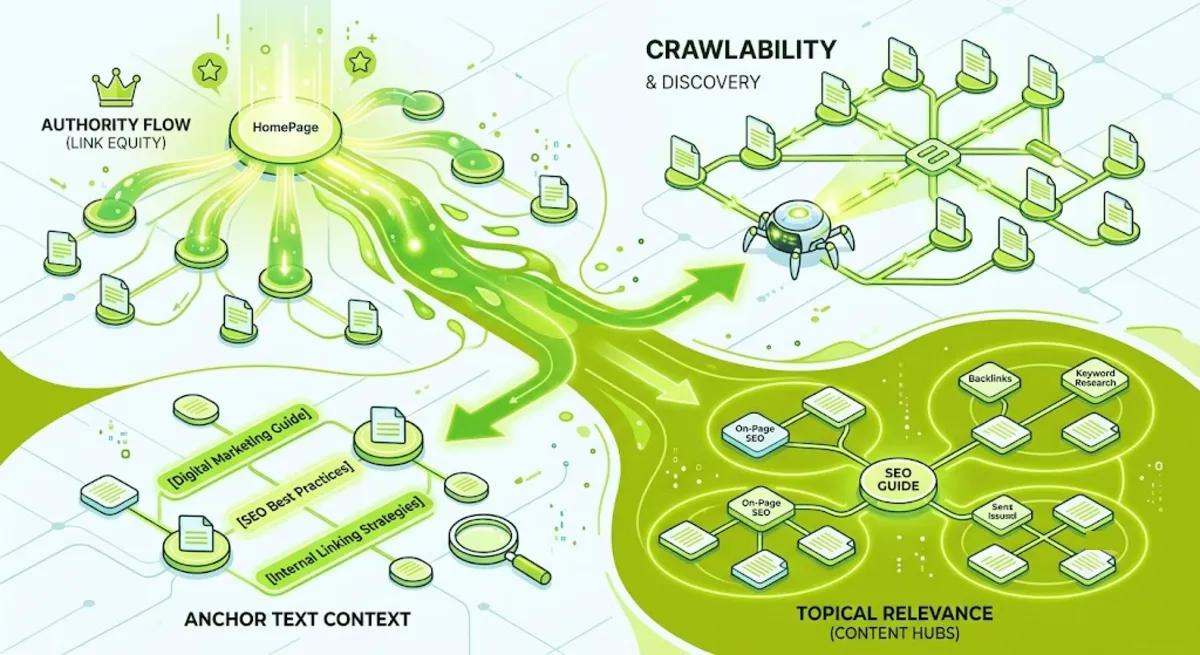
- Authority flow. Links pass equity between pages, so linking from strong pages to important ones lifts the pages that matter.
- Discovery and crawling. Crawlers follow links to find pages, so well-linked content gets found and indexed, while unlinked content may not.
- Importance signals. The pages you link to most, and from where, tell Google which content you consider most important.
Pro tip: Open the Internal Links report in Google Search Console. It ranks your pages by how many internal links each receives. Your most important pages should sit at the top of that list. If a priority page is near the bottom, your internal linking is working against you, and that is a fast fix.
Understanding the jobs is one thing. Seeing how they translate into rankings is what makes the strategy click.
How Internal Links Help You Rank
Internal links help you rank by shaping the signals Google already uses: authority, relevance, and crawlability. They are not a single standalone ranking factor like backlinks, but they influence several signals at once, which is why a good internal linking strategy for SEO moves rankings across a whole site.
The specific ways they help:
- They route authority to priority pages. You decide which pages receive the most internal links, concentrating equity where it earns the most.
- They give context through anchor text. Per Google’s link best practices, descriptive anchor text tells Google what the linked page is about.
- They improve crawl efficiency. Clear paths help crawlers reach deep pages, so more of your content gets indexed.
- They build topical authority. Linking related pages together shows Google you cover a topic in depth, not just one page.
That last point, topical authority, is where a real strategy lives. And the strategy has a shape.
The Core Strategy: Pillars and Clusters
The core of any modern internal linking strategy for SEO is the pillar-and-cluster model, also called hub and spoke. A broad pillar page covers a topic comprehensively, and focused cluster pages cover specific subtopics, with links running both ways between them. This structure is what builds topical authority.

Here is how the model works in practice:
- The pillar page targets a broad, competitive topic and links out to each of its cluster pages.
- The cluster pages each cover one subtopic in depth and link back up to the pillar.
- The cluster pages also link to each other where the subtopics genuinely relate.
This bidirectional structure concentrates link equity around your most strategic content and tells Google, and AI engines, that the pillar is the authoritative hub for the topic. It also produces clearly scoped, citable pages at every level, reinforced by structured data, which is exactly what AI answer engines look for when choosing what to quote.
Why this works so well: when several cluster pages link to a pillar using descriptive, related anchor text, they collectively signal that the pillar is the definitive resource on that topic. You are not just linking pages, you are building a map of your expertise that both Google and AI can read.
With the model clear, here is how to actually build it on your site.
How to Build the Strategy Step by Step
You build an internal linking strategy for SEO by mapping your content into clusters, connecting each cluster to its pillar, and then routing authority to your priority pages. It is methodical work, not guesswork, and most sites can make real progress in a focused afternoon.
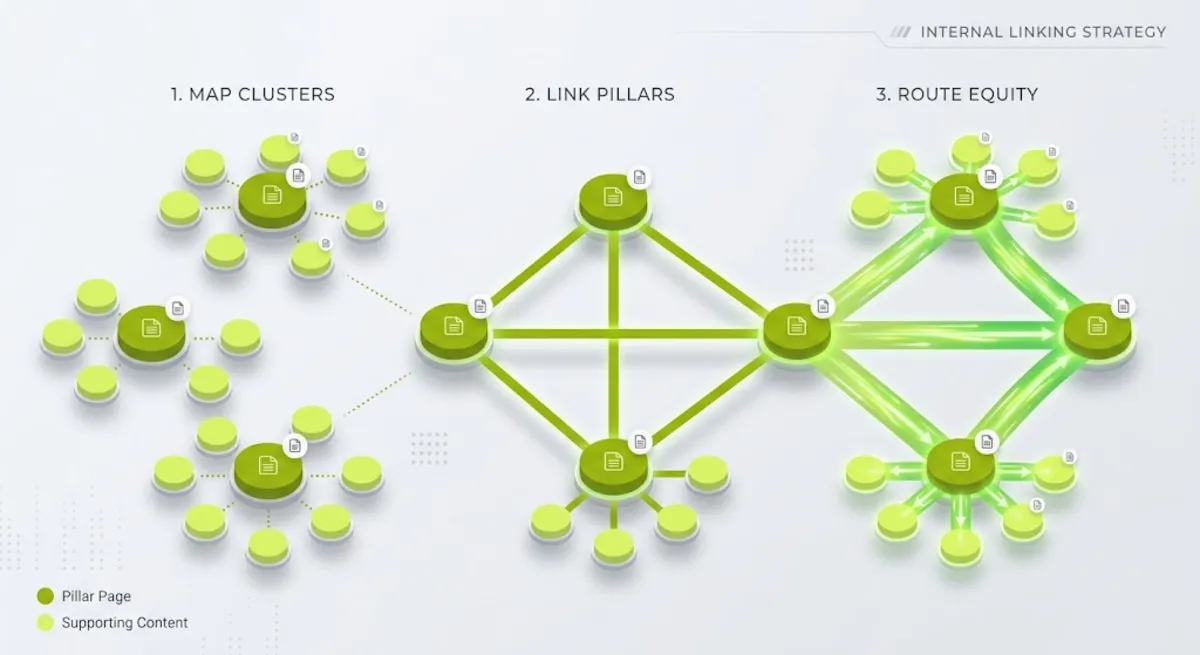
- Map your content into topics. Group your existing pages into topic clusters, and identify or create a pillar page for each.
- Link clusters to pillars, both ways. Make every cluster page link up to its pillar, and the pillar link down to each cluster page.
- Interlink related cluster pages. Where two subtopics genuinely relate, link them, using natural, descriptive anchor text.
- Route equity to priority pages. Add links from your strongest, most-visited pages to the priority pages you want to rank.
- Fix orphans and deep pages. Find pages with no internal links and pages buried too deep, and pull them into the structure.
- Audit regularly. Run a quarterly check for broken links, new orphans, and priority pages that have slipped.
Pro tip: The single fastest ranking win I see is pointing a few more internal links, with good anchor text, at an existing page stuck on page two. No new content, no new backlinks, just better internal support for a page that is already close. Look for those near-misses first.
The steps give you the structure. A few rules make sure it actually helps rather than hurts.
The Rules: Anchors, Depth, and Orphans
A few clear rules separate an internal linking strategy for SEO that works from one that leaks equity. These are the details that decide whether your links help Google understand your site or just add noise.
| Rule | What to do |
|---|---|
| Anchor text | Use descriptive, varied anchor text that describes the destination. Never generic “click here” or “read more.” |
| Click depth | Keep important pages within three clicks of the homepage. Deeper pages struggle to rank. |
| Orphan pages | Ensure every page has at least a couple of internal links pointing to it. Orphans rarely rank. |
| Link volume | Aim for a few contextual links per 1,000 words. Quality and relevance beat sheer quantity. |
| Relevance | Link between genuinely related pages, so the connection means something to Google. |
Get these rules right on top of the pillar-and-cluster structure, and your internal linking quietly compounds. Here is where people trip up.
Want your internal linking mapped and built to actually rank?
I audit your site structure and build a pillar-and-cluster internal linking strategy that routes authority where it counts. See my WordPress and SEO service.
What Most People Get Wrong
The biggest mistake in internal linking is thinking more links is better. It is not. Linking every page to every other page flattens your hierarchy, so nothing stands out as important, and spreads equity so thin it stops helping anything. A strong internal linking strategy for SEO is about direction and restraint, sending authority deliberately to the pages that matter, not scattering it everywhere.
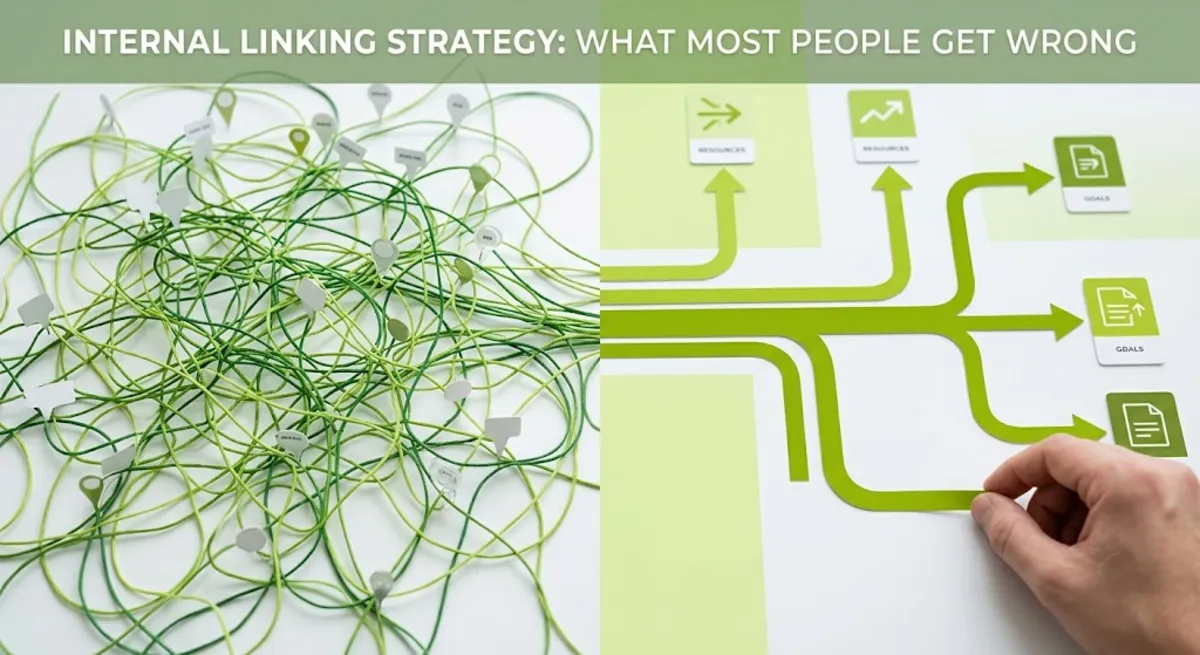
Here is the observation from client work. When I audit a struggling site, the same pattern appears again and again: a chunk of pages are orphaned with zero internal links, the pillar pages do not link to their own cluster content, and the anchor text is either “click here” or the exact same keyword stuffed everywhere. Those sites are leaking equity. The fix is not complicated, it is just deliberate, and it usually lifts rankings without a single new backlink or new article.
The second trap is over-optimized anchor text. Using the exact same keyword-rich anchor for every link to a page looks manipulative, and Google’s own guidance never asks for keyword-stuffed anchors. Vary your anchors naturally, describe the destination in plain language, and let longer, descriptive phrases do the work. That reads as helpful to users, which is exactly what Google is trying to reward.
When your site is large or your structure has drifted over years, that is where a deliberate internal linking audit turns a tangled site into a ranking one.
Site structure a tangled mess after years of adding pages?
I map it, fix the orphans and deep pages, and rebuild your internal linking to route authority where it counts. See my WordPress and SEO service or book a free call.
Frequently Asked Questions
What is an internal linking strategy for SEO?
It is a deliberate plan for how the pages on your site link to each other, so authority flows to your most important pages, crawlers can find all your content, and search engines understand how your pages relate. The core method is pillar-and-cluster linking, connecting a broad hub page with focused supporting pages on the same topic.
Why is internal linking important for SEO?
Internal linking distributes authority between your pages, helps search engines discover and crawl your content, and signals which pages matter most. It is also the SEO lever you control completely, since you decide every internal link on your own site, unlike backlinks. That makes it one of the highest-return, lowest-risk SEO tactics available.
How many internal links should a page have?
There is no fixed rule, but a practical baseline is a few contextual internal links per 1,000 words of content, kept relevant and natural. Quality and relevance matter far more than quantity. Avoid cramming in dozens of links, which dilutes equity and flattens your hierarchy, making it harder for Google to see what matters.
What is a pillar page and topic cluster?
A pillar page covers a broad topic comprehensively, and topic cluster pages cover specific subtopics in depth. The cluster pages link up to the pillar and the pillar links down to them, with related clusters linking to each other. This bidirectional structure builds topical authority and tells Google which page is the hub.
What are orphan pages and why do they hurt SEO?
Orphan pages are pages with zero internal links pointing to them. Because crawlers follow links, orphans are hard to discover, receive no link equity from the rest of your site, and rarely rank, no matter how good the content is. Find them with a site crawl and add at least two contextual internal links from related pages.
What anchor text should I use for internal links?
Descriptive, varied anchor text that accurately describes the destination page. Google’s own guidance says to avoid generic text like “click here” and never asks for keyword-stuffed anchors. Longer, natural phrases that describe the linked page give the clearest context to both users and search engines, and reduce any appearance of over-optimization.
Does internal linking help with AI search?
Yes. AI answer engines use your internal link structure to identify which pages belong to a topic cluster and which page is the authoritative hub. The same pillar-and-cluster topology that earns traditional rankings also makes your content clearer and more citable to AI, since it produces well-scoped, well-connected pages.
Should I hire someone for internal linking?
Consider it when your site is large, its structure has drifted over years, or your rankings are stuck despite good content. Mapping clusters, fixing orphans, and routing equity deliberately is high-impact work that is easy to do halfway. My WordPress and SEO service covers full internal linking audits and builds.
Conclusion
An internal linking strategy for SEO is the rare tactic that is entirely in your hands: no outreach, no backlinks, no waiting. Organize your content into pillars and clusters, link them both ways, route authority from your strongest pages to your priority ones, use descriptive anchor text, keep key pages within three clicks, and eliminate orphans. Remember that it is about direction, not volume, deliberately sending equity where it earns the most, not scattering links everywhere. Start today by opening the Internal Links report in Search Console and checking whether your most important pages are actually the most linked. If they are not, you have just found your fastest ranking win.
Ready to turn your pages into a structure that ranks?
I build internal linking strategies that lift rankings without a single new backlink. Book a free call or browse my recent project portfolio.
This article was last reviewed and updated in June 2026 to reflect current Google link guidance and search behavior.