Why Most Nonprofit Websites Fail the People They Exist to Serve
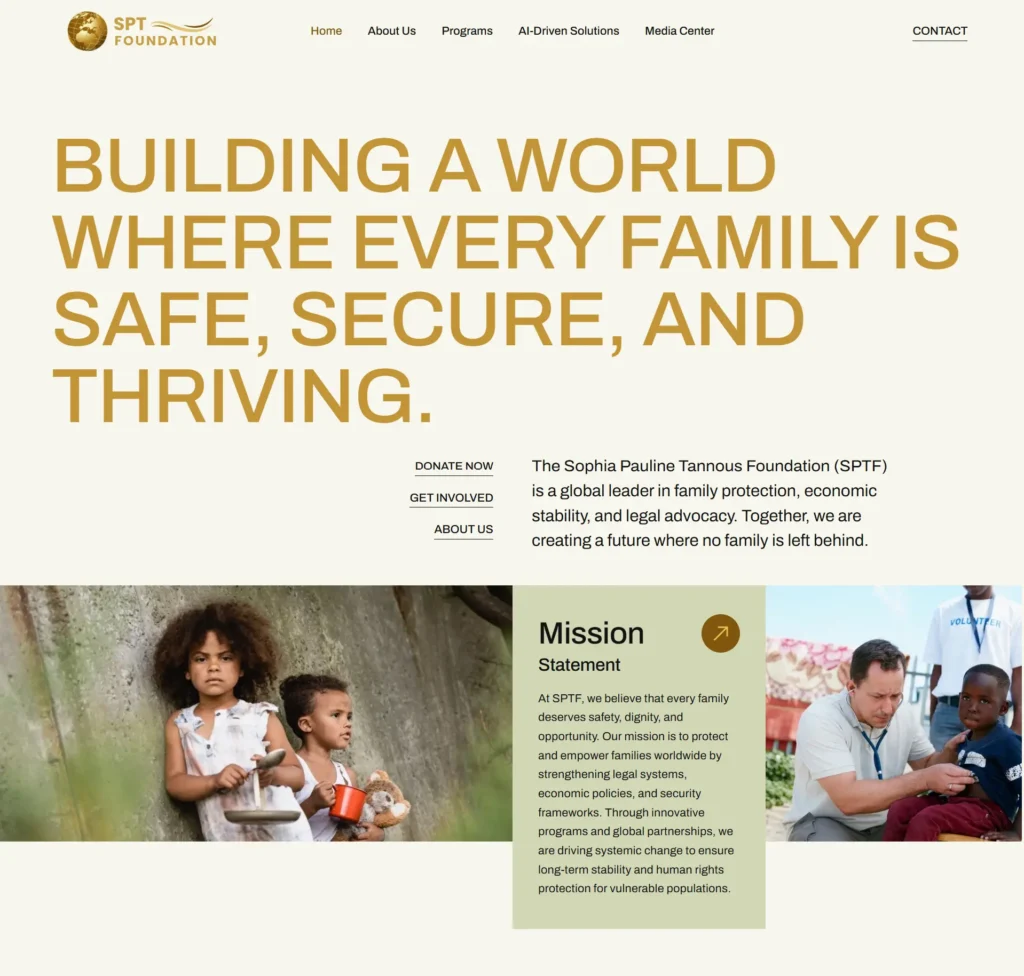
A nonprofit website serves multiple audiences simultaneously – donors, volunteers, beneficiaries, grant funders, corporate partners, and the media – and most nonprofit websites try to serve all of them from a single confusing homepage that ends up serving none of them well. The donation button is buried. The impact numbers are either missing or presented as raw statistics without context. The volunteer page asks people to fill out a form that nobody reads for weeks. The grant funding page does not exist. A nonprofit website that works for its mission is built around each audience having a clear, specific path to the action that serves both them and the organisation – donate, volunteer, access services, partner, fund. Building those paths cleanly is the entire job of the site.
Donation Pages That Convert One-Time Givers Into Recurring Supporters
A donation page has one job – remove every possible obstacle between the moment someone decides to give and the moment the payment clears. Most nonprofit donation pages fail this at multiple points: too many suggested amounts with no context for what each achieves, a form that asks for unnecessary information, a payment processing step that looks insecure or redirects to a page that does not look like the charity, and no follow-up path that makes the donor feel their gift mattered. I build donation pages with specific amount anchors tied to real outcomes (“$50 provides a week of meals for one child”), a recurring donation option prominently presented as the default alongside one-time giving, Stripe or PayPal processing embedded in the page rather than a redirect, and an automated thank-you sequence that confirms the impact of the gift within minutes of it clearing.
Impact Storytelling That Moves People From Interest to Action
Statistics do not move people. Stories do. A nonprofit website that communicates its work through beneficiary impact stories – real people, specific situations, documented outcomes – converts browsers into donors and volunteers at a significantly higher rate than one that presents programme statistics and administrative achievements. I build impact sections with a structured story format: the situation before, the intervention, the outcome in the person’s own words where possible. These stories serve multiple functions simultaneously: they convert new donors, they retain existing donors by showing their past gifts at work, and they provide the human evidence that grant funders require for programme effectiveness reporting. The same stories that live on the website feed the email newsletter, the social media channels, and the annual report, so the content investment compounds across channels.
Volunteer Recruitment and Management That Fills Your Programme Roster
Volunteer recruitment from a website fails when the process between “I want to help” and “I am scheduled for a shift” has too many steps and too long a gap. Most nonprofits lose a significant proportion of volunteer interest between the expression of intent and the first contact from the organisation. I build volunteer sections with a structured interest form that captures the volunteer’s availability, skills, location, and preferred programme area, an automated acknowledgment within minutes of submission confirming receipt and expected next steps, and a volunteer portal where registered volunteers can see available shifts, sign up, and receive reminders without a staff member facilitating every step. For organisations with high volunteer turnover or seasonal programmes, the system scales without proportional increases in staff coordination time.
Grant Funder and Corporate Partnership Pages That Support Funding Applications
Grant funders and corporate sponsors conduct due diligence on nonprofit websites as part of their assessment process. A website that clearly documents your organisation’s governance structure, financial accountability, programme outcomes, beneficiary reach, and organisational history reduces friction in the funding application process. Many funders shortlist applications partly based on the professional credibility signalled by the organisation’s online presence. I build funder-facing sections that present annual reports in accessible formats, programme impact summaries with verifiable metrics, governance information including board composition, financial accountability statements, and a contact path directly to the grants or partnerships function rather than a generic contact form. These pages serve the funding cycle directly while also building public trust credibility for the organisation.
Event, Fundraiser, and Campaign Pages That Drive Specific Outcomes
Charity events and fundraising campaigns have a specific conversion architecture different from the general donation ask. A fundraising event page needs to sell tickets, accept sponsorships at multiple tiers, manage a table booking process for gala events, and optionally connect to a peer-to-peer fundraising platform where attendees fundraise from their own networks. A campaign page for an emergency appeal needs a single-minded conversion focus – the donation amount selector, the impact context, and the payment form, with nothing else competing for attention. I build these as purpose-built landing pages within the WordPress site rather than relying on third-party platforms that break the brand experience and charge platform fees on every transaction. For recurring annual events, the page template is reused each year with updated content, reducing the cost and time of each campaign cycle.
SEO and Content Strategy for Nonprofits Serving Specific Communities
Nonprofit content SEO targets two different audiences: people searching for the services your organisation provides, and people searching for causes to support or ways to volunteer in your area. For service users, this means pages targeting searches like “domestic violence shelter [city],” “food bank near me,” “free mental health support [region]” – direct, practical searches from people who need what you provide. For supporters, it means content that answers “how can I help with [cause],” “best charities for [issue],” “volunteering opportunities [city].” These two content streams require separate page architectures and conversion paths, but they live on the same domain and benefit from the same domain authority. I plan both content streams from the start so the SEO investment serves both the mission and the fundraising pipeline.