Rates start @ $15/hour!
☀️ Solar & Battery Installation WordPress Development

WordPress Websites for
Solar & Battery Installation Businesses

WordPress websites for solar installers and battery storage companies. System size and product pages matching the six-week buyer research journey, government rebate pages capturing the highest-intent solar searches, commercial solar pages winning large B2B contracts, CEC accreditation display that separates you from non-compliant operators, and suburb-level SEO across every postcode in your installation area.

System Size Landing Pages Government Rebate Pages CEC Accreditation Display Commercial Solar Pages Battery Storage Pages Suburb Solar SEO Solar Case Studies Gallery
Top Rated on Upwork 100% Job Success 100+ Projects

Quick Project Info

Industry focus Solar & Battery Installation
Typical timeline 2-6 weeks
Starting price From $500
Consultation Free + No obligation
Response time Within 24hrs

Free quote. No pushy sales. Just clarity.

100+ Projects delivered worldwide
5+ Years WordPress expertise
100% Job Success Score on Upwork
48hr Proposal turnaround time

Quick Answer

What does a Solar & Battery Installation website actually need to succeed?

WordPress websites for solar installers and battery storage companies. System size and product pages matching the six-week buyer research journey, government rebate pages capturing the highest-intent solar searches, commercial solar pages winning large B2B contracts, CEC accreditation display that separates you from non-compliant operators, and suburb-level SEO across every postcode in your installation area.

Industry-specific structure Every industry has unique conversion flows, content hierarchy, and trust signals. I build for yours specifically.
SEO built into every page Technical SEO, schema markup, and content structured for both search engines and real humans.
Performance that holds Core Web Vitals optimised on mobile. Fast load times, not just on launch day.
Clear conversion paths Every page answers: what do I do next? No confusion. No generic "contact us" footers as the only CTA.

Solar Buyers Are the Most Research-Heavy Consumers Online

A homeowner or business owner researching solar spends an average of three to six weeks comparing options before requesting a single quote. They search for system sizes, panel brands, inverter brands, battery options, rebate eligibility, installer credentials, payback periods, feed-in tariff rates, and reviews of local installers – all before making first contact with any company. The solar installers that dominate this research phase are the ones whose websites answer every one of these questions in enough depth to become the reference point the buyer returns to throughout their decision process. A solar company website that only has a contact form, a generic “we install solar” statement, and a few stock photos of panels on roofs loses the six-week research journey to a competitor whose website functions as the definitive local resource for every solar question that buyer will ask.

System Size and Product Pages That Match Buyer Research Intent

Solar buyers search by system size, panel brand, and inverter brand with extraordinary specificity: “6.6kW solar system [suburb],” “10kW solar with battery [city],” “SunPower panels installer [region],” “Fronius inverter installation [area],” “Tesla Powerwall certified installer [state].” These are not top-of-funnel searches – they are evaluation-phase searches from buyers who have done enough research to know what specifications they want and are now finding who can install it. I build system size landing pages for the most commonly enquired residential and commercial system sizes in your market, panel and inverter brand pages for every product line you install, and battery system pages for every battery product you offer. Each page contains the system specifications, performance expectations, warranty terms, and the local incentive information relevant to a buyer evaluating that specific product in your geographic market.

Government Rebate and Incentive Pages That Capture High-Intent Research Traffic

Rebate eligibility and incentive searches are among the highest-converting solar queries online because the buyer is specifically trying to understand what the system will actually cost them after incentives – the final piece of information before they request quotes. “STC solar rebate [state],” “solar rebate [year],” “home battery rebate [state],” “solar feed-in tariff [retailer],” “small scale technology certificate calculation” – these searches represent buyers at the final evaluation stage. I build rebate and incentive pages updated for the current financial year that explain the Small-scale Technology Certificate (STC) scheme for Australian buyers, state-level battery subsidies (SA Home Battery Scheme, VIC Solar Homes, NSW Empowering Homes), feed-in tariff comparison by retailer, and the net system price after all applicable incentives for typical residential system sizes. These pages rank for the high-intent incentive research searches that convert to quote requests at the highest rate of any solar content type.

Commercial Solar Pages That Win the High-Value B2B Contracts

Commercial solar installations – for warehouses, factories, shopping centres, farms, and office buildings – are a fundamentally different sales process from residential solar with fundamentally different website requirements. A commercial buyer is not making a personal purchase decision – they are making a capital expenditure assessment with a formal ROI requirement, often with multiple decision-makers including a CFO, a sustainability manager, and a facilities manager. The commercial solar page needs to address the financial analysis directly: the typical payback period and internal rate of return for a commercial system at current energy prices, the depreciation treatment and immediate deductibility provisions for commercial solar under current tax law, the power purchase agreement (PPA) option where the buyer avoids upfront capital cost, the grid connection and network operator approval process for systems above a certain size, and the case studies from commercial installations of comparable size and energy profile. I build commercial solar landing pages targeting “commercial solar [city],” “industrial solar installation [region],” and “farm solar [state]” with the financial and technical depth that commercial buyers require.

Solar Monitoring, Maintenance, and After-Sales Service Pages

The solar installer that wins the installation and then maintains the customer relationship through monitoring, servicing, and expansion builds a client base that generates referrals, repeat battery upgrades, and system expansion as energy prices rise and battery technology improves. Most solar installer websites say nothing about what happens after installation. I build after-sales service pages covering solar system monitoring and performance reporting, annual system health checks, inverter servicing and replacement, panel cleaning and inspection, warranty claim management, and system expansion when a customer wants to add more panels or a battery to an existing system. These pages serve SEO by capturing the “solar service [suburb]” and “solar maintenance [city]” searches from existing solar owners who are not current customers – a lead acquisition channel that most installers ignore entirely.

Installer Credentials and Clean Energy Council Accreditation Display

Solar buyer research always includes a verification step: is this installer CEC accredited, and do they use CEC approved products? In Australia, Clean Energy Council (CEC) accreditation for both the installer and the products they use is the minimum credential standard that qualified buyers know to look for, and it is a prerequisite for customers to receive the STC rebate. In the US, the equivalent is NABCEP certification. I build accreditation display sections that present the CEC accreditation number for the company and every licensed installer it employs, a list of approved panel and inverter products from the CEC approved products list, and where relevant, any additional accreditations: battery accreditation, commercial accreditation, and Solar Retailer Code of Conduct membership. These credentials are not displayed as a trust badge in the footer – they are presented prominently on the homepage and every service page because they are the compliance signal that separates accredited installers from the non-accredited operators that have caused significant damage to solar buyer trust.

Local Solar SEO That Wins Every Suburb in Your Installation Area

Solar search intent is intensely local – most homeowners want an installer within a reasonable service radius, and most installers have a geographic limit on where they can deploy crews efficiently. I build suburb-specific solar landing pages for every suburb in the installer’s primary service area, each targeting the suburb-and-system-type combination that generates local search traffic: “solar installation [suburb],” “battery storage [suburb],” and for metro areas with strong commercial activity, “commercial solar [suburb].” Each suburb page contains unique local content: the electricity network operator for that area (relevant for grid connection applications), the typical roof orientation and shading profile for housing stock in that suburb, any suburb-specific incentive programs, and a review or case study from a recent installation in that area where available. This structure ranks each suburb page independently rather than a single generic service area page that cannot rank for any specific suburb.

What I deliver

WordPress Services for Solar & Battery Installation

Every service is scoped, priced, and executed specifically for your industry's needs - not a generic template.

01

WordPress Development Services

WordPress Development by a Top Rated freelancer. 100% job success, 100+ projects delivered, fast and SEO-ready builds for clients worldwide.

Learn more
02

WooCommerce Development Services

WooCommerce Development by a Top Rated freelancer. Conversion-focused stores with fast checkout, payment gateway integration, and product schema SEO.

Learn more
03

WordPress Speed Optimization Services

WordPress Speed Optimization by a Top Rated freelancer. Real PageSpeed lifts of 25-60 points, Core Web Vitals passing on mobile, measurable conversion gains.

Learn more
04

WordPress Bug Fixing Services

WordPress Bug Fixing by a Top Rated freelancer. Fast diagnosis, clean fixes, no broken layouts. Response in 4 hours for emergencies.

Learn more
05

WordPress SEO Services

WordPress SEO Services by a Top Rated freelancer. Technical SEO foundation, schema markup, content optimization, and ongoing programs. Real ranking results.

Learn more
06

WordPress Maintenance Plans

WordPress Maintenance Plans by a Top Rated freelancer. Updates, backups, security monitoring, performance checks. Scheduled, human-reviewed, transparent reports.

Learn more
07

Emergency WordPress Support

Emergency WordPress Support for sites that are down, hacked, or broken right now. Top Rated freelancer with 1-4 hour response. Real diagnosis, clean fixes.

Learn more
08

Core Web Vitals Optimization

Core Web Vitals Optimization by a Top Rated freelancer. Real LCP, INP, CLS improvements verified in CrUX field data, not just lab scores.

Learn more
09

WooCommerce Speed Optimization

WooCommerce Speed Optimization by a Top Rated freelancer. Store-specific tuning for product pages, cart, checkout, variations, and galleries. Real conversion lift.

Learn more
10

WordPress Security Hardening

WordPress Security Hardening by a Top Rated freelancer. Layered defense, WAF, file integrity, login protection. Prevent breaches before they happen.

Learn more
11

WordPress Website Redesign

WordPress Website Redesign by a Top Rated freelancer. Modernize design, lift conversions, pass Core Web Vitals, preserve SEO rankings through complete redirect mapping.

Learn more
12

WordPress Migration Services

WordPress Migration Services by a Top Rated freelancer. Host-to-host, platform migrations, domain changes. SEO preservation, email continuity, zero downtime.

Learn more
13

WordPress Landing Page Development

WordPress Landing Page Development by a Top Rated freelancer. High-conversion pages for paid traffic. Mobile-first, fast, message-matched, A/B test ready.

Learn more
14

Bricks Builder Website Development

Bricks Builder Website Development by a Top Rated freelancer. 95+ PageSpeed scores, ACSS or Core Framework, class-first code. WordPress sites that pass Core Web Vitals on day one.

Learn more
15

Elementor Website Development

Elementor Website Development by a Top Rated freelancer. Theme Builder, Container layouts, ACF dynamic content, performance-tuned. WordPress sites that load fast and stay editable.

Learn more
16

Divi Website Development

Divi Website Development by a Top Rated freelancer. Divi 5-ready specialist with Variable Manager, Theme Builder, Loop Builder, performance-tuned. WordPress sites that combine design freedom with modern speed.

Learn more
17

Custom WordPress Theme Development

Custom WordPress Theme Development by a Top Rated freelancer. Lean PHP HTML CSS code, 85-98 PageSpeed scores, ACF integration, no recurring license fees. Foundations built for your brand.

Learn more
18

Custom WordPress Plugin Development

Custom WordPress Plugin Development by a Top Rated freelancer. WPCS-compliant code, security hardening, REST API, custom Gutenberg blocks, WooCommerce extensions. Plugins you own outright.

Learn more
19

Figma to WordPress Conversion

Figma to WordPress Conversion by a Top Rated freelancer. Pixel-perfect mobile responsive, manual implementation not AI plugin output, multi-path delivery (custom theme, Elementor, Bricks, Divi).

Learn more
20

White-Label WordPress Development

White-Label WordPress Development for marketing, design, SEO, and digital agencies. Solo Top Rated specialist, NDA-friendly, multi-path delivery, retainer or hourly pricing. Scale your agency without the hire.

Learn more
21

WordPress Technical SEO Services

WordPress Technical SEO Services by a Top Rated developer-SEO hybrid. Crawl errors, indexation, Schema markup, Core Web Vitals, JavaScript rendering. Diagnose and fix in one engagement.

Learn more
22

WooCommerce SEO Services

WooCommerce SEO Services by a Top Rated developer-SEO hybrid. Complete Product Schema, faceted nav management, Google Merchant Center, Core Web Vitals on product pages.

Learn more

How it works

From first message to live website

01

Discovery Call

Free 30-min call to understand your business, goals, current site pain points, and timeline. No pitch, just clarity.

02

Scoped Proposal

Detailed proposal within 48 hours. Fixed price, clear deliverables, realistic timeline. No surprises mid-project.

03

Build and Review

Built on staging. You review at each milestone. Feedback rounds are built into the timeline so launches don't slip.

04

Launch and Support

Go live with a full pre-launch checklist. Post-launch support included. Your team gets a walkthrough so they're self-sufficient.

Case studies

Recent Work

A sample of websites built and optimised for clients across industries.

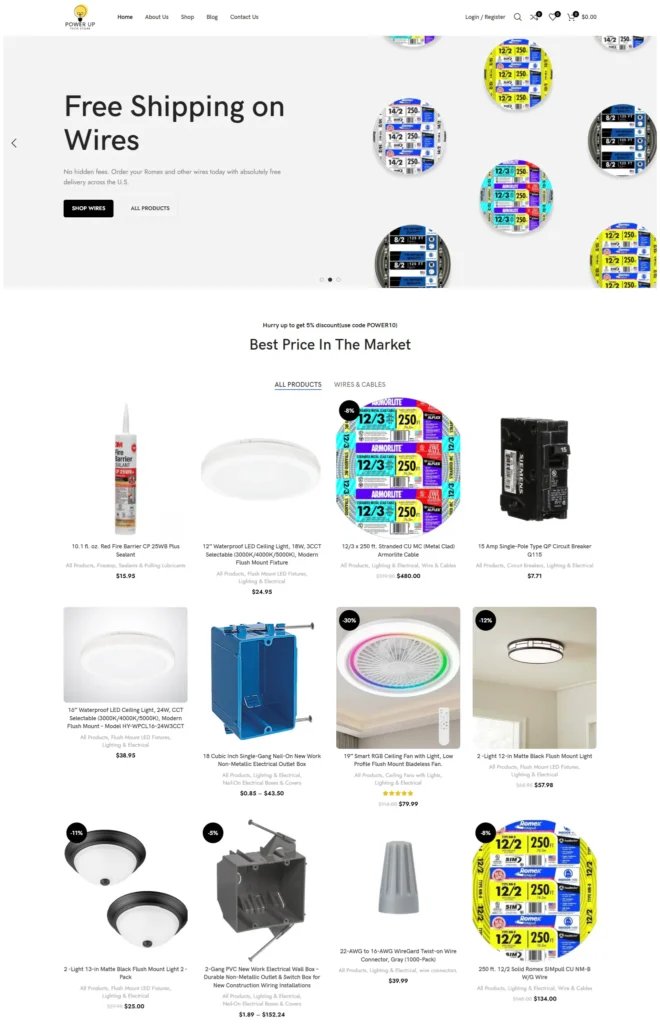
PowerUp Tech Store

PowerUp Tech Store

High-performance WooCommerce store for electrical products with dynamic catalogs, advanced filters, and optimized checkout.

SPT Foundation

SPT Foundation

Global non-profit platform focused on family protection, economic stability, and legal advocacy with donation integration.

ICTC

ICTC

Professional corporate website showcasing financial services, investor relations resources, and thought-leadership content for enterprise clients.

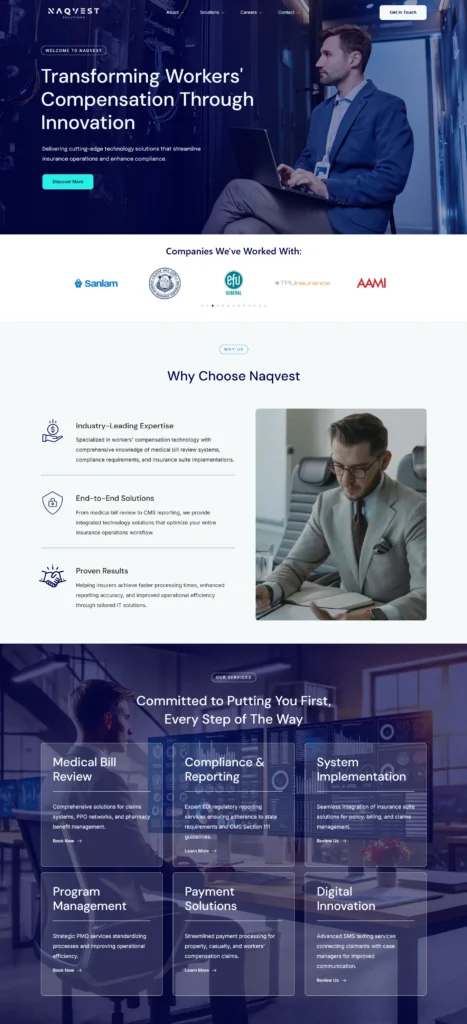
Naqvest Solutions

Naqvest Solutions

Technology-driven corporate platform showcasing insurance and workers compensation solutions with B2B lead generation.

Ethnik Ease

Ethnik Ease

Modern fashion e-commerce platform specializing in ethnic wear with seasonal sales, discount logic, and responsive shopping layouts.

Client feedback

What Clients Say

Real projects. Real results. No generic "great work" quotes.

I recommend and would always work again with him. If you need somebody who has an eye for details and understands the full concept then you will be happy to land him, very punctual and sympathetic (kind) expert engineer.

AL
Alex

He is really really talented. He really did all the work according to my requirement and that too in one go. I don't need to explain him again and again, I was just explaining my thoughts and he was executing it and...

MO
Mohd Adnan

Really great and experienced in his skills. I really like the way we worked together and communicate to the fullest. If someone is hiring him and giving him only an idea of what he/she wants, he is going to make it really...

MO
Mohd Adnan

He is the best in this whole bunch of freelancers. He did the work with full ease and according to your needs and going beyond your expectations. Because of his skills he can make anything you can think of. I am actually...

MO
Mohd Adnan

Thank you for excellent work. Very responsive and original work. I liked that the developer did not require much guidance on design issues and was able to come with innovative solutions.

CR
Cristian Alberch

Excellent freelancer. Has initiative and comes up with ideas for improvement on his own. Hard working and flexible in the working hours.

CR
Cristian Alberch

FAQ

Frequently Asked Questions

Answers to the questions most Solar & Battery Installation clients ask before starting a project.

Solar system costs in Australia in 2025 vary by system size, panel and inverter brand, and installer. A standard residential 6.6kW system with mid-range panels and a quality inverter typically costs between $5,000 and $9,000 after the STC rebate is applied by the installer at point of sale. The STC rebate reduces the upfront cost by $1,500 to $3,500 for a 6.6kW system depending on the zone and current STC price - this discount is applied automatically, so the price you are quoted should already reflect it. State-level incentives vary: Victoria's Solar Homes program offers an additional rebate for eligible households, South Australia's Home Battery Scheme subsidises battery installation, and NSW's Empowering Homes program offers interest-free loans for solar-battery systems. Battery systems add $8,000 to $15,000 to the cost depending on capacity and brand. The payback period for a well-sized residential system is currently three to seven years depending on energy usage, feed-in tariff rate, and whether a battery is included. I provide a detailed, site-specific quote with a personalised payback analysis after an assessment of your energy bills and roof.

System size should be matched to your household or business energy consumption and the available roof space. A 6.6kW system with a 5kW inverter is the most common residential configuration in Australia - it produces approximately 24-28kWh per day in most capital cities and suits a household using 15-25kWh per day. A 10kW system suits larger households, homes with a pool and air conditioning, or small businesses with moderate daytime energy use. A 13.2kW or larger system typically requires a three-phase connection or a home with genuine high consumption - households with electric vehicle charging, hydronic heating, or business energy use during the day. Most residential grid-connected systems are limited to 10kW by network operators without additional approval. The right system size is calculated from your actual electricity bills, your daytime occupancy pattern, and your plans for EV charging or battery addition - a reputable installer calculates this from your data rather than recommending the largest system that fits on your roof.

Whether a battery is worth adding depends on your energy usage pattern and feed-in tariff rate. A battery stores excess solar generation during the day for use at night, reducing your grid electricity purchase when solar is not generating. At current electricity prices (30-45 cents per kWh in most states) and feed-in tariff rates (4-10 cents per kWh for most retailers in 2025), the economics of a battery have improved significantly from 2022. For households that are home during the day and already self-consuming most of their solar generation, a battery adds limited value. For households that export the majority of their solar generation and then purchase grid electricity in the evening, a battery typically pays back in seven to twelve years at current prices - improving to five to eight years if electricity prices continue rising. The battery brands with the strongest track records for reliability and warranty support currently include Tesla Powerwall, Sungrow SBH, BYD Battery-Box, and SolarEdge Energy Bank. I model the specific battery ROI for your household as part of the quote process.

The minimum verification steps for a residential solar buyer in Australia: confirm the company holds a current CEC retailer accreditation or that the individual installer holds CEC accreditation as a solar installer - both are searchable on the Clean Energy Council website. Confirm the panels and inverter being quoted appear on the CEC approved products list, which is required for you to receive the STC rebate. Check that the installer will install to Australian standards AS/NZS 5033 and AS 4777 and that the system will be connected to the grid by a licensed electrician. Check their Google Business reviews - specifically look for reviews that mention post-installation support and inverter or panel issues, not just installation day reviews. Ask for references from installations completed in the last twelve months in your area. A reputable installer will answer all of these questions without hesitation. One who deflects, cannot provide CEC details, or quotes only "affordable" brands not on the approved products list is a risk worth avoiding regardless of the price difference.

From accepted quote to operational system, the timeline for a standard residential solar installation is typically four to eight weeks in most Australian markets, though this varies significantly with installer demand, meter changeover processing times by the network operator, and local council permit requirements in some areas. The process stages: site assessment and quote (one to two weeks if done promptly), quote acceptance and grid connection application (one to two weeks), equipment ordering and scheduling (one to three weeks depending on installer backlog), installation day (typically four to eight hours for a standard residential system), and meter changeover and system commissioning by the network operator (one to four weeks after installation - this is the stage outside the installer's control). I provide a realistic timeline at the quoting stage based on current network operator processing times in your area, not the optimistic estimate that assumes everything moves at maximum speed.

Yes. Commercial and industrial solar installations differ from residential in four significant ways. System size: commercial systems typically range from 30kW for a small business up to several megawatts for industrial facilities, requiring different inverter configurations (multiple string inverters or a central inverter), different mounting systems for flat commercial roofs, and often a three-phase or high-voltage connection. Grid connection: commercial systems above 30kW typically require a formal network connection application, power quality assessment, and a protection relay - a process managed by the installer but requiring network operator approval that adds weeks to the timeline. Financial treatment: commercial solar qualifies as a depreciable asset and may be eligible for the instant asset write-off provisions under current tax law, significantly improving the first-year cash flow impact of the investment. Return on investment: commercial electricity tariffs in Australia are typically higher than residential, making the financial case for commercial solar stronger per kWh generated. I prepare a commercial solar feasibility assessment from your electricity bills before quoting any commercial installation.

A complete solar installer website - homepage, residential solar service pages by system size, battery storage page, commercial solar page, rebate and incentive information, accreditation and credentials section, suburb service area pages for primary coverage area, case studies and installation gallery, reviews and testimonials, and a quote request form - takes 3 to 5 weeks. Solar companies with multiple branches covering different geographic areas, a commercial solar division requiring separate content, and a solar monitoring and maintenance service section take 4 to 6 weeks. The content that most affects timeline for solar installer websites is the case study and installation gallery material - professional photography of completed residential and commercial installations, including before and after roof shots, the completed system, and where possible the monitoring dashboard showing production data, is the visual content that converts quote requests at the highest rate. I build the site structure with placeholder content so the development is never blocked by photography that is still being compiled.

Ready when you are

Let's Build Your Solar & Battery Installation Website Right

Free consultation. Detailed proposal within 48 hours. No commitment required - just a clear picture of what's possible.

100+ Projects Delivered 100% Job Success on Upwork Free First Consultation
Get a Free Quote Call Now