

- SEO earns a ranked link, AEO earns the direct answer, and GEO earns a citation inside an AI tool.
- They are layers, not rivals. Each one builds on the same foundation of clear, trustworthy content.
- SEO targets Google results, AEO targets snippets and voice answers, GEO targets ChatGPT, Perplexity, and Google AI.
- Most WordPress sites in 2026 need SEO plus GEO, and AEO if their niche is answer or voice heavy.
- The smart move is not to pick one, but to sequence them based on where your audience searches.
AEO vs SEO vs GEO is the difference between getting clicked, getting answered, and getting cited. SEO ranks links on Google, AEO wins the direct answer, and GEO earns citations inside AI tools like ChatGPT. Here is how the three compare, and which ones your site actually needs.
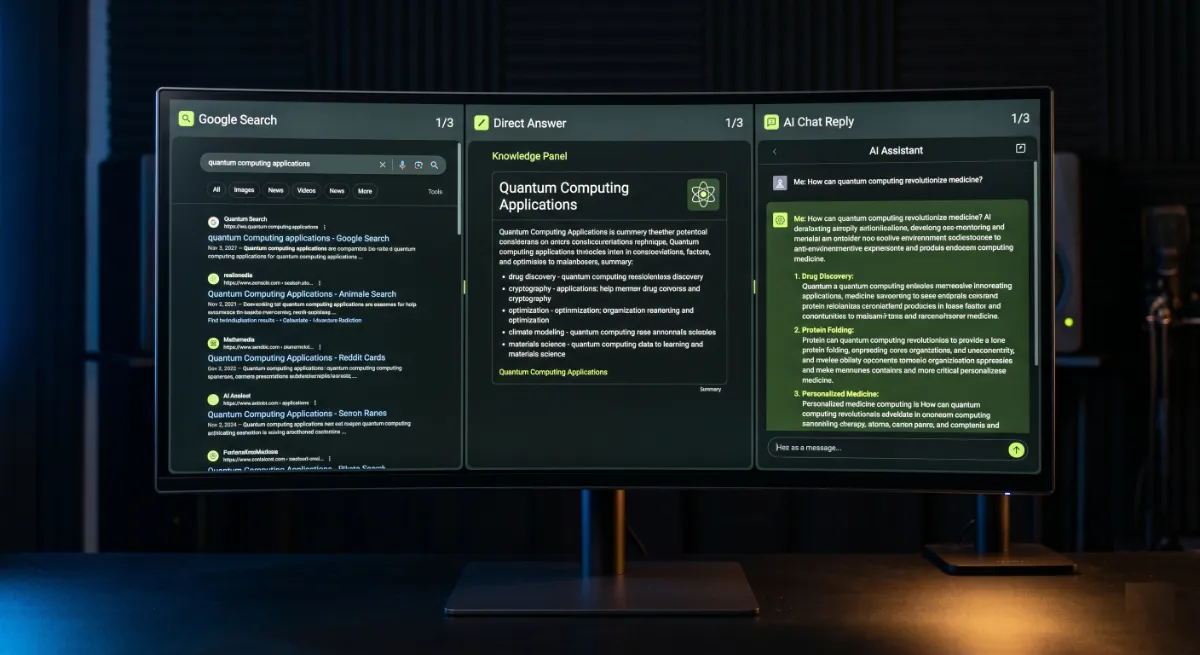
The acronyms pile up fast, so let me keep this simple. After 100+ WordPress projects, I think of these three as a stack: you rank, you get picked as the answer, then you get quoted by AI. Each one has its own goal, its own signals, and its own payoff. Once you see how they fit together, the strategy becomes obvious.
What is SEO?
SEO, or Search Engine Optimization, is the practice of improving your site so it ranks higher in traditional search results like Google and Bing. The goal is a high-ranking link that people click, sending them to your page.
It rewards a familiar mix of signals: relevant keywords, helpful content, quality backlinks, fast and crawlable pages, and clean technical health. SEO is the oldest of the three and still the foundation. If search engines cannot find, crawl, and rank your pages, nothing else here works. You can read more on the technical side in my WordPress SEO services.
SEO is also the slowest-moving and most competitive of the three. Rankings are won over months through consistent content and authority, not overnight. That patience is the point: the work you do for SEO, clean structure and genuinely useful content, is the same raw material that AEO and GEO depend on. Skip it and the newer layers have nothing solid to stand on.

What is AEO?
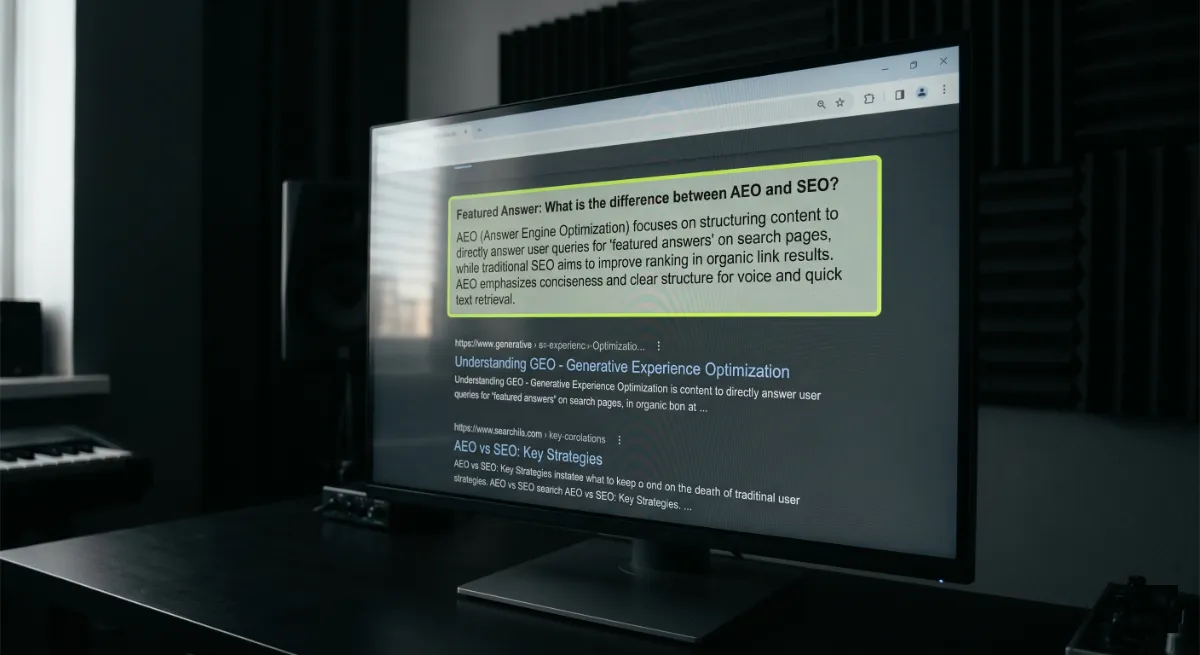
AEO, or Answer Engine Optimization, is the practice of structuring your content so it becomes the direct answer to a question, not just a link in a list. Think featured snippets, the “People also ask” box, voice assistant replies, and knowledge panels.
AEO rewards clarity above all. It favors concise, self-contained answers, question-based headings, and structured data that machines can read. The catch is that AEO often produces a zero-click result: the user gets their answer without visiting your site. The payoff is authority and brand visibility, since you are recognized as the source of the answer.
Structured data does a lot of the heavy lifting here. Marking up your content with the right schema types, using Google’s structured data, helps answer engines pull the exact passage they need. In practice, AEO and GEO overlap heavily: the same clear, structured answer that wins a featured snippet is also the kind of passage an AI engine likes to quote.
What is GEO?
GEO, or Generative Engine Optimization, is the practice of optimizing your content so generative AI engines cite and quote it. The target is a mention inside an AI-written answer from ChatGPT, Perplexity, or Google AI, rather than a ranked link or a snippet.
GEO rewards content that AI can reach, trust, and lift cleanly: open crawler access, answer-first writing, valid schema, strong author and entity signals, and freshness. Research led by Princeton found GEO methods can lift visibility in AI answers by up to 40 percent, with smaller sites often gaining the most. It is the newest layer, and the one most sites are ignoring. My full guide to generative engine optimization goes deeper.
A practical first step for GEO is simply letting the right crawlers in. Each engine uses named bots, OpenAI documents GPTBot and its search crawler in the OpenAI crawler overview, and many WordPress firewalls block them by default. If the AI cannot read your page, it cannot cite it, no matter how good the content is.

The simplest way to remember it: SEO gets you found, AEO gets you the answer, GEO gets you quoted. Same content foundation, three different finish lines.
AEO vs SEO vs GEO: the key differences
Here is the side-by-side that makes the difference click. Notice how the goal shifts from a click, to an answer, to a citation.
| Dimension | SEO | AEO | GEO |
|---|---|---|---|
| Full name | Search Engine Optimization | Answer Engine Optimization | Generative Engine Optimization |
| Goal | Rank a clickable link | Be the direct answer | Be cited by AI |
| Where you appear | Google and Bing results | Snippets, voice, “People also ask” | ChatGPT, Perplexity, Google AI |
| Content style | Keyword-focused, in-depth | Concise, question-based | Answer-first, citable |
| Key signals | Keywords, backlinks, tech health | Structured data, clarity | Crawler access, schema, trust |
| Typical result | A click to your site | An on-page answer (often zero-click) | A named citation in an answer |
| Best for | Most sites, as a base | Q-and-A and voice-heavy niches | Sites whose audience uses AI tools |
One query, three results: a concrete example
Take a single question a customer might ask: “how do I speed up my WordPress site?” Here is how each layer plays out for that one query.
With SEO, you aim to rank a thorough guide on WordPress speed so it sits near the top of Google, and the user clicks through to read it on your site. With AEO, you structure that guide so Google lifts your concise answer into a featured snippet or reads it aloud through a voice assistant, often without a click. With GEO, you make the same guide easy for AI to reach and trust, so when someone asks ChatGPT or Perplexity the question, your site is named as a source in the generated answer.
Same question, same underlying content, three different ways to show up. That is the whole idea: you are not writing three separate things, you are making one strong asset work across every surface where people look for answers.
How SEO, AEO, and GEO work together
The biggest mistake is treating these as rivals where you must pick one. They are layers on the same foundation, and they reinforce each other.
SEO is the base. Without crawlable, quality content, neither AEO nor GEO has anything to work with. AEO then sharpens that content into clear, structured answers, which is exactly the format generative engines prefer too. GEO builds on both, adding the crawler access and trust signals that turn a good page into a cited source. Improve one carefully and you usually lift the others.
What trips people up: they think GEO replaces SEO. It does not. GEO sits on top of solid SEO. Skip the foundation and you are optimizing a house with no floor.
My AI Search Optimization service sets up the GEO layer on top of solid SEO, so your WordPress site competes for rankings and citations at once.
Which one does your WordPress site need?
The honest answer is usually all three, but the order depends on where your audience searches. A local service business leans on SEO and AEO. A brand whose customers research with ChatGPT needs GEO sooner. Use the quick check below to find your starting point.
Which should you focus on first?
Answer three quick questions. No email, nothing stored.
1. Where do most of your customers search first?
2. Your content is mostly…
3. What matters most to you right now?
How to optimize for all three
The good news is that the work overlaps heavily. A single well-built page can rank, answer, and get cited if you set it up right.
- Build the SEO base. Fast, crawlable pages, clear keywords, quality content, and clean technical health.
- Add AEO structure. Lead with concise answers, use question-based headings, and add FAQ and structured data.
- Layer in GEO. Allow AI crawlers, strengthen author and entity trust, and keep content fresh and citable.
For the full step-by-step on the AI side, see my guide on how to optimize WordPress for AI search. It walks through crawlers, schema, content, and trust in order.
Common myths about SEO, AEO, and GEO
The space is noisy, so a few myths keep tripping people up. Clearing them makes the strategy simpler.
- “GEO is replacing SEO.” No. Generative engines still pull from content they can crawl and trust, which SEO builds. GEO is a layer on top, not a replacement.
- “AEO and GEO are the same thing.” They are cousins, not twins. AEO targets answer features inside search engines, while GEO targets AI tools that write their own answers.
- “You have to pick one.” The strongest sites run all three, sequenced by audience. They share most of the same work.
- “GEO is a quick hack.” There is no magic switch. It rewards the same fundamentals as good SEO, plus crawler access and trust signals, applied consistently.
- “This only matters for big brands.” The opposite is often true. Research suggests smaller, focused sites can gain the most in AI answers when they get the basics right.
Strip away the myths and the picture is calm: build solid content, structure it clearly, make it reachable and trustworthy, and you are optimizing for all three at once.
Frequently asked questions
What is the difference between SEO, AEO, and GEO?
SEO optimizes for ranked links on search engines, AEO optimizes for direct answers like snippets and voice replies, and GEO optimizes for citations inside AI tools like ChatGPT and Perplexity. The goal shifts from a click, to an answer, to a citation.
Is AEO the same as GEO?
No. AEO targets answer features inside search engines, such as featured snippets and voice results. GEO targets generative AI engines that write their own answers and cite sources. They are related, since both reward clear, structured content, but the destinations differ.
Does GEO replace SEO?
No. GEO sits on top of SEO. Generative engines still rely on content they can crawl and trust, which is what SEO provides. Strong SEO makes GEO far more effective, so you build both, not one instead of the other.
Which is most important in 2026?
SEO remains the foundation, but GEO is the fastest-growing layer as more searches end inside AI answers. For most WordPress sites, the right move is solid SEO plus active GEO, with AEO added where your niche is answer or voice heavy.
Do I have to choose just one?
No, and you should not. They are layers that reinforce each other. The practical question is sequencing: start where your audience searches, then expand to the others.
What is an example of AEO vs GEO?
AEO is winning the featured snippet for “how to clear WordPress cache” so Google shows your answer at the top. GEO is having ChatGPT name your site as the source when someone asks it the same question. Different surfaces, similar content discipline.
Can a WordPress site do all three?
Yes. WordPress is well suited to all three with the right setup: an SEO plugin like Rank Math for rankings and schema, structured answers for AEO, and crawler access plus trust signals for GEO.
How do I get started?
Use the quick check above to find your starting layer, then build outward. If you want it set up and tracked for you, my AI Search Optimization service covers it, and you can book a free call to plan it.
Conclusion
AEO vs SEO vs GEO is not a contest with one winner. SEO gets you found, AEO gets you the answer, and GEO gets you quoted, all built on the same foundation of clear, trustworthy content. The sites that win in 2026 are not choosing between them, they are sequencing them: a solid SEO base, sharpened into clean answers, then optimized so AI engines cite you. Start where your audience searches, build outward, and you cover every way people find information today.
See how I set up SEO and GEO together in my AI Search Optimization service, or learn the hands-on steps in how to optimize WordPress for AI search.
This article was last reviewed and updated in June 2026 to reflect current SEO, AEO, and GEO practices.