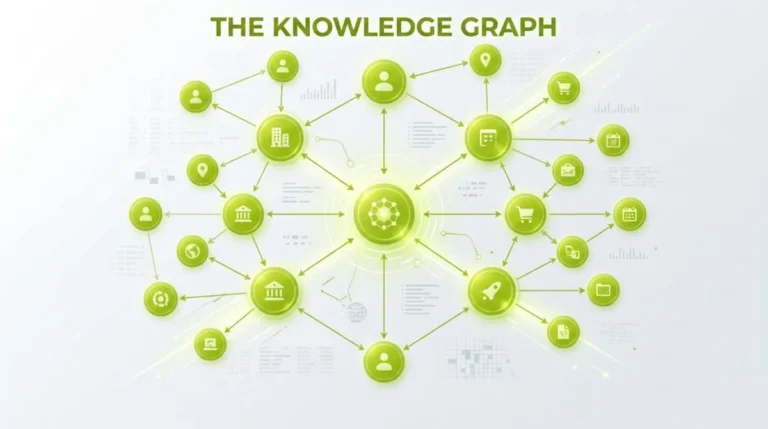


- Structured data for AI search is labeled, machine-readable code that tells AI engines exactly what your content is.
- It is not a magic citation switch, but it removes ambiguity and builds the entity clarity AI relies on.
- Lead with identity types: Organization, Person, and WebSite, connected by stable IDs.
- On WordPress you rarely hand-code it, an SEO plugin generates most of it once configured.
- Always validate, because invalid markup fails silently and teaches machines to distrust your data.
Structured data for AI search is the labeled, machine-readable code that tells engines like ChatGPT, Perplexity, and Google AI exactly what your content is. It will not single-handedly win you citations, but it removes ambiguity and builds the entity clarity AI relies on. Here are the types that matter and how to add them properly.
Across 100+ WordPress projects, I have watched structured data go from an SEO nicety to a core part of being understood by AI. The web is moving from pages people read to facts machines extract, and structured data is how you hand those facts over cleanly. Let me explain what it is, how it actually helps AI search, the types worth adding, and exactly how to implement it on WordPress without the hype.
What is structured data, and why does AI search need it?
Structured data is code, usually written in JSON-LD, that labels your content using the shared Schema.org vocabulary. Instead of leaving a machine to guess that a page is an article by a certain author about a certain topic, you state it explicitly. It is the difference between a machine reading prose and reading clean facts.
AI search needs that clarity because engines assemble answers from many sources fast. The clearer your data, the easier you are to understand, attribute, and trust. To be clear about scope: structured data for AI search is a clarity and credibility tool, not a guaranteed path to citations. For the honest detail on what it does and does not do for being quoted, see my deep dive on schema markup for AI citations. This guide focuses on the practical setup.
You will see structured data written in a few formats, but JSON-LD is the one to use. It sits in a clean script block, separate from your visible content, which makes it easy to add, read, and maintain. Both Google and the major AI engines prefer it, so every recommendation in this guide assumes JSON-LD.
How structured data helps AI search
The value is real but indirect. Used well, structured data for AI search does four useful things.
- It clarifies your entity. Organization and Person markup tell AI exactly who you are, so it describes and attributes you correctly instead of guessing.
- It disambiguates your content. Clear types and properties remove the ambiguity that makes a machine unsure what your page even is.
- It supports classic SEO. Structured data powers rich results and helps rankings, and ranking well is upstream of AI visibility.
- It future-proofs you. Machine-readable structure helps every system that parses your site, today and as AI search matures.
So add structured data for AI search because it makes you clearer, more credible, and better understood, not because the markup alone forces a citation. That honest framing keeps your effort focused on what works.
A simple example shows the difference. Without markup, a machine sees a page of text and infers that “Acme” might be a company. With Organization markup carrying a stable identity, it knows Acme is a specific business, with this logo, this URL, and these profiles. Multiply that certainty across every page and you have a site AI can describe and attribute with confidence rather than guesswork.
Think of structured data as labeling the boxes in a warehouse. It does not make your products better, but it makes the right ones findable instantly. AI is the picker working at speed.
Structured data for AI search vs traditional schema
For years, structured data meant one thing: earning rich results in Google, the star ratings and FAQ drop-downs in the search listings. That still matters, but structured data for AI search shifts the emphasis. AI engines care less about whether you qualify for a particular snippet and more about whether they can identify and trust you as an entity.
The practical change is where you put your effort. Traditional schema work chased eligible rich-result types page by page. An AI-search mindset prioritizes a clean, consistent identity layer, Organization and Person with stable IDs, that resolves across your whole site. The rich-result types still help, but that identity layer is what stops an AI from confusing you with another business or describing you with stale facts.
So if you set up schema years ago purely for snippets, it is worth revisiting. Same vocabulary, slightly different priority for the AI era: identity and consistency first, rich-result eligibility second. That single reframe is what separates structured data for AI search from the old checklist approach.
The 7 structured data types to add for AI search
You do not need dozens of types. A small, accurate, well-connected set does the work. Choosing the right structured data for AI search is less about volume and more about covering these core types well. These are the seven that matter most, roughly in order of value.

1. Organization
The highest-value, most underused type. It defines your brand as an entity with a name, logo, URL, and profiles. Give it a stable @id so the same identity resolves across every page. This is what lets AI describe your business accurately rather than inventing details.
2. Person
Marks up authors with name, role, and a sameAs link to real profiles. It anchors authorship and the experience behind your content, the credibility signals both AI and search weigh heavily.
3. WebSite and WebPage
Basic but often skipped. A WebSite node with a stable identity and a WebPage node per URL give the rest of your markup a clean structure to hang on. They are the connective tissue of a tidy schema graph.
4. Article or BlogPosting
Signals authorship, headline, and dates on posts, linking the content to its author and publisher so machines can attribute it and judge freshness.
5. FAQPage
Mirrors the question-and-answer format AI uses to retrieve answers. Use it only for genuine FAQs with visible questions and answers, never faked, and it maps neatly to how engines pull responses.
6. Product or LocalBusiness
For commerce and local sites, these are essential. Product with Offer and review data, or LocalBusiness with address, hours, and ratings, give AI the concrete facts it needs to recommend you for a specific need.
7. BreadcrumbList
Communicates where a page sits in your site hierarchy. Small but useful, it helps machines understand context and the relationships between your pages.
Connect these in a single JSON-LD @graph with stable @id values so your Organization, Person, and pages reference each other consistently. That coherence matters more than piling on rare types.
| Type | What it tells AI | Best used on |
|---|---|---|
| Organization | Who your brand is | Sitewide, homepage |
| Person | Who wrote or stands behind it | Articles, author pages |
| WebSite / WebPage | Your site and each page | Sitewide |
| Article | Authorship, topic, freshness | Blog posts |
| FAQPage | Direct question and answer pairs | Pages with real FAQs |
| Product / LocalBusiness | Concrete commerce or location facts | Shop and local pages |
| BreadcrumbList | Page context and hierarchy | Most pages |
Which structured data types does your page need?
Pick a page type and get the recommended structured data to add.
How to add structured data in WordPress
The good news: you rarely hand-code it. On WordPress, an SEO plugin like Rank Math generates most of your structured data automatically once configured.
Set your Organization and Person details in the plugin so your identity is consistent sitewide. Choose the right default schema type per template, Article for posts, WebPage for pages, Product for products. Add FAQ blocks where you have genuine questions and answers. For anything custom, the plugin lets you build schema or you can add a JSON-LD @graph manually. The principle throughout: mark up what is actually on the page, and keep your identity IDs stable. My WordPress technical SEO services cover a full, validated setup if you want it done right the first time.
One detail trips people up: avoid running two plugins that both output structured data, or you will get duplicate and conflicting markup. Let a single source generate it, confirm your logo and social profiles are filled in so the Organization node is complete, and make sure your author accounts map to real Person profiles. Done once, this gives you clean structured data for AI search across the whole site automatically.

Validate and avoid common errors
Markup you never test is a liability. Invalid JSON-LD fails silently and can teach machines to distrust your data, which is worse than having none. Always validate.
Run key URLs through Google’s Rich Results Test and the Schema.org validator, and fix every error and warning. Then watch for the usual mistakes: marking up content that is not visible on the page, faking FAQs or reviews to chase rich results, using inconsistent names or unstable @id values across pages, and piling on rare types that add risk without benefit. Google’s structured data guidelines are the authority on what is allowed. Make validation a habit, not a one-off, because themes, plugins, and edits can quietly break your structured data for AI search over time.

Where structured data fits in AI search
Keep perspective. Structured data is one layer of AI visibility, not the whole thing. It clarifies and supports, but it cannot rescue a site AI cannot crawl, content with nothing useful to say, or a brand with no trust.
Pair it with the rest: open your AI crawlers, write answer-first content, rank well, and earn trust. Google’s own guidance on AI features confirms there is no special markup requirement, just strong, well-structured content. For the complete picture, see my guide on how to optimize WordPress for AI search. Structured data makes that whole effort legible to machines.
The right way to think about structured data for AI search is as an amplifier. It will not create authority you have not earned, but it makes the authority you do have unmistakable. On a strong site it removes the last bit of friction between your content and the machines deciding what to surface.
Frequently asked questions
What is structured data for AI search?
It is machine-readable code, usually JSON-LD using the Schema.org vocabulary, that labels what your content is so AI engines can understand, attribute, and trust it instead of guessing from prose.
Does structured data help me get cited by AI?
Indirectly. It is not a guaranteed citation lever, and engines do not require it, but it clarifies your entity and supports rankings, both of which help you be understood and attributed. See the citations deep dive for the honest detail.
Which structured data types matter most?
Identity first: Organization and Person with stable IDs, plus WebSite and WebPage. Then Article, FAQPage, Product or LocalBusiness, and BreadcrumbList where they genuinely apply.
Do I need to code structured data by hand?
Usually not. On WordPress, an SEO plugin like Rank Math generates most of it once you set your Organization, Person, and default schema types. Hand-coding is only for custom cases.
Will more structured data types improve my AI visibility?
No. Piling on rare types adds risk and errors without benefit. A small, accurate, well-connected set of the right types beats a long list of half-finished ones.
How do I check my structured data is correct?
Run key pages through Google’s Rich Results Test and the Schema.org validator, and fix every error and warning. Re-test after major changes, since invalid markup fails silently.
Is structured data still worth it for AI in 2026?
Yes, just not as a magic switch. It clarifies your entity, supports rankings and rich results, and future-proofs your content for machine understanding. The value is real even though it is one layer among several.
Can you set up structured data for my site?
Yes. My AI Search Optimization service implements and validates a clean structured data graph alongside the work that drives AI visibility, and you can book a free call to start.
Conclusion
Structured data for AI search is worth doing, with clear eyes about why. It will not buy you a citation, but it makes your content unmistakable to the machines now assembling answers, clarifies who you are, and supports the rankings that feed AI visibility. Set up your identity types with stable IDs, add the content types that genuinely apply, validate everything, and treat it as one strong layer in a bigger plan. Do that and you give AI exactly what it needs to understand and trust you.
Most sites are still leaving this on the table, treating structured data for AI search as an afterthought or skipping it entirely. That is your opening. Get the identity layer clean, validate it, and keep it consistent, and you become one of the few sites a machine can read without hesitation.
See the full method in how to optimize WordPress for AI search, or have me implement and validate it through my AI Search Optimization service.
This article was last reviewed and updated in June 2026 to reflect current structured data practice for AI search.